10 Reasons Dealerships Get Low Leads On Car Listings & How To Fix Them
 May 9, 2026
, 8 Min Read
May 9, 2026
, 8 Min Read
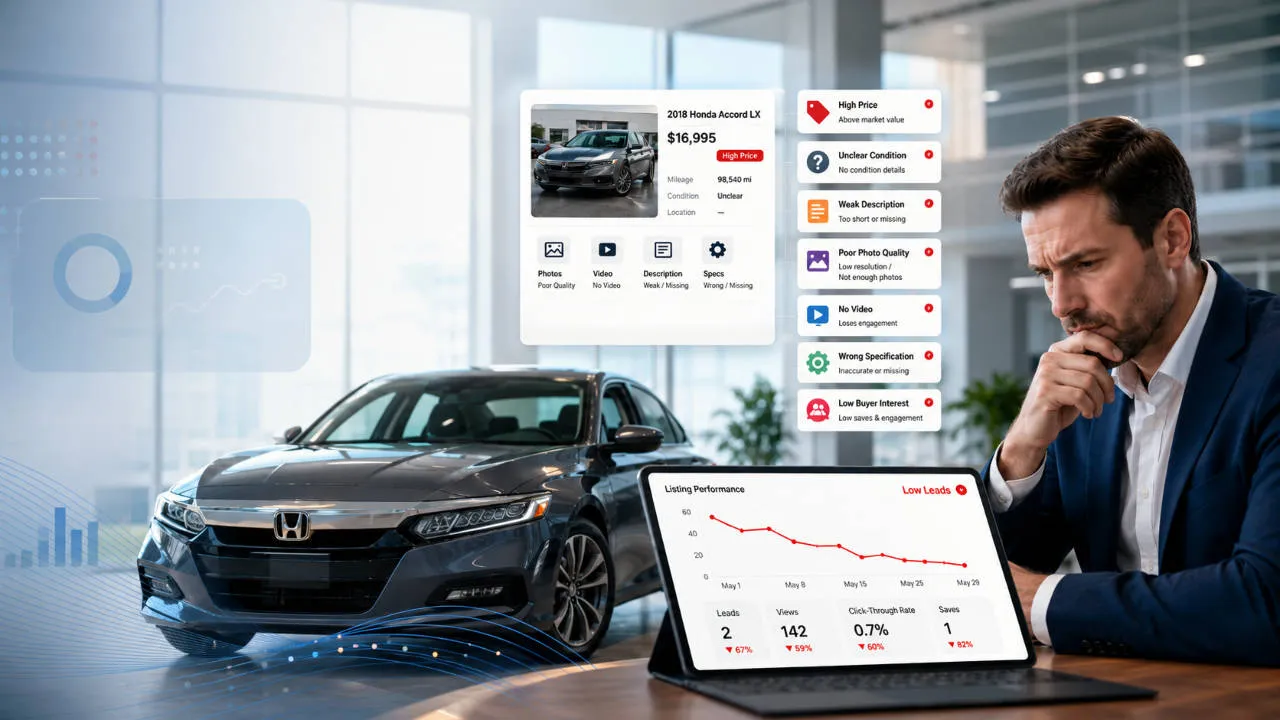
A car listing can have the right model, the right mileage, and even the right buyer waiting for it. But if the advert does not build trust, explain value, or make the car look desirable, leads will stay low.
Most buyers do not enquire just because a car is online. They enquire when the listing answers their questions and gives them confidence. A strong listing should feel like a helpful salesperson: clear, honest, visual, and persuasive.
 AI Quick Summary
Car dealerships often experience low leads on listings because their adverts fail to build trust, clearly explain value, or make the vehicle desirable. To attract buyers, a strong listing must be clear, honest, visual, and persuasive, providing comprehensive details, justifying the price and condition, and highlighting unique selling points to answer buyer questions and instill confidence.
This summary was generated by AI using this article’s content.Read Next


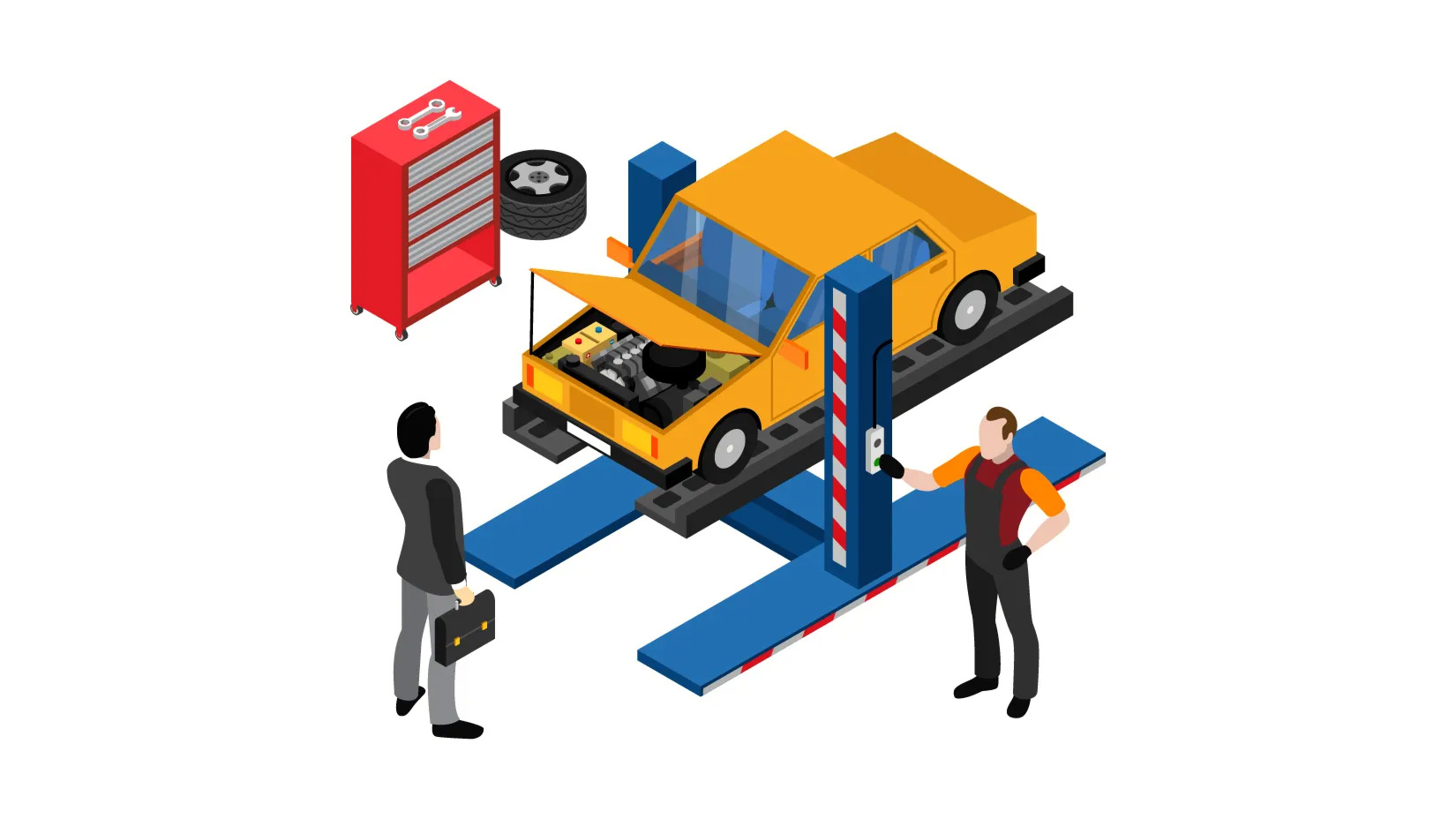
Here are 10 common reasons dealerships get low leads on car listings, and how to fix them.
1. The Price Is Too High For The Market
Price is often the first reason buyers scroll past a listing. If the car looks more expensive than similar models, buyers need to know why.
A high price can be justified when the car has low mileage, strong service history, excellent condition, warranty, or certified pre-owned benefits. But if the advert does not explain these points, the price feels random.
Dealerships should use a free online car valuation tool before listing a vehicle. This helps them understand the market and avoid pricing the car too high or too low.
Dealerships should:
- Compare similar cars in the market
- Check the car’s condition, mileage, and trim
- Review pricing every 7 to 14 days
- Explain why the car deserves its price
- avoid waiting months before making price changes
A premium price needs a premium reason.
2. The Condition Is Not Clear
Buyers are careful with used cars. If the condition is not clear, they may assume there is something wrong.
Simply writing “good condition” is not enough. The advert should explain what has been checked and what makes the car reliable. A properly used car inspection checklist can help dealerships highlight the right details.
Useful details include:
- inspection status
- accident history, if available
- tyre and brake condition
- interior condition
- service history
- warranty coverage
- certified pre-owned checks
If the car has passed an inspection, say so clearly. Buyers are more likely to enquire when they feel the dealership is being open.
3. The Description Is Too Basic
Many listings lose leads because the description says very little about the car. Phrases such as “finance available” and “contact us for details” are not enough. A good description should help the buyer understand the car’s value. It should explain what makes this specific vehicle worth viewing.
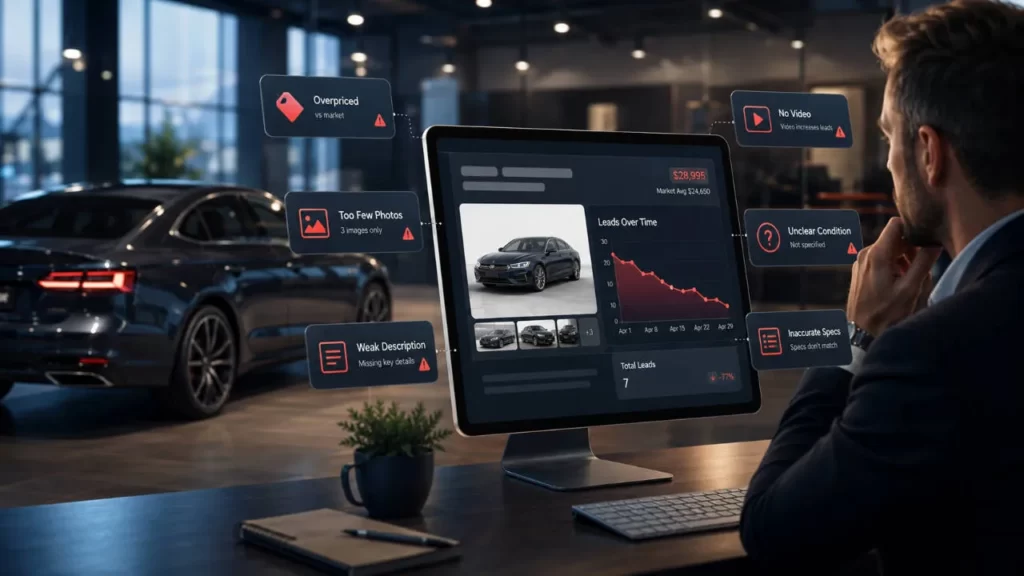
Instead of only listing features, tell the buyer what those features mean. For example, a panoramic sunroof is not just a feature. It makes the cabin feel brighter and more open on long drives.
A useful description should include:
- trim and engine details
- key features
- service history
- ownership background, if known
- inspection or warranty details
- What type of buyer does the car suit
The aim is not to write a novel. The aim is to make the car feel real, trustworthy, and worth a call.
4. The Photos Do Not Sell The Car
Photos are often the first thing buyers judge. If the images are dark, messy, or incomplete, the listing will struggle. Good photos make the car feel clean, cared for, and ready to buy. Poor photos make even a good car look neglected. Dealers can follow these tips on how to take better car photos to improve listing quality.
Dealerships should show:
- front, rear, and side angles
- wheels and tyres
- dashboard
- seats
- boot space
- odometer
- infotainment screen
- engine bay
- key features
Use plenty of photos, but only if they are good. One bad image can damage the whole impression.
5. There Is No Video
Video gives buyers extra confidence. It helps them see the car in a more realistic way before they enquire. A short walk-around video can show the exterior, interior, start-up, features, and overall condition. It does not need to be overproduced. It just needs to be clear and useful.
A good video can include:
- exterior walkaround
- interior view
- dashboard and screen
- engine start
- boot space
- feature highlights
- condition close-ups
For buyers comparing several cars online, a video can be the reason one listing feels more trustworthy than another.
6. The Specification Is Wrong
Incorrect specifications damage trust quickly. If a car is called “top spec” or “full option” when it is not, serious buyers will notice. Once buyers spot one mistake, they may question the rest of the advert. They may wonder whether the mileage, condition, or service history is also wrong. Dealerships can use a chassis number check in the UAE to verify key details before listing the car.
Dealerships should check:
- trim level
- engine size
- gearbox
- drivetrain
- option packages
- safety features
- infotainment system
- seat material
It is better to be accurate than impressive. Honest details create better leads.
7. The Listing Does Not Explain Why The Car Is Special
Some cars have strong selling points, but the listing hides them. This is a missed chance. If the car has one owner, a full service history, low mileage, rare colour, dealer maintenance, or excellent condition, these details should be easy to see.

Strong value points include:
- one-owner history
- full service record
- low mileage
- rare trim or colour
- non-smoking previous owner
- warranty
- certified pre-owned status
- dealer-supplied from new
- clean interior and exterior
For premium or rare stock, dealerships can also highlight exclusivity. Features such as exclusive car listings in the UAE help buyers understand why certain cars stand out. Buyers do not always know why one used car is better than another. The listing must explain it.
8. Certified Pre-Owned Benefits Are Not Clear
Certified pre-owned cars often cost more, but buyers need to understand why. If the advert only says “certified” without details, the value is weak. Buyers should know what the certification includes and why it matters.
Dealerships should clearly explain the benefits of buying a certified pre-owned car, especially when the car is priced higher than a normal used model.
Dealerships should mention:
- inspection points
- warranty cover
- roadside support, if included
- brand standards
- rejected-car criteria
- aftersales support
Certified pre-owned is not just a label. It is a trust signal. Put it where buyers can see it.
9. The Advert Has No Story
A used car advert should not feel like a stock entry. It should help buyers picture the car in their lives. Storytelling does not mean making things up. It means using real details in a better way. A family SUV can be described around comfort, space, safety, and school-run practicality. A sports car can be described around performance, rarity, and driving feel.
Dealers can build a story around:
- the model’s reputation
- the car’s condition
- previous ownership
- service history
- special features
- lifestyle use
- rarity
- comfort or performance
Facts tell buyers what the car has. A good story tells them why it matters.
10. The Listing Is Not Reviewed Often Enough
A listing should not be uploaded and forgotten. If it is not getting leads, something needs to change. Dealerships should review performance weekly. Look at views, clicks, enquiries, price position, photo quality, and competing listings.
Modern tools can also help dealers improve listings faster. DubiCars’ latest AI listing features are designed to support better descriptions, pricing, search, and dealer tools. If the car gets views but no leads, the price, description, or trust signals may be weak. If it gets few views, the main image, price, or headline may need work.
Small updates can make a big difference. Dealers can also follow this guide on how to sell a used car online fast for extra tips on improving online listing performance.
Reasons Dealerships Get Low Leads On Car Listings
Low leads are not always a stock problem. Often, they are a listing problem. A better advert gives buyers more reasons to trust the car and contact the dealership. The strongest listings combine fair pricing, clear condition details, strong photos, useful video, accurate specifications, and a description that explains real value. The goal is simple: make the buyer feel confident before they enquire.
Stay tuned to UAE’s most popular auto blog for more information about the latest happenings in all of the Emirates.
FAQs
Why are my car listings not getting leads?
Car listings get low leads when the price is high, photos are poor, descriptions are weak, or buyers do not see enough trust signals.
How can dealerships get more leads online?
Dealerships can get more leads by improving listing quality, pricing cars correctly, adding better photos, using video, and responding quickly to enquiries.
Do better photos help sell cars faster?
Yes. Clear, high-quality photos make the car look more trustworthy and help buyers inspect the vehicle before enquiring.
Why is pricing important in car listings?
Pricing affects buyer interest immediately. If a car is priced above the market without a clear reason, buyers are likely to skip it.
What should a good car listing description include?
A good listing should include condition, mileage, trim, engine, service history, inspection details, warranty, key features, and why the car is worth buying.
Follow us on

Recent Stories
How To Buy A Car With Cryptocurrency In Dubai
For several years now, cryptocurrency has been described as the future of money. In recent months, several countries, including the...

How Car Impound Works In The UAE: Rules, Fines, Costs & Release Process
Car impoundment is one of the more serious penalties motorists can face in the UAE. Unlike a standard traffic fine,...
What Are The Car Window Tint Rules in the UAE In 2026?
Car window tint is one of the most useful upgrades for drivers in the UAE. It can reduce cabin heat,...
Nissan Patrol Ownership Cost In The UAE: New & Used Guide
The Nissan Patrol is one of the UAE’s most popular full-size SUVs. However, its showroom price is only the beginning....

Parking Guide For Discovery Gardens In Dubai
Discovery Gardens is a large residential community in Jebel Ali, close to Ibn Battuta Mall, Al Furjan and Sheikh Zayed...
Is DC Fast Charging Bad For Your EV Battery? Complete EV Charging Guide
DC fast charging makes electric cars easier to use. It lets drivers add useful range during a short stop instead...