
Your Complete Guide to Car Dashboard Warning Lights & What They Mean
 April 1, 2025
, 9 Min Read
April 1, 2025
, 9 Min Read
- Fog Lights
- Low Tyre Pressure
- Engine Oil Warning
- Check Engine Light
- Traction or Stability Control Light
- Coolant Temperature Warning
- Brake System Warning Light
- ABS Warning Light
- Airbag Warning Light
- Battery Warning Light
- Low Fuel Light
- Diesel Glow Plug Light
- Door Ajar Warning Light
- Seatbelt Reminder Light
- Washer Fluid Warning Light
- Power Steering Warning Light
- DPF Warning Light (Diesel Particulate Filter)
- Automatic Transmission Warning Light
- EV (Electric Vehicle) Warning Lights
- Shared Car Dashboard Warning Lights (ICE & EV Cars)
- What You Should Do When a Dashboard Light Appears
- FAQs
- Also Read:
Cars are packed with technology designed to keep you safe. One key part is the dashboard—a space filled with warning lights and symbols. These lights alert you when something isn’t right. Some are reminders, while others signal serious issues. It’s important to know what each one means so you can act quickly and avoid bigger problems. Let’s look at the most common car dashboard warning lights found in petrol, diesel, and electric vehicles (EVs).
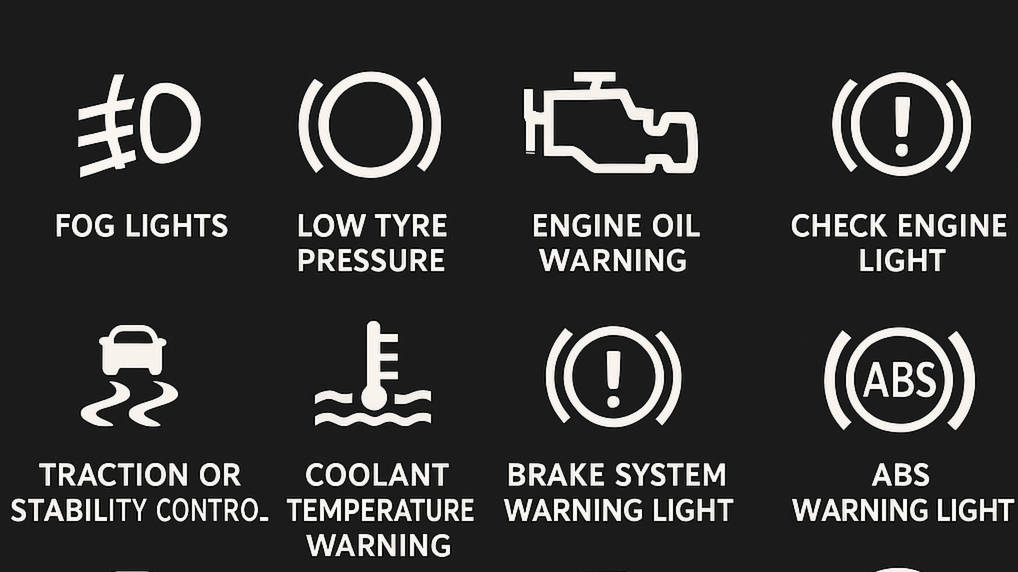
Fog Lights
This symbol looks like a headlight with a wavy line in front of it. It shows the front or rear fog lights are on. Fog lights help you see better in thick fog, rain, or snow. Not all cars have them. If the symbol flashes or doesn’t turn off, there could be an electrical issue.
Low Tyre Pressure
A yellow symbol showing an exclamation mark inside a flat tyre means one or more tyres have low pressure. Low pressure can affect grip, fuel use, and tyre wear. Stop at a safe spot, check the tyres, and inflate them as needed. Most systems reset automatically once pressure is normal.
Engine Oil Warning
A symbol like a dripping oil can signals low oil pressure. This can cause serious engine damage if ignored. Stop the car immediately, turn off the engine, and check the oil level once the engine is cool. If the level is fine, the oil pump or sensor could be faulty. Seek help quickly.
Check Engine Light
This is often a symbol of an engine or simply says “Check Engine.” It covers many engine issues, from minor faults like a loose fuel cap to major problems like misfiring or emissions faults. The car may still run, but it’s best to get a diagnosis from a professional as soon as possible.
Traction or Stability Control Light
This symbol shows a car with wavy lines behind it. It means the traction or stability control system is off or not working. These systems help prevent skidding or sliding. If you didn’t turn it off yourself, there could be a fault. It’s safer to drive with this system on, so get it checked.
Coolant Temperature Warning
A thermometer symbol usually means the engine is overheating. Pull over safely and let the engine cool down. Don’t open the coolant cap while hot. Check the coolant level and refill if needed. If the problem continues, there could be a leak or a faulty thermostat.
Brake System Warning Light
This red light (exclamation mark inside a circle) signals a brake problem. It could be low brake fluid, worn pads, or a serious brake system fault. Driving without working brakes is extremely dangerous. Stop the car and call for roadside help or a tow.

ABS Warning Light
This light means there’s a fault in the anti-lock braking system (ABS). While your main brakes will still work, ABS helps stop the car safely without skidding. It’s especially useful in rain or on icy roads. Have the system checked by a technician as soon as possible.
Airbag Warning Light
A symbol showing a person with a circle (airbag) means there’s a fault with the airbag system. This could be an issue with sensors, wiring, or airbags. In a crash, the airbags might not work. This should be fixed quickly to stay safe.
Battery Warning Light
A red battery symbol means your car is running on battery power only. The alternator may not be charging it. If this happens while driving, you might soon lose power. Get to a garage before the battery dies. You may need a jump-start if the engine is off and the light shows.
Low Fuel Light
This light means the fuel tank is nearly empty. It usually comes on when there’s less than 10–15% fuel left. Some cars are estimated based on driving habits. Fill up soon to avoid being stranded.
Diesel Glow Plug Light
In diesel cars, this curly symbol shows the glow plugs are warming the engine for a cold start. Wait for the light to go out before starting. If it flashes or stays on, there may be a fault with the glow plugs or the heating system. Have it checked if the problem continues.
Door Ajar Warning Light
This symbol, often a car with open doors, means one or more doors are not properly shut. Stop and check all doors, including the boot. Driving with an open door is unsafe, especially at higher speeds.
Seatbelt Reminder Light
A seated figure with a belt across the chest means someone hasn’t fastened their seatbelt. Most cars also beep as a reminder. Buckle up to switch off the alert. This light can also show issues with seatbelt sensors.
Washer Fluid Warning Light
A windscreen with water spray indicates the washer fluid is low. It won’t stop the car from running, but driving with a dirty windscreen is dangerous. Top up the washer fluid when safe.
Power Steering Warning Light
This shows a steering wheel and often an exclamation mark. It means a problem with the power steering system. You may notice stiff or heavy steering. In electric systems, it could be a software issue or a failed motor.
DPF Warning Light (Diesel Particulate Filter)
This symbol, often a box with dots inside, means the DPF is clogged. It collects soot from the exhaust in diesel cars. A long motorway drive at steady speed can often clear it. If not, it needs professional cleaning.
Automatic Transmission Warning Light
This might look like a gear or the letters “AT.” It signals a problem with the automatic gearbox. If the car struggles to shift gears or drives strangely, stop and get it checked. Ignoring it can lead to expensive repairs.
EV (Electric Vehicle) Warning Lights
EVs have some unique car dashboard warning lights related to their battery and motor systems.
EV System Warning Light
This symbol, often a car with an exclamation mark or a battery outline, means there’s a fault in the electric drive system. It could be a software glitch or a motor issue. Stop the car safely and contact your dealer or technician.
Battery Temperature Warning
A battery symbol with a thermometer shows the battery is too hot or too cold. Extreme temperatures can reduce performance or damage the battery. Avoid driving hard and park the car in a suitable place. If the light stays on, seek help.
Charging System Warning
This light may show a plug or cable icon. It means something went wrong during charging—maybe a loose cable or issue with the charging port. Check connections and try a different charger. If it continues, have the system checked.
Low EV Battery Warning
Just like the low fuel light in petrol cars, this light means your EV battery is nearly empty. Find a charging station soon to avoid running out of power.
Electric Motor Warning Light
This symbol may look like a small motor or a bolt. It means there’s a fault with the electric motor or related systems. The car might lose power or behave differently. Visit an EV service centre for diagnosis.
Shared Car Dashboard Warning Lights (ICE & EV Cars)
Some alerts appear in all modern cars, regardless of engine type:
- Brake Warning – Indicates general brake system issue. Critical for safety.
- Tyre Pressure Warning (TPMS) – Low pressure in one or more tyres.
- Seatbelt Reminder – Seatbelt not fastened.
- Airbag Warning – Airbag system not working properly.
- Door Ajar Warning – Door not properly shut.
- Headlight & Fog Light Indicators – Lights are on or malfunctioning.
- Lane Departure Warning – You are moving out of lane without indication.
- Parking Brake Light – Handbrake is active.
- Power Steering Warning – Fault in the power steering system.
What You Should Do When a Dashboard Light Appears
- Don’t Panic – Most alerts are not emergencies.
- Check the Symbol – Refer to the car manual or infotainment screen.
- Stop if Needed – For critical warnings like overheating, pull over safely.
- Call for Help – Contact your roadside assistance or mechanic.
- Get Regular Service – Prevent many warnings by maintaining your car.
Dashboard signs are there to help you, not scare you. Learning their meanings keeps you safe and protects your car. In the UAE’s tough climate, acting on warnings quickly is even more important. Whether you drive petrol, diesel, or electric, always pay attention to what your dashboard tells you.
FAQs
What should I do if a warning light comes on while driving?
Stay calm. Check the symbol. If it’s red, pull over safely and switch off the engine. For yellow or orange lights, you may continue driving carefully but get the car checked soon.
Can I ignore a check engine light if the car feels fine?
No. The check engine light can signal anything from a minor sensor fault to a serious engine issue. Get it diagnosed as soon as possible to avoid bigger problems.
Do dashboard lights turn off automatically once the issue is fixed?
Yes, in many cases they do. For example, the tyre pressure or low fuel light will turn off after correcting the problem. Some lights may need a manual reset by a mechanic.
Are warning lights the same in every car?
Most symbols are standard, but some may look slightly different depending on the make and model. Always check your vehicle’s manual for accurate details.
Is it safe to drive with the ABS light on?
You can drive, but the anti-lock feature won’t work. This means braking may be less safe on slippery roads. Get it checked soon.
Why does my battery light stay on while driving?
It usually means the battery isn’t being charged properly. This could be due to a failing alternator or loose wiring. You may lose power if the battery dies, so get help quickly.
Can cold weather cause dashboard warning lights?
Yes. Cold temperatures can affect battery performance, tyre pressure, and sensors—often triggering warning lights. Once the car warms up, some of them may switch off.
Also Read:
- Ultimate Guide To Car Registration Renewal In Dubai
- Top 10 Tips To Choose The Best Car Insurance
- How To Get The Best Price For My Used Car?
Follow us on

Recent Stories
Can You Own An EV In Dubai Without Home Charging?
Electric cars are becoming easier to own in Dubai thanks to longer ranges and a growing charging network. But can...
Complete Guide On How To Place Requests With RTA In Dubai
Dubai’s Roads and Transport Authority (RTA) manages roads, public transport, vehicle and driving services across the emirate. Residents and visitors...
How To Get The Best Car Loan Interest Rate In The UAE For Used & New Cars
Getting the lowest possible car loan rate in the UAE is not just about finding the bank advertising the smallest...
Is It Safe To Sleep In A Car? Risks and Safety Tips
Long drives, road trips and late-night journeys can leave drivers feeling exhausted. In those situations, pulling over for a short...
A Complete Guide To RTA Bus On-Demand Service In Dubai
Dubai’s public transport network continues to expand, and the RTA Bus On Demand service is becoming an increasingly useful option...

Top 10 Cars To Rent In The UAE
Renting a car is one of the easiest ways to travel across the UAE. From affordable daily commuters to luxury...