Geely G-ASD: The Chinese Tesla Killer Debuts at CES 2026
 March 12, 2026
, 5 Min Read
March 12, 2026
, 5 Min Read
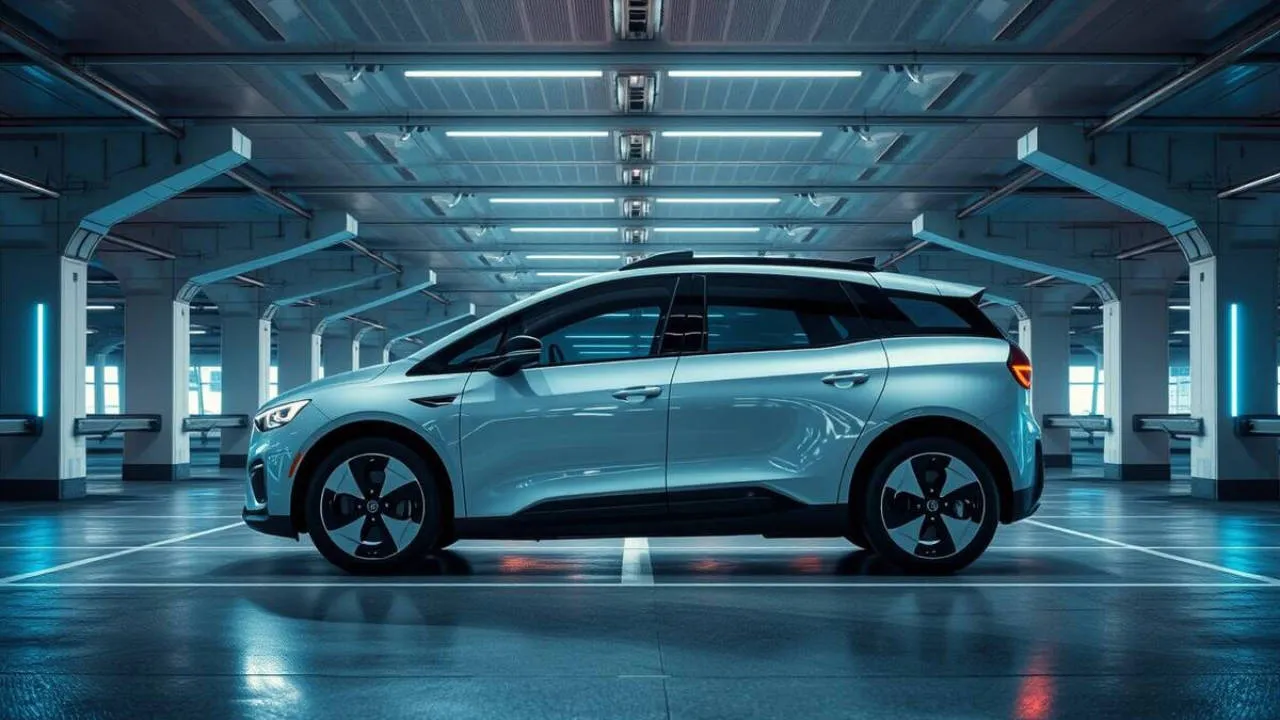
Geely Auto Group has announced two major breakthroughs in self-driving technology at CES 2026. The Chinese automaker revealed Full-Domain AI (Artificial Intelligence) 2.0 and G-ASD (Geely Afari Smart Driving)—systems designed to bring self-driving cars closer to reality for everyday drivers.
 AI Quick Summary
At CES 2026, Geely Auto Group unveiled significant self-driving advancements with its Full-Domain AI 2.0, a unified "super AI brain" integrating all vehicle systems, and G-ASD, an advanced autonomous driving system. These technologies, backed by extensive real-world data and powerful hardware, are poised to launch Level 3 highway autonomy and Level 4 low-speed city capabilities, including robotaxis, across Geely brands in 2026.
This summary was generated by AI using this article’s content.Read Next
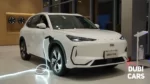
What is Full-Domain AI 2.0 and How Does It Work?
Full-Domain AI 2.0 represents a major step forward from Geely’s previous AI system. Instead of multiple separate intelligent systems working independently, the new version brings them all together under one unified “super AI brain” that coordinates everything in your car simultaneously—from driving experience to safety features and suspension control.
- Previous system (AI 1.0): Operated like separate departments that didn’t communicate
- New system (AI 2.0): Functions as a single, coordinated team where systems share information instantly
- Real-time coordination: The AI brain adjusts driving and safety features based on road conditions
- Better decision-making: Multiple vehicle systems working together respond faster to unexpected situations
Think of it like upgrading from multiple separate robots to one intelligent co-driver who handles all tasks at once.
What is G-ASD and Why Should Drivers Care?
G-ASD stands for Geely Afari Smart Driving. It’s Geely’s newest self-driving system that combines advanced AI technology, real-world driving information, and powerful sensors to help cars drive themselves more safely. The system has been tested on millions of real vehicles and is already operational on Lynk & Co vehicles (Geely’s luxury brand).
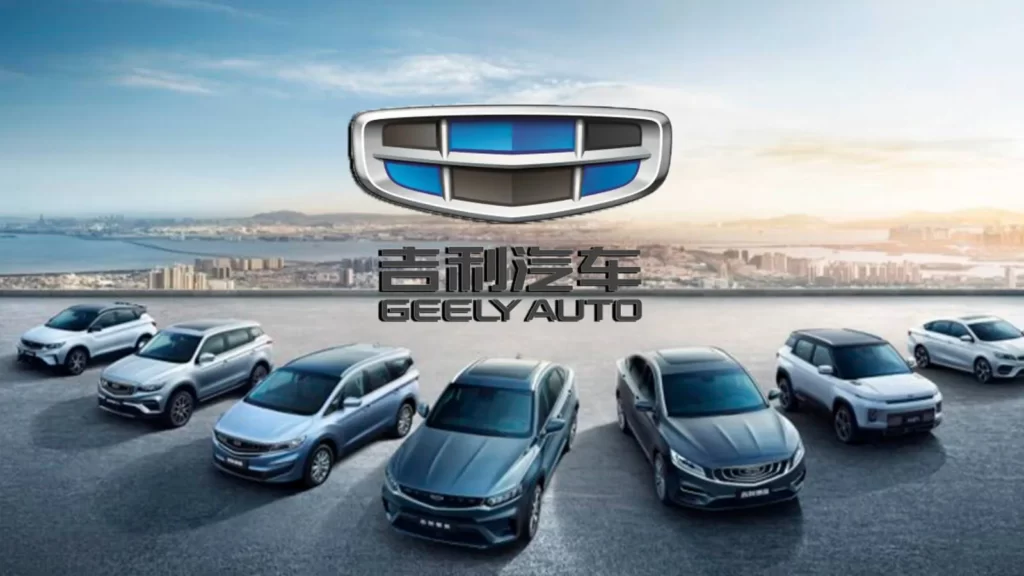
Key features include:
- Learns from billions of kilometres of actual driving data
- Powered by AI models containing over 100 billion data points
- Uses 31 sensors and lidar (laser detection) to “see” the road
- Autonomous parking in underground car parks now works without human input
- Handles complicated traffic situations effectively
Understanding Autonomous Driving Levels: L3 and L4
The industry uses a numbering system to describe how much a car can drive itself. Geely plans to reach Level 3 (L3) and Level 4 (L4) autonomy in 2026.
| Level 2 | Level 3 (L3) | Level 4 (L4) |
| AI assists; driver controls car | Car drives itself; driver must be ready to take over | Car drives completely; no driver needed |
| Cruise control, lane-keeping assist | Highway driving; traffic jams | Robotaxis, autonomous shuttles, delivery vehicles |
Geely plans to launch both L3 capabilities (for highways) and L4 capabilities (for city driving at lower speeds) in 2026. This would enable robotaxi services—self-driving taxis with no human driver inside.
Hardware and Computing Power
Geely offers two hardware levels for G-ASD, similar to choosing between standard and premium computers:
G-ASD H7 System:
- 31 sensors (cameras, radar, and detection equipment)
- Nvidia Drive Thor processor (700 TOPS computing power)
- Suitable for highway driving assistance
G-ASD H9 System:
- 31 sensors plus 5 lidar units (laser sensors)
- Two Nvidia Drive Thor processors (1,400 TOPS)
- Better suited for complex city driving and robotaxi operations
The 700-1,400 TOPS computing power represents a specialized AI supercomputer built into your car.
Geely’s 2026 Roadmap
Geely has been explicit about its roadmap for 2026:
- Highway L3 and Low-Speed L4 capabilities launching in 2026
- Robotaxi operations where government permits
- 10 new models rolling out with these systems across Geely, Lynk & Co, and Zeekr brands
- 3.45 million vehicles sales target (up from 3.02 million in 2025)
These timelines depend on government approval, as autonomous driving regulations vary significantly by country.
What Makes Geely’s Approach Different?
Geely leverages Volvo’s safety heritage (its Swedish parent company’s reputation for vehicle safety) and claims its unified AI architecture (AI 2.0) differs from competitors by integrating all vehicle systems into one coordinated intelligence rather than multiple separate systems.
The company uses real-world driving data from 8.5 million vehicles (10 billion kilometres accumulated) and 25 million training videos to teach its AI system. Geely faces competition from Tesla’s Full Self-Driving, Huawei’s ADS (Advanced Driving System), and Waymo’s robotaxi services.
Is This Real or Just Marketing?
Unlike many self-driving announcements, Geely has tangible proof:
- Already deployed: G-ASD (previously known as G-Pilot) runs on Lynk & Co vehicles today via software updates
- Real-world testing: The system has learned from billions of kilometres of actual driving
- Live features now: Autonomous parking in underground car parks is already operational
- Regulatory approval: China has approved L3 autonomous vehicles; Geely is working toward L4 approval
Geely’s announcement at CES 2026 marks a genuine step toward everyday self-driving cars. The company has positioned itself as a serious contender in the global autonomous vehicle race, though the journey from announcement to widespread adoption will take several more years for automotive enthusiasts and consumers interested in the future of mobility.
Find the best used cars for sale in the UAE.
Stay tuned to UAE’s most popular auto blog for more information about the latest happenings in all of the Emirates.
FAQs
What is Geely Full-Domain AI 2.0?
Geely’s unified “super AI brain” coordinates all car systems—driving, safety, chassis, cockpit—in real time, unlike previous fragmented AI 1.0. Enables smarter, faster vehicle decisions across domains.
What does G-ASD stand for, and what can it do?
G-ASD (Geely Afari Smart Driving) is Geely’s self-driving system using 100B+ parameter AI, 31 sensors, and lidar. Handles complex traffic, autonomous underground parking is already live on Lynk & Co cars.
When will Geely launch Level 3 and Level 4 autonomy?
2026 targets: Highway L3 (driver ready to take over) and low-speed L4 (fully autonomous city driving, robotaxis). Depends on regulatory approval by the country.
How powerful is G-ASD hardware?
H7: 31 sensors, Nvidia Thor (700 TOPS) for highways. H9: +5 lidars, dual Thor (1,400 TOPS) for city/robotaxis. Trained on 10B km of real-world data from 8.5M vehicles.
Is Geely’s self-driving tech real or just promises?
Real progress: G-ASD (formerly G-Pilot) is already operational via OTA updates. L3 approved in China. Beats hype with live features, massive real-world testing data.
Follow us on

Recent Stories
Toyota’s First Electric Car In The UAE: Toyota bZ4X Touring Launched At AED 184,900
For the first time in a partnership that stretches back to 1955, Al-Futtaim Motors and Toyota UAE have launched a...
Porsche Mission S Revealed: New Mid-Engine Supercar To Sit Above The 911
Porsche has revealed the all-new Mission S, a stunning supercar concept that offers a glimpse into the brand’s future. Unveiled...
Flying Tesla Roadster Unveiled: 0 to 100 km/h in Under a Second
Tesla has finally unveiled its long-awaited second-generation Roadster, and this electric sports car has quite a few tricks up its...

DubiCars Launches ‘Find It On DubiCars’
Whatever car you’re thinking of, Find It On DubiCars. A sensible Toyota for the daily commute. A seven-seat SUV for...
All-New Toyota Hilux 2027 Launched In The UAE At AED 107,900
The wait is finally over! The all-new Toyota Hilux 2027 has arrived in the UAE, bringing a fresh design, a...

New 2026 Jeep Wrangler Moab 392 Launched In UAE: The HEMI V8 Is Back!
The V8-powered Jeep Wrangler is back, and it still means business! The 2026 Jeep Wrangler Moab 392 has officially launched...