
Great Wall Motor Reveals 4.0-Litre V8 at CES 2026 in Strategic Power Shift
 March 12, 2026
, 7 Min Read
March 12, 2026
, 7 Min Read
For much of the past five years, the global automotive narrative has been neatly divided along technological lines. China became the undisputed leader in batteries, electric motors, and large-scale EV manufacturing, while Europe and Japan retained their authority over complex internal combustion engines. If you wanted cutting-edge battery tech, you bought Chinese. If you wanted a refined, high-performance engine, you looked elsewhere.
 AI Quick Summary
Great Wall Motor (GWM) unexpectedly unveiled a new 4.0-litre twin-turbo V8 engine, signaling China's ambition to compete at the highest level of mechanical engineering, not just in EVs. This strategic move aims to overcome a "glass ceiling" for Chinese luxury SUVs in markets like the Middle East, where powerful engines are crucial for luxury perception and aspirational appeal. Developed with advanced hybrid integration and designed for extreme conditions, the V8 fills a market gap left by rivals downsizing, enhancing the credibility of GWM's premium models.
This summary was generated by AI using this article’s content.Read Next

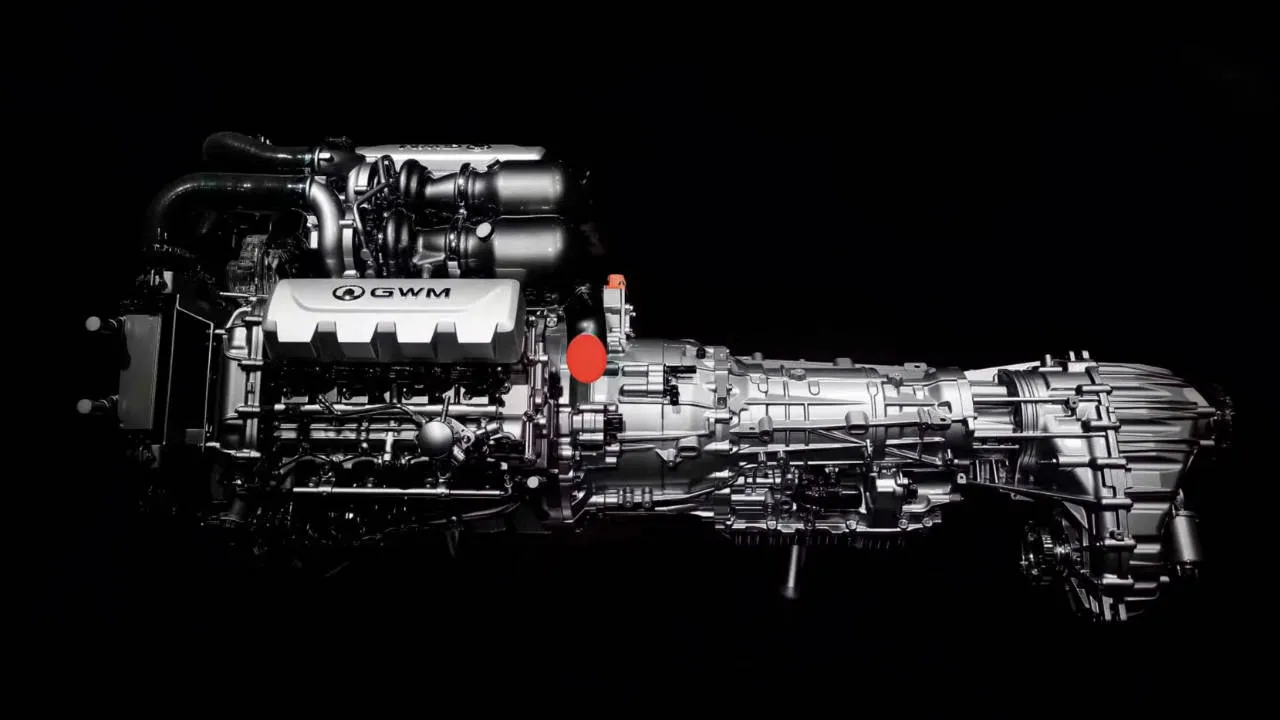
At CES 2026, a venue better known for artificial intelligence, consumer electronics, and autonomous technology, Great Wall Motor delivered one of the most unexpected automotive statements of the decade. Instead of another electric concept, the company unveiled a newly developed 4.0-litre twin-turbocharged V8 engine.
This was not a nostalgic indulgence or a last gasp for combustion engines. It was a calculated declaration that China is ready to compete at the highest level of mechanical engineering, on terms long dominated by Europeans, Japanese, and American manufacturers.
The glass ceiling facing Chinese luxury SUVs
To understand why this engine matters, particularly for the Middle East, it is important to recognise the problem Chinese luxury brands have struggled to overcome. Their vehicles are often exceptional on paper. Interiors rival those of ultra-luxury marques, technology is cutting-edge, and ride comfort frequently exceeds expectations.
Yet in markets such as the UAE, Saudi Arabia, and Russia, perception is shaped as much by what sits under the bonnet as what surrounds the driver. A flagship SUV powered by a small-displacement four-cylinder engine, no matter how turbocharged, undermines the promise of luxury. In regions where vehicles like the Toyota Land Cruiser and Nissan Patrol Y62 have become cultural icons, effortless torque and engine character remain non-negotiable.
This disconnect has been the final glass ceiling for Chinese brands. It forced them to compete on value rather than desire, positioning them as sensible alternatives rather than aspirational choices.
A counter-trend strategy as rivals downsize
What makes GWM’s decision particularly striking is the timing. The global industry is actively moving away from large-capacity engines. Toyota replaced the Land Cruiser’s V8 with a V6. Nissan followed with the Nissan Patrol Y63. Even premium European brands have reduced cylinder counts outside their performance sub-brands.
This shift has left a clear gap in the market. There remains a loyal and affluent customer base that values the sound, smoothness, and character of a V8, especially in large SUVs designed for towing, highway cruising, and desert use. GWM has identified this vacuum and moved decisively to fill it.
By developing this engine in-house, the company is also making a broader statement about its engineering maturity. A modern V8 is one of the most demanding engine architectures to design, balance, cool, and package. Mastering it signals a transition from fast follower to genuine innovator.
A closer look at the 4.0-litre twin-turbo V8
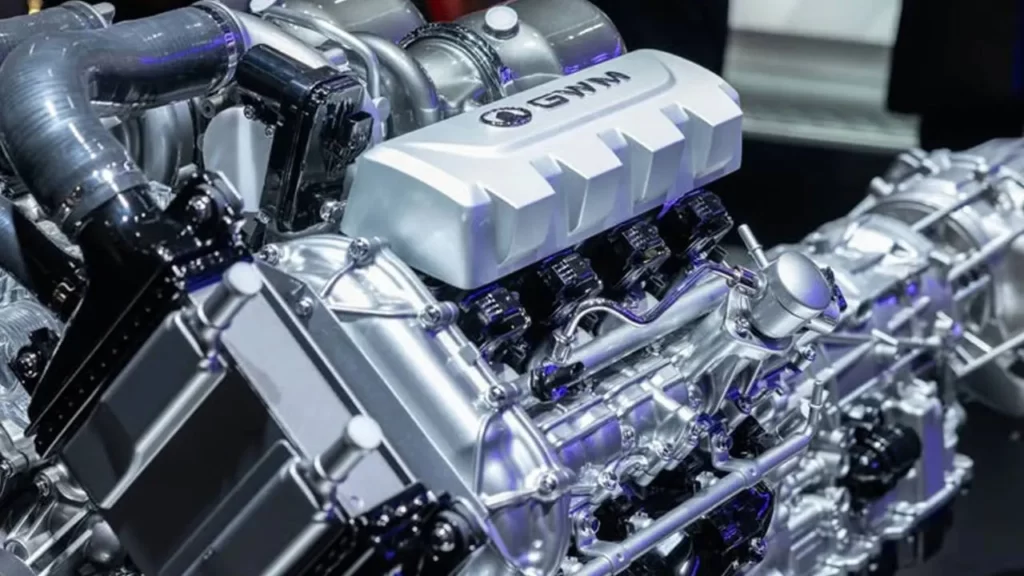
While final output figures have not yet been published, the technical details revealed point to a thoroughly modern power unit. The 4.0-litre displacement mirrors the industry standard used by brands such as Mercedes-AMG and Porsche, offering an ideal balance between packaging efficiency and thermal capacity.
The engine is believed to use a hot-V configuration, with turbochargers mounted within the cylinder banks to improve throttle response and reduce turbo lag. More unusually, it operates on the Miller combustion cycle, prioritising thermal efficiency and reduced pumping losses.
On its own, this approach would compromise low-end torque. GWM’s solution is hybridisation.
Hybrid integration with a clear purpose
This V8 has been engineered specifically for GWM’s Hi4-T longitudinal hybrid platform. It is paired with a 9-speed hybrid automatic transmission that integrates a powerful P2 electric motor directly into the drivetrain.
The result is a complementary system rather than a compromise. The electric motor delivers instant torque from standstill, masking the Miller cycle’s low-speed weakness, while the V8 provides sustained power at higher speeds and under heavy load. Combined outputs are expected to comfortably exceed 800 Nm, while still meeting modern emissions requirements.
Designed with the Gulf in mind
Crucially for the UAE and wider GCC region, GWM has clearly engineered this powertrain for extreme conditions. A front-mounted, water-cooled intercooler helps maintain stable intake temperatures during high ambient heat, while a dual-injection fuel system combines high-pressure direct injection with port injection.
This approach improves combustion efficiency and addresses long-term reliability by preventing carbon buildup on intake valves, a known issue in many modern performance engines. The message is clear: this engine is designed to survive real-world use, not just pass laboratory tests.
Where this engine is likely to appear
The arrival of a V8 fundamentally reshapes GWM’s premium ambitions. Several models now gain immediate credibility.
The Tank 800, often described as the “Chinese Cullinan,” finally has the powertrain to match its scale and luxury, positioning it as a genuine alternative to the Mercedes-Maybach GLS and Cadillac Escalade.
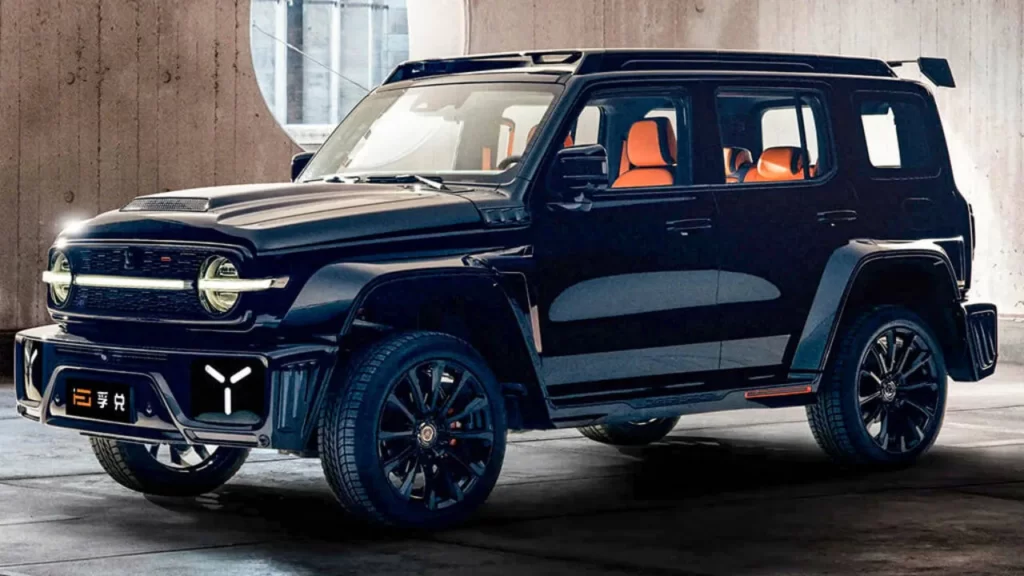
The Tank 700, already the most aggressive and performance-focused model in the lineup, could become a compelling rival to high-performance SUVs if offered with this V8.
Meanwhile, a limited-run V8 Tank 500 would likely resonate strongly in the Gulf, offering traditional engine character at a time when many long-established rivals are moving away from it.
The unveiling of GWM’s 4.0-litre twin-turbo V8 represents more than a new engine programme. It marks a shift in how Chinese manufacturers want to be perceived. This is no longer about undercutting rivals on price or overwhelming buyers with features. It is about earning respect through engineering depth.
For consumers in the UAE, the implications are significant. The V8 is not disappearing. It is simply emerging from an unexpected source. If GWM delivers on its performance and reliability promises, it will not just be selling vehicles; it will be redefining what Chinese luxury means on the global stage.
Find the best Chinese cars for sale in the UAE.
Stay tuned to UAE’s most popular auto blog for more information about the latest happenings in all of the Emirates.
FAQs
Which cars will use the new GWM V8 engine?
The engine is confirmed for the upcoming flagship Tank 800 luxury SUV (the “Chinese Cullinan”). It is also expected to power high-performance variants of the Tank 700 and a future halo sports car to rival AMG models.
What are the specs of the GWM 4.0L V8?
It is a 4.0-litre twin-turbo V8 utilising a Miller cycle. While official numbers are pending, it is expected to deliver over 500 hp and 800 Nm+ of torque when combined with the Hi4-T plug-in hybrid system.
Will the GWM V8 engine be available in the UAE?
Yes. The Middle East is a primary target market. The V8 directly addresses local demand for large-displacement engines in luxury SUVs, filling the void left by competitors (like the Nissan Patrol) downsizing to V6.
Why is GWM building a petrol V8 in 2026?
To establish prestige and mechanical mastery. GWM is using the V8 to elevate its brand image from “budget alternative” to a true luxury competitor, capturing enthusiasts who feel alienated by the global trend of engine downsizing.
Is the GWM V8 a copy of a Mercedes or Toyota engine?
No. It is a self-developed unit featuring unique engineering choices, such as combining the efficiency-focused Miller cycle with a proprietary 9-speed hybrid transmission (9HAT), making it distinct from existing German or Japanese architectures.
Follow us on

Recent Stories
Top 10 Best Chinese SUVs Under AED 75,000 In The UAE
Chinese SUVs have become a major part of the UAE car market, with several brands now offering compact, family-focused models...
Farizon V7E Electric Van Launched In The UAE: Prices Start At AED 115,000
Jameel Motors has launched the Farizon V7E in the UAE, giving logistics companies, delivery operators, small businesses and service fleets...
New Citroen C5 Aircross Launched In The UAE At AED 106,999
The all-new Citroen C5 Aircross is officially launched in the UAE, bringing a completely redesigned version of the French brand’s...
New 2027 Toyota Land Cruiser FJ Launched In UAE: FJ Cruiser Returns?
The FJ name is back in the UAE, and Toyota has attached it to something even bigger this time. The...
Land Rover Defender Pickup Truck Coming Soon: What We Know So Far
A modern Land Rover Defender pickup could finally be on the way. Recent reports suggest JLR is working with Stellantis...
Porsche Sells Bugatti Rimac Stake: Abu Dhabi Investor Takes 30% Share
Porsche has completed the sale of its stakes in Bugatti Rimac and Rimac Group, bringing approximately €1 billion into Stuttgart...