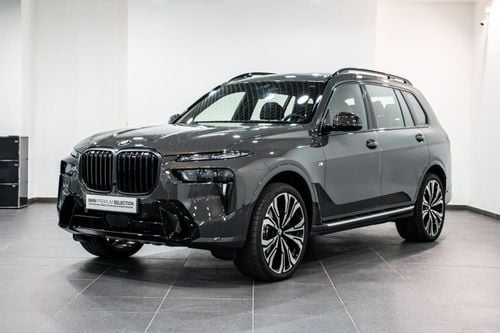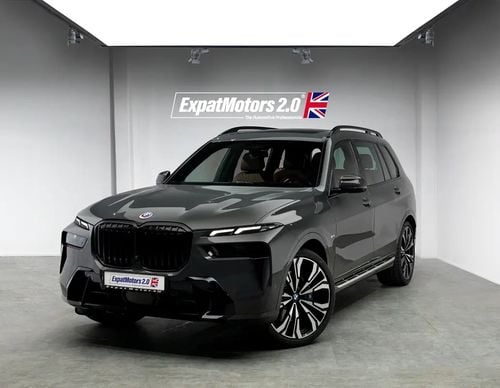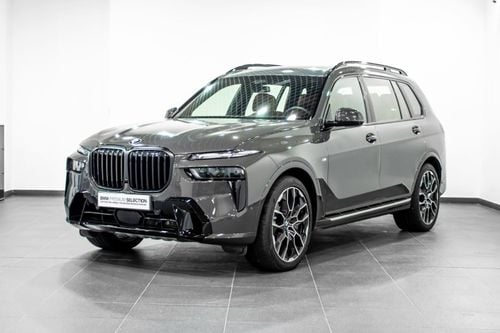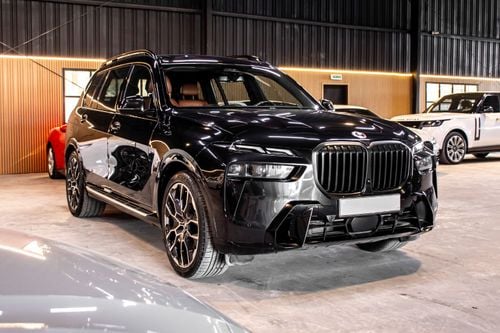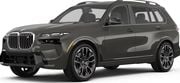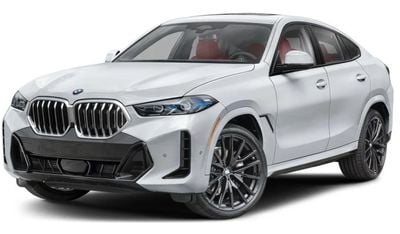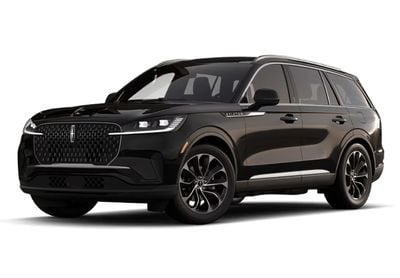

The BMW X7 stands as the most ambitious and luxurious sport activity vehicle ever produced by the storied Bavarian manufacturer, born in Munich, Germany and assembled at the company's Spartanburg plant in South Carolina since production began in late 2018. Built on the flexible CLAR architecture that underpins the brand's flagship saloons, this full-size three-row SUV represents the apex of what the marque can offer in presence, engineering depth, and uncompromising luxury. The 2026 BMW X7 arrives as the most accomplished iteration of the X7 to date, refined inside and out, powered by a choice of mild-hybrid inline-six and twin-turbocharged V8 engines, and channelled to all four wheels through the renowned xDrive intelligent all-wheel drive system. Whether configured for six occupants with captain's chairs or seven across three generous rows, this machine continues to redefine what a true flagship SUV can be.
History and Development
The story of the BMW X7 is, in many ways, the story of BMW's evolving philosophy towards size, presence, and luxury. For decades, the Bavarian marque resisted the temptation to build a true full-size SUV, content to let the X5 lead its sport activity vehicle lineup. That changed in 2014 when BMW announced its intention to enter the full-size luxury SUV segment, a decision driven by the rising global appetite for large, three-row premium vehicles, particularly in North America, the Middle East, and China. After four years of intensive development, the production X7 was unveiled in October 2018 and entered showrooms as a 2019 model, swiftly establishing the X7 as the new halo of the X family.
The first generation introduced the now-iconic oversized kidney grille that would soon influence the rest of the BMW range, alongside a commanding stance and an interior crafted to rival the brand's own 7 Series flagship saloon. In 2022, BMW gave the X7 a comprehensive mid-cycle update, introducing the controversial split headlight design, a thoroughly modernised cabin built around the iDrive 8 system on a curved display, and the replacement of the M50i variant with the more powerful M60i. The 2026 BMW X7 represents the culmination of that journey, blending matured design, refined engineering, and the latest mild-hybrid technology to stake its claim at the top of the luxury SUV ladder. The BMW X7 price reflects this flagship status and positions the car squarely against the most prestigious German and British rivals.
Exterior Design
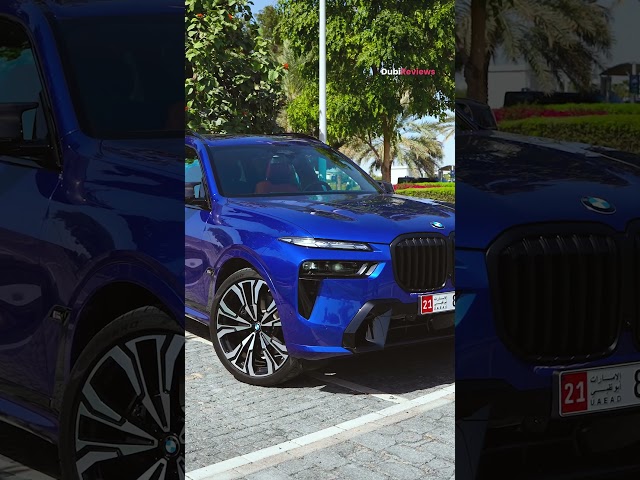
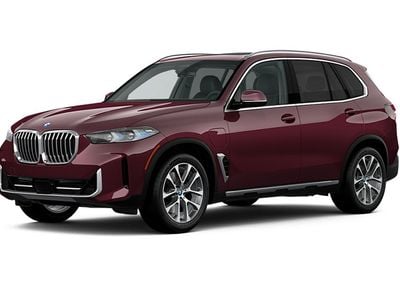
The 2026 BMW X7 makes its presence felt long before you climb aboard. The split headlight arrangement introduced with the LCI update has become a defining signature, with slim daytime running light bars sitting above larger main clusters housing adaptive LED or available laserlight technology. Between them sits the imposing illuminated kidney grille, now one of the largest and most recognisable design elements in modern automotive styling. The bonnet is long and powerfully sculpted, while the tall greenhouse and elevated beltline give the vehicle a true full-size SUV silhouette without sacrificing the athleticism that has long defined BMW design.
In profile, the X7 reveals a stretched 122-inch wheelbase that delivers true three-row capability and a side view dominated by a strong character line running from front fender to rear taillamp. Flared wheel arches house wheels that range from 21 inches as standard up to 23 inches on M Sport options, while subtle aluminium roof rails and frameless doors add a touch of sporting elegance. The rear is anchored by horizontal tail lamps connected by a chrome strip, giving the BMW X7 2026 a wide and planted look from behind. M Sport packages, dark Shadowline trim, and individual paint finishes from BMW Individual all expand the personalisation menu, and the BMW X7 Price will reflect the extent to which a buyer dives into these bespoke options.
BMW X7 Performance and Engine Specifications
Underneath that imposing bonnet, the X7 offers two carefully chosen powertrains designed to satisfy different but equally demanding drivers. The xDrive40i is powered by BMW's silken 3.0-litre turbocharged inline-six, codenamed B58, now equipped with a 48-volt mild-hybrid system that adds an electric boost of around 12 horsepower on demand. Total output stands at approximately 375 horsepower and 398 lb-ft of torque, enough to propel this nearly 5,500-pound machine from 0 to 60 mph in around 5.6 seconds. Power delivery is creamy and linear, with the kind of effortless thrust that makes brisk overtakes feel entirely unhurried.
For those seeking something altogether more potent, the X7 M60i replaces the previous M50i and brings BMW's 4.4-litre twin-turbocharged S68 V8 to the party. Producing 523 horsepower and 553 lb-ft of torque, also assisted by 48-volt mild-hybrid technology, the M60i variant catapults the BMW X7 from rest to 60 mph in just 4.5 seconds. Top speed is electronically limited to 155 mph as standard, though buyers who specify the M Driver's Package can raise that ceiling to 180 mph. Both X7 variants employ rear-biased torque distribution under normal cruising conditions, ensuring the rear-drive feel that BMW enthusiasts have always cherished. The soundtrack from the V8 is muscular yet never crude, a hallmark of BMW M-tuned engines, and the BMW X7 price for the M60i sits a meaningful step above the inline-six.
Transmission and Drivetrain of the 2026 BMW X7
Both engines in the 2026 BMW X7 send their power through a ZF-sourced 8-speed Steptronic Sport automatic transmission, a gearbox widely considered the gold standard in the luxury segment. Shifts are imperceptibly smooth in Comfort mode, where the box prioritises early upshifts to keep the cabin serene, while Sport mode holds gears longer, blips the throttle on downshifts, and responds to the steering-mounted paddles with sharp urgency. Launch Control is available on the M60i, allowing the driver to extract the full performance potential of the V8 with a simple set of pedal inputs.
All variants are fitted with BMW's xDrive intelligent all-wheel drive system as standard, which can shuffle torque between front and rear axles within milliseconds based on grip, throttle, and steering inputs. Two-axle air suspension is standard equipment, automatically lowering the vehicle at speed for stability and raising it for clearance when off-road mode is selected. The Integral Active Steering option adds rear-wheel steering, shrinking the turning circle in tight urban environments while enhancing high-speed stability. Drivers familiar with smaller X-series models will recognise the X7's chassis philosophy as a logical scaling-up. M Sport models include an electronically controlled M Sport differential at the rear axle, and the optional Off-Road Package introduces dedicated Sand, Rocks, Gravel, and Snow modes for true all-terrain capability that few rivals can match.
Interior Comfort and Cabin Technology of the BMW X7 2026
Step inside the BMW X7 2026 and the sense of occasion is immediate. The cabin is built around the BMW Curved Display, which combines a 12.3-inch digital instrument cluster and a 14.9-inch infotainment touchscreen behind a single sweep of glass that gently angles toward the driver. Running the latest iDrive 8 software with natural-language voice control, gesture control, and full smartphone mirroring through wireless Apple CarPlay and Android Auto, the system is responsive and beautifully animated. Material quality has long been a BMW strength, and here it reaches new heights, with Merino leather, open-pore wood, brushed aluminium, and crystal-effect glass for the iDrive controller, gear selector, start button, and volume knob.
Comfort across all three rows is exceptional. Front occupants enjoy multi-contour seats with massage and ventilation, while second-row passengers can choose between a three-seat bench or two heated and ventilated captain's chairs separated by a centre console. The third row, accessed via the power-folding second row, is one of the most usable in the segment thanks to the long wheelbase and tall roofline. Boot capacity ranges from 326 litres with all seats up to 2,120 litres with both rear rows folded, accessed through a two-piece power tailgate. Every X7 ships with BMW Live Cockpit Professional, while the optional Bowers & Wilkins Diamond Surround Sound System with 1,965 watts and 20 speakers, four-zone climate control, and a panoramic Sky Lounge LED roof elevate the experience further. The BMW X7 price climbs steadily as these comfort options are specified, but the cabin atmosphere this car creates is without rival in the BMW range.
Safety Technology in the BMW X7 2026
The 2026 BMW X7 protects its occupants with a sophisticated suite of active and passive safety systems, befitting its status as the brand's flagship SUV. Standard driver assistance technology includes Frontal Collision Warning with Automatic City Collision Mitigation, Lane Departure Warning, Blind Spot Detection, Rear Cross-Traffic Alert, and a comprehensive Active Driving Assistant package. The optional Driving Assistance Professional Package adds Active Lane Keeping Assistant with side collision avoidance, Steering and Lane Control Assistant, Traffic Jam Assistant up to 40 mph, and Extended Traffic Jam Assistant which permits hands-off driving on mapped highways under defined conditions.
The body structure benefits from the inherent rigidity and crash energy management of BMW's CLAR platform, with extensive use of high-strength steel and aluminium throughout. Eight airbags are fitted as standard, including front, side, knee, and full-length curtain airbags covering all three rows. A 360-degree Surround View camera system, automatic Parking Assistant Plus, and the available Reversing Assistant, which can autonomously retrace the last 50 metres travelled forwards, all combine to make low-speed manoeuvring effortless. Although BMW does not always submit the X7 to the IIHS or Euro NCAP for evaluation, the closely related X5 has consistently achieved Top Safety Pick Plus status and five-star ratings, indicating the level of protection engineered into this model. Night Vision with pedestrian detection is offered for buyers wanting an additional layer of awareness in low-light conditions.
The Enduring Legacy and Lasting Appeal of the BMW X7
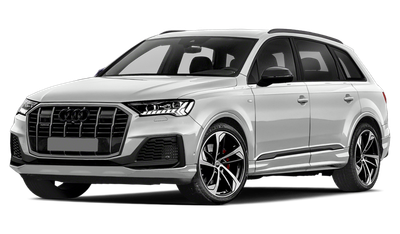
In a segment crowded with capable contenders, the BMW X7 has carved out a distinctive identity built on the brand's traditional strengths of refined dynamics, exquisite engineering, and authentic driver engagement, all scaled up to flagship proportions. While the Mercedes-Benz GLS leans towards the limousine-on-stilts experience and the Range Rover prioritises off-road heritage and country-house elegance, the X7 stakes a unique middle ground, blending serious luxury with the kind of composed, balanced road manners that have always defined BMW. The Audi Q7 and Q8 may offer slightly different design language, and the Cadillac Escalade and Lexus LX bring their own cultural appeal, yet none combines straight-six and V8 charisma, three-row practicality, and authentic driving feel with quite the same coherence as this car.
Ownership of the BMW X7 also brings access to the full BMW ConnectedDrive ecosystem, over-the-air software updates, and BMW Individual personalisation, allowing each example to feel uniquely tailored to its owner. The X7 has earned a particularly strong following across the GCC region, where its scale, presence, and standard xDrive system suit both desert highways and dense city streets. The 2026 BMW X7 has matured into a vehicle that delivers on its ambitious brief, refined where it once felt overt and confident where it once felt experimental. Pricing remains commensurate with its position, and the BMW X7 price reflects not only the engineering and equipment but also the prestige of owning the largest and most luxurious SUV in the entire BMW portfolio. For the buyer who wants presence without flamboyance, performance without compromise, and luxury that engages rather than isolates, this machine remains, quite simply, in a class of its own.
Read more