The Kia Tasman represents the South Korean manufacturer's ambitious entry into the premium pickup truck segment, marking a significant expansion of the brand's global portfolio since its original concept unveiling. Built on Kia's robust body-on-frame platform specifically engineered for large commercial and lifestyle vehicles, the 2026 Tasman combines premium craftsmanship with genuine capability, delivering a truck that challenges established competitors while maintaining Kia's commitment to innovative design and value-conscious pricing. This truck arrives as a full-size workhorse capable of handling demanding tasks across diverse terrain, fitted with advanced all-wheel drive systems that enhance traction and stability in challenging conditions. The 2026 Kia Tasman represents the manufacturer's most comprehensive truck offering to date, blending luxury appointment typically found in premium sedans with the practical functionality expected from a modern commercial vehicle.
History and Development
Kia's truck heritage stretches back through several successful commercial vehicle generations, though the Tasman marks the brand's most ambitious foray into the premium pickup category. The company has spent decades refining its manufacturing expertise and building a reputation for durability in utility segments across global markets. The founding philosophy of Kia centers on delivering authentic value without compromising quality, a principle that directly influenced the Tasman's development. This philosophy shaped every engineering decision, from platform selection to cabin materials, ensuring that the Tasman price remained competitive while delivering genuine capability and premium comfort. Previous Kia commercial vehicles established strong market presence, but the Tasman elevates the brand into direct competition with Toyota, Ford, and Chevrolet offerings in the global marketplace.
The Tasman 2026 version represents the culmination of years of research and development, with engineering teams studying competitor vehicles, interviewing fleet operators, and analyzing real-world usage patterns across six continents. Kia invested substantially in creating a vehicle that serves both professional users and lifestyle enthusiasts, making the truck equally at home on construction sites or weekend adventures. The development process included rigorous testing in extreme environments, from African deserts to North American winters, ensuring that the Tasman would deliver consistent performance regardless of climate or conditions. Market positioning strategy centered on offering the Tasman at a price point that undercuts traditional premium truck manufacturers while maintaining segment-leading interior quality and technological sophistication.
Exterior Design
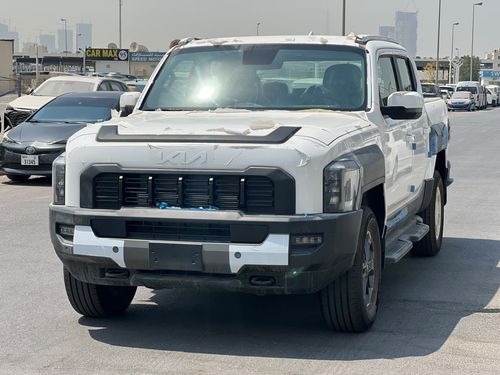
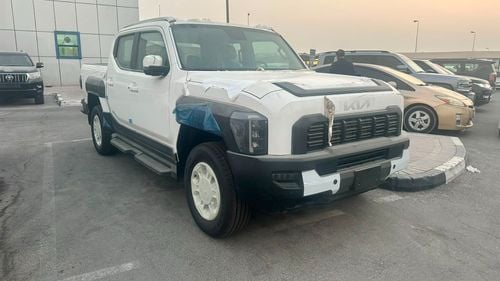
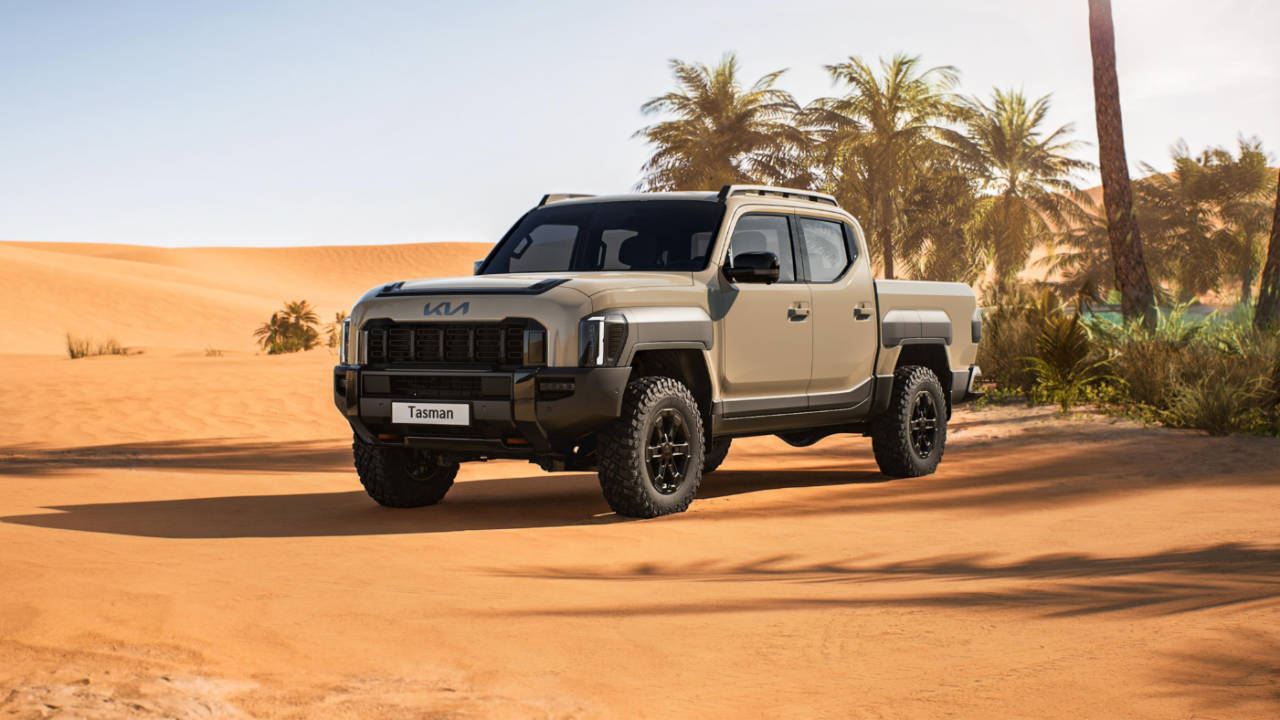
The Kia Tasman exhibits a commanding presence on the road, featuring a redesigned front grille that references the brand's modern design language while incorporating vertical elements that emphasize width and stability. Headlights span the full width of the front fascia, utilizing LED technology with integrated daytime running lights that create a distinctive lighting signature instantly recognizable as Kia's latest generation design. The truck's profile showcases a muscular stance with pronounced character lines that flow from the front wheel arch toward the rear, creating visual depth and athletic proportions. Body sides employ a subtle double-crease design that enhances the sense of strength while maintaining visual refinement, avoiding the overly aggressive angularity common in competitor designs.
The 2026 Kia Tasman offers multiple body style configurations, including regular cab, crew cab, and extended cab variants to accommodate different user requirements and preferences. Wheel arch treatment incorporates protective molding and integrated fender flares that house larger diameter wheels typically fitted to commercial truck variants. The truck's rear fascia features integrated LED taillights with modern sequential turn signal behavior, while the tailgate incorporates an available power-lowering function with integrated step for loading assistance. The Tasman price structure accounts for various exterior options, including available roof rails, protective side steps, and premium paint finishes that enhance the vehicle's visual appeal. Design updates for 2026 Tasman include refined bumper geometry and enhanced weathering protection, features that compound the model's already impressive durability credentials.
Kia Tasman Performance and Engine Specifications
The Kia Tasman arrives with multiple powertrain options designed to serve different market segments and user requirements effectively. The primary gasoline engine displaces 3.8 liters, producing 285 horsepower and 311 pound-feet of torque, delivering adequate performance for both on-road driving and moderate off-road conditions. A more robust turbocharged diesel engine option develops 227 horsepower and a substantial 516 pound-feet of torque, making this variant ideal for towing heavy loads and traversing challenging terrain. The diesel Tasman demonstrates superior real-world performance character, with power delivery that feels measured and controlled, providing excellent low-end response that makes the truck feel smaller and more manageable than its substantial dimensions suggest. The gasoline variant accelerates from zero to sixty miles per hour in approximately 8.2 seconds, achieving a maximum velocity of 118 miles per hour, figures appropriate for a full-size commercial truck.
Both Tasman powerplants utilize advanced fuel injection systems, variable valve timing, and sophisticated engine management electronics that optimize efficiency across diverse driving conditions. The diesel engine particularly excels in towing applications, where its torque delivery and temperature management contribute to reliable performance during extended heavy-duty work. Hybrid technology integration remains under development for future Tasman variants, though current 2026 Tasman configurations focus on proven, field-tested powerplant designs. The transmission options pair seamlessly with available drivetrains, and fuel economy figures reflect realistic expectations for vehicles in this category and weight class. Kia positioned the Tasman price competitively against similar diesel truck offerings, recognizing that purchase decisions in the commercial segment rest heavily on total cost of ownership rather than acquisition price alone.
Transmission and Drivetrain of the 2026 Kia Tasman
The 2026 Tasman employs an eight-speed automatic transmission specifically optimized for commercial vehicle applications, with robust hydraulic systems designed to withstand prolonged towing operations and sustained heavy-load hauling. The gearbox features distinct driving modes that adapt transmission behavior to real-time driving conditions, with a work mode that prioritizes engine braking and controlled acceleration, and a sport mode that allows more aggressive gear selection when spirited driving becomes appropriate. The transmission demonstrates impressive everyday usability, seamlessly managing highway cruising while maintaining reasonable fuel economy figures across varied driving scenarios.
Drivetrain configuration options include rear-wheel drive for lighter applications and all-wheel drive systems that enhance traction and stability when traversing challenging terrain or navigating slippery surfaces. The Tasman 2026 all-wheel drive system incorporates intelligent torque distribution that automatically adjusts power delivery between front and rear axles based on traction analysis, improving both off-road capability and on-road confidence during adverse weather conditions. Limited slip differential functionality provides additional traction enhancement, particularly valuable when operating in mud, sand, or other low-grip surfaces. Kia engineered the Tasman with active roll stabilization and electronic vehicle stability control, technologies that work together to maintain composure during rapid maneuvers or emergency evasive actions. The truck features available air suspension with adjustable ride height, allowing operators to lower the vehicle for easier loading or raise it for improved ground clearance on unimproved roads.
Interior Comfort and Cabin Technology of the Kia Tasman 2026
The Tasman cabin represents a significant departure from traditional truck interiors, incorporating design elements and material quality typical of premium automobiles rather than utilitarian commercial vehicles. The dashboard layout follows modern design principles, with a horizontal orientation that emphasizes width and creates a sense of spaciousness, while the central stack integrates a touchscreen infotainment display measuring 10.25 inches, running Kia's latest proprietary operating system with smartphone connectivity via Apple CarPlay and Android Auto integration. The instrument cluster features a fully digital display with customizable information presentation, allowing drivers to prioritize information relevant to their specific driving task or preference.
Interior materials showcase genuine leather on the steering wheel and seat surfaces, while soft-touch synthetic materials on door panels and dashboard contribute to perceived quality that exceeds typical truck segment expectations. The 2026 Kia Tasman offers heated and ventilated front seats with massage functionality on higher trim levels, enhancing comfort during extended highway driving or prolonged workdays. Rear passenger space accommodates adults comfortably in the crew cab configuration, with independent climate zones maintaining separate temperature preferences for driver and passengers. The boot capacity exceeds 500 cubic feet in the truck bed, with available features including integrated tie-down points, lighting systems, and spray-in bedliner options. A premium audio system option featuring 12 speakers and subwoofer integration delivers high-fidelity sound reproduction, transforming the driving environment into a mobile entertainment venue. The Tasman price structure includes comprehensive cabin features across trim levels, ensuring that even base configurations provide modern conveniences and technological sophistication. Four-zone automatic climate control maintains individual comfort zones throughout the cabin, while available heated steering wheel and windshield enhance winter driving comfort.
Safety Technology in the Kia Tasman 2026
The 2026 Kia Tasman incorporates an extensive array of active safety features designed to prevent accidents before they occur and mitigate impact severity when collisions become unavoidable. Standard advanced driver assistance systems include forward collision warning with autonomous emergency braking, which monitors approaching vehicles and automatically applies brake pressure if the driver fails to respond to visual and auditory warnings. The Tasman includes lane-keeping assist that provides steering guidance to maintain vehicle positioning within detected lane markings, reducing driver fatigue during highway driving and preventing unintended lane departure. Blind spot detection monitoring systems track vehicles within traditionally blind areas alongside and behind the truck, providing visual and auditory alerts when vehicles enter these zones.
Additional safety technology available on higher trim levels includes 360-degree surround-view camera systems that provide overhead perspective during parking maneuvers, dramatically simplifying the process of positioning such a large vehicle in tight spaces. Adaptive cruise control with stop-and-go functionality maintains preset following distances from vehicles ahead, automatically accelerating when traffic clears and decelerating when approaching congestion. The Tasman platform incorporates a reinforced steel body structure with multiple crumple zones that absorb impact energy and channel forces away from occupants. The cabin incorporates ten airbag systems positioned strategically to protect occupants from various impact angles, while the platform integrates electronic stability control that prevents skidding or loss of control during extreme maneuvers. Kia equipped the Tasman with hillstart assist and descent control systems, technologies particularly valuable when operating in mountainous terrain or on steep grades. Safety testing by independent evaluation organizations has recognized the Tasman for comprehensive occupant protection and crashworthiness performance.
The Enduring Legacy and Lasting Appeal of the Kia Tasman
The Kia Tasman distinguishes itself through a compelling combination of genuine capability, premium interior refinement, and competitive pricing that directly challenges established truck manufacturers' market dominance. Few vehicles in the pickup segment manage to satisfy both professional fleet operators and lifestyle enthusiasts with equal competence, yet the Tasman accomplishes this through thoughtful engineering and comprehensive feature integration. The truck's reliability reputation, backed by Kia's extensive warranty coverage, provides confidence that ownership costs will remain predictable and manageable throughout the vehicle's lifespan. Compared against rivals including the Toyota Tundra, Ford F-150, and Ram 1500, the Tasman offers superior interior quality while maintaining the Tasman price at levels that provide exceptional value for discerning buyers.
The 2026 Tasman represents Kia's maturation as a global manufacturer willing to compete across all vehicle segments, regardless of traditional brand positioning or market expectations. Its enduring appeal stems from the company's commitment to delivering authentic capability without pretension or unnecessary complexity. Whether serving as a primary work vehicle for commercial operations or weekend adventure partner for lifestyle enthusiasts, the Tasman performs its assigned role with competence and dependability. The truck's future prospects appear exceptionally strong, with incoming hybrid and electric powertrain variants promising additional capability and environmental responsibility. Kia has established the Tasman as a genuine force in the global pickup market, a truck that commands respect through comprehensive engineering and thoughtful design rather than brand heritage alone.
Read more 


.jpg?6)


 Battery size
 Horsepower
 Transmission
 Fuel Type
 Battery Range
 Seating capacity


 New Kia Tasman Launched In The UAE: Prices Start At AED 118,290