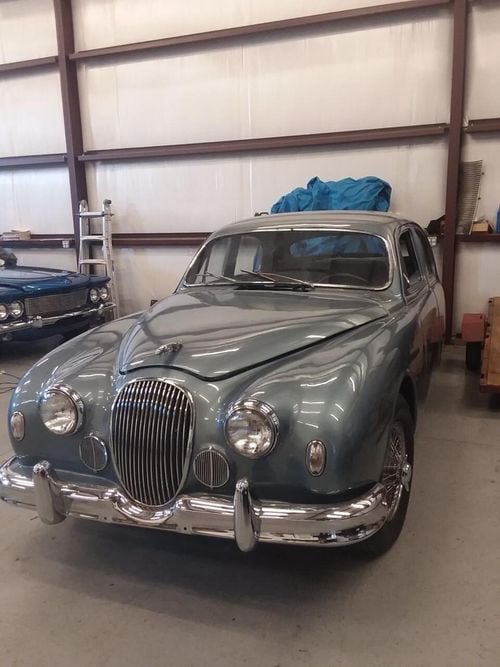

Jaguar MK II

AED 65,000 info-icon

Jaguar MK II Key Specifications

Battery size Battery size
TBD
Horsepower Horsepower
TBD
Transmission Transmission
TBD
Fuel Type Fuel Type
TBD
Battery Range Battery Range
TBD
Seating capacity Seating capacity
TBD seater
Transmission Transmission
TBD
Seating capacity Seating capacity
TBD seater

Jaguar MK II Pros and Cons

What we like
  • Classic Jaguar design
  • Vintage charm
  • Comfortable ride
What we don't like
  • Older model
  • Limited fuel efficiency
  • Potential maintenance costs

Jaguar MK II Overview

Introduction

The Jaguar MK II is a classic midsize luxury sports saloon produced from 1959 to 1967, renowned for its blend of performance, elegance, and craftsmanship. It quickly became one of Jaguar’s most iconic models, popular among both enthusiasts and professionals of its era. The MK II combined British sophistication with strong performance, setting new standards for sports sedans of its time.

Exterior

The exterior of the Jaguar MK II is timeless, with its rounded body lines, chrome detailing, and signature oval grille. Large round headlamps and slim bumpers define its vintage charm. The balanced proportions and sweeping curves gave it a refined yet sporty appearance. Wire-spoke wheels and premium paint finishes highlighted its elegance, making it instantly recognizable as a classic Jaguar.

Interior

Inside, the MK II offered an opulent cabin crafted with fine materials. Polished walnut wood veneers, rich leather upholstery, and deep carpets created a luxurious environment. The dashboard featured classic round dials and chrome switches, blending functionality with style. Passenger comfort was prioritized with well-padded seats, while the driver enjoyed a cockpit designed for engagement and precision.

Safety Features

For its era, the Jaguar MK II introduced several advanced safety features. It was one of the first cars to be fitted with disc brakes on all four wheels, significantly improving stopping power. Strong body construction added to crash protection, while visibility was enhanced with large glass areas. Although lacking modern airbags or electronic systems, it was considered progressive in safety for its time.

Engine Trims

The MK II was offered with a range of straight-six petrol engines, including 2.4L, 3.4L, and the powerful 3.8L variant. The 3.8L was particularly celebrated, offering sports-car-like performance in a luxury sedan body. Transmission options included manual with overdrive or automatic gearboxes. This combination made the MK II one of the most dynamic saloons of the 1960s.

Maintenance

Maintenance of the MK II requires attention to detail, as it is now a classic vehicle. Spare parts are available through specialist suppliers, though upkeep can be costly compared to modern cars. Enthusiasts often invest in careful restoration to preserve originality. With proper maintenance, the MK II retains high value as a collectible classic that continues to impress.

Competitors

The Jaguar MK II competed with luxury sedans of its era such as the Mercedes-Benz 220, BMW Neue Klasse, and Rover P5. While rivals offered solid engineering, the MK II stood out for its performance, style, and prestige. It remains an icon among collectors and enthusiasts, representing the golden age of British motoring.

Jaguar MK II FAQs

  • What is the price of Jaguar MK II in the UAE?

    The price of a Jaguar MK II in the UAE is TBD.

  • What is the fuel economy of Jaguar MK II?

    The manufacturer suggested fuel economy of Jaguar MK II is TBD.

  • What are the trims of Jaguar MK II?

    The trims for Jaguar MK II are .

  • What is the top speed of Jaguar MK II?

    The top speed of Jaguar MK II is TBD.

  • What is the Fuel Tank Capacity of Jaguar MK II?

    The fuel tank capacity of Jaguar MK II is TBD.

Dubicars app on mobile