The McLaren Senna is a track-biased hypercar produced by McLaren Automotive, the British manufacturer based in Woking, Surrey, entering limited production in 2018 as one of the most extreme road-legal vehicles in McLaren's history, named in honour of the legendary three-time Formula One World Champion Ayrton Senna. Built on the McLaren Carbon Lightweight Architecture monocoque and developed with a single overriding objective - the fastest possible lap time on a racing circuit while retaining legal road car status - the Senna represents the ultimate expression of McLaren's Ultimate Series philosophy applied without compromise. The 2026 McLaren Senna, of which just 500 examples were produced, stands as a monument to extreme performance and a tribute to the greatest racing driver of his generation, with 789 horsepower sent to the rear wheels through a seven-speed dual-clutch transmission.
History and Development
The decision to name a road car after Ayrton Senna was not undertaken lightly by McLaren Automotive. The Senna name carries extraordinary weight in motorsport history, associated with performances that transcended the technical and entered the realm of the legendary. McLaren's relationship with Senna extended through eight seasons and three World Championship titles between 1984 and 1993, a partnership that produced some of the most memorable moments in Formula One history. The Senna family's involvement in the car's development and their approval of its name underlines the seriousness with which this tribute was conceived.
The McLaren Senna entered production in 2018, priced at approximately £750,000 and with all 500 units already allocated to customers before the car's public reveal. The development brief was singular and unambiguous: create the fastest McLaren road car ever built around a circuit, prioritising lap time above all other considerations while meeting the regulatory requirements for road legality. McLaren Senna price reflected the extraordinary engineering content and the exclusivity of the production run, with secondary market values rising immediately upon production completion. The 2026 McLaren Senna is among the most coveted and valuable contemporary production cars in the collector market.
Exterior Design
The McLaren Senna's exterior design is the most aerodynamically extreme of any McLaren road car, with every surface, duct, and aperture shaped by the requirement to generate maximum downforce and manage airflow with precision. The front of the Senna features an enormous front splitter, large dive planes at the outer corners, and multiple apertures in the bodywork feeding air to cooling systems, brake ducting, and aerodynamic surfaces beneath the car. The headlights are slim and functional, integrated into the aerodynamic management of the front fascia rather than designed as standalone visual features.
In profile, the Senna's signature feature is its large, complex dihedral door structure incorporating transparent polycarbonate panels that extend into the roof, providing both aerodynamic tunnel function and a transparent visual connection between the driver and the external environment. The enormous active rear wing - capable of generating over 800 kilograms of downforce - dominates the rear view and leaves no ambiguity about this car's purpose. Body panels are made from visible carbon fibre wherever possible, and buyers were given the option of specifying coloured carbon fibre weave patterns through McLaren Special Operations. McLaren Senna price included extensive personalisation, with many examples featuring unique colour combinations worth significant additional investment. The 2026 Senna remains unmistakable among its contemporaries.
McLaren Senna Performance and Engine Specifications
The McLaren Senna is powered by the M840T 4.0-litre twin-turbocharged V8 engine in its most extreme road car state of tune, producing 789 horsepower at 7,250 rpm and 800 Nm of torque from 5,500 rpm. This represents a significant uplift over the 720S specification of the same engine and is achieved through larger turbines, increased boost pressure, revised fuel injection mapping, and an optimised exhaust system. The engine delivers its power with an urgency and conviction that matches the car's aerodynamic drama.
The McLaren Senna accelerates from 0-60 mph in 2.8 seconds, reaches 124 mph from rest in 6.8 seconds, and achieves a maximum velocity of 208 mph - a governed figure limited by aerodynamic drag rather than powertrain capability. The combination of 789 horsepower and just 1,198 kilograms of kerb weight produces a power-to-weight ratio of approximately 659 horsepower per tonne, a figure that places the Senna among the most performance-dense road cars ever produced. On a circuit, the Senna's combination of mechanical grip, aerodynamic downforce, and braking performance produces lap times that approach those of dedicated track-day cars. Buyers considering McLaren Senna price encountered a vehicle whose performance credentials were entirely consistent with its extraordinary cost.
Transmission and Drivetrain of the 2026 McLaren Senna
The 2026 McLaren Senna uses a seven-speed dual-clutch seamless shift gearbox in a rear mid position, driving the rear wheels through an electronic limited slip differential calibrated specifically for the Senna's extreme performance envelope. The gearbox software has been developed with circuit use as the primary objective, providing shift strategies and paddle response times that are sharper and more aggressive than those found in the wider McLaren range. The transmission communicates continuously with the active aerodynamic system to ensure the car's dynamic state is managed coherently across the full range of performance inputs.
The Senna uses a fully active hydraulic suspension system - Proactive Chassis Control II with Race Active Suspension - that lowers the car automatically on track to improve aerodynamic efficiency and adjusts corner-by-corner stiffness in real time based on the vehicle's dynamic state. Coupled with the active rear wing and active front aero elements, the suspension creates a vehicle whose aerodynamic and mechanical behaviour are integrated into a single coherent system managed by the car's central processing unit. The result is a machine that achieves levels of cornering performance on a circuit previously the exclusive domain of dedicated racing cars, while retaining the ability to be driven on public roads.
Interior Comfort and Cabin Technology of the McLaren Senna 2026
The interior of the McLaren Senna 2026 is the most uncompromisingly track-focused cabin environment in any McLaren road car, designed entirely around the requirements of a driver pursuing maximum lap time on a racing circuit. The standard seating specification uses a fixed carbon fibre racing shell with integrated harness points, designed for use with an optional six-point harness when the Senna is being used on circuit. The standard road specification provides seatbelts and airbags in compliance with road car regulations, but the ergonomic philosophy of the interior is derived entirely from racing practice.
The instrument and infotainment architecture is adapted from the 720S but calibrated for track priorities, with the Folding Driver Display in Track mode removing visual distractions while retaining essential performance data. Large polycarbonate panels in the doors and roof flood the cabin with natural light and provide a visceral visual connection to the external environment that enhances the sensation of speed. McLaren Senna price for MSO-specified examples included bespoke carbon fibre weave colours, personalised engine bay detailing, and unique exterior graphics that made many delivered cars effectively one-of-a-kind. Storage and practicality are minimal - this vehicle exists to drive, not to carry.
Safety Technology in the McLaren Senna 2026
The McLaren Senna 2026 is built around the MCLA carbon fibre monocoque, engineered to the extreme structural standards required by a vehicle generating over 800 kilograms of aerodynamic downforce at speed. The monocoque provides exceptional occupant protection in the event of a high-energy impact, with the carbon fibre composite's energy-absorbing properties creating a survival cell of extraordinary rigidity and resilience. Front and rear aluminium subframes are engineered to deform progressively in a collision, directing energy away from the passenger cell.
Active safety management on the Senna is handled through an integration of the proactive suspension, electronic limited slip differential, and stability control systems that work in concert to manage the car's behaviour at the extreme performance levels it is capable of achieving. The active aerodynamic system contributes to stability by increasing downforce proportionally with speed, ensuring that the grip available at the tyres rises as the vehicle's velocity demands increase. Carbon ceramic brakes are standard equipment, providing heat-stable stopping power appropriate to the Senna's circuit performance capabilities. Driver and passenger airbags are standard, alongside all systems required for road car homologation.
The Enduring Legacy and Lasting Appeal of the McLaren Senna
The McLaren Senna occupies a position of permanence in the history of the extreme road car, a vehicle that achieved its singular objective with a completeness and conviction that makes it one of the defining high-performance machines of the modern era. Against contemporaries such as the Ferrari 488 Pista Spider, Lamborghini Aventador SVJ, and Porsche 911 GT2 RS, the Senna argues through the radical coherence of its aerodynamic concept and the extraordinary level of circuit performance it delivers in a road-legal package. The Senna's downforce figures, its braking performance, and its cornering capability set standards that dedicated track machines struggle to exceed.
The name it carries adds a dimension that transcends specification sheets and performance data. The Ayrton Senna tribute is not incidental to this car's identity - it is central to the values that shaped every engineering decision during its development. Pursuit of perfection, refusal to compromise, and an understanding that the boundary between possible and impossible is defined only by the limits of ambition and engineering skill. The McLaren Senna price has risen steadily in the years since production concluded, as the community of enthusiasts who understand this vehicle's significance has continued to grow. The 2026 McLaren Senna is not merely a fast car - it is an argument made in carbon fibre and turbocharged engineering about what a road car can be when greatness is the only acceptable outcome.
Read more 

.png?6)


 Engine
 Horsepower
 Transmission
 Fuel Type
 Mileage
 Seating capacity



.png)

.png)


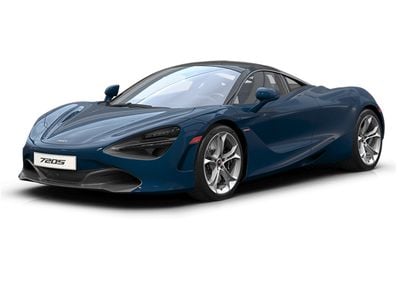 McLaren 720S1,215,000