The Jaguar I-Pace is a British all-electric premium midsize SUV manufactured by Magna Steyr in Graz, Austria, under contract for Jaguar Land Rover, with series production beginning in 2018 as Jaguar's first fully electric vehicle and one of the first purpose-built electric SUVs to challenge established convention in the premium EV segment. Built on a bespoke skateboard-style EV platform with a 90 kWh lithium-ion battery mounted in the floor, the I-Pace employs two electric motors to drive all four wheels with a combined output of 395 horsepower and 696 Nm of torque, delivering the performance and sophistication of a sports car within the practical body of a premium family SUV. The 2026 Jaguar I-Pace stands as the most refined and technically mature version of this pioneering model, representing Jaguar's most comprehensive statement of electric vehicle intent to date.
History and Development
Jaguar's commitment to electrification became concrete with the unveiling of the I-Pace concept at the 2016 Los Angeles Auto Show, a vehicle that announced the brand's electric future with dramatically resolved proportions and an interior architecture that exploited the unique packaging possibilities of an EV powertrain. The production I-Pace went on sale in 2018 to immediate critical acclaim, winning the triple crown of Car of the Year awards that year - the European Car of the Year, World Car of the Year, and World Car Design of the Year - becoming only the second car in history to achieve this remarkable distinction. This achievement validated Jaguar's approach to the I-Pace as a purpose-built EV rather than an adapted internal combustion engine platform, and the car's reception demonstrated that there was a substantial market appetite for a premium electric SUV that prioritized driving dynamics alongside range and charging capability.
The I-Pace has received software updates over its production life that have improved energy management, charging speeds, and infotainment functionality, with over-the-air update capability allowing Jaguar to deploy improvements to the car's software systems without requiring dealer visits. The Jaguar I-Pace price positioned the model firmly in the premium EV segment at launch, competing directly against the Audi e-tron and later the Mercedes-Benz EQC, and the car's distinctive design and superior driving dynamics consistently gave it an advantage in the eyes of buyers who prioritized engagement alongside zero-emission credentials. The 2021 interior update brought the Pivi Pro system to the I-Pace, significantly improving the cabin technology and keeping the 2026 Jaguar I-Pace competitive in a segment where technology expectations have risen sharply since the car's initial launch.
Exterior Design
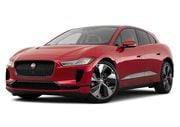
The Jaguar I-Pace presents one of the most distinctive and resolved designs in the premium electric vehicle class, with a silhouette that communicates its EV nature without resorting to the eccentric or alienating styling choices that characterize some segment competitors. The front end is led by a largely sealed grille panel - appropriate to the car's limited cooling requirements - with a slim bright surround that maintains visual continuity with the internal combustion engine Jaguar lineup, flanked by slim LED headlights with daytime running light signatures that carry the brand family identity clearly. The overall front proportions are those of a vehicle that rides lower to the ground than its SUV segment position might suggest, with the battery floor package delivering a centre of gravity lower than many sports saloons.
The body profile of the I-Pace is among the most dramatic in the premium SUV segment, with a steeply raked windscreen, a fast-running roofline, and a near-vertical tailgate creating a fastback-coupe silhouette that gives the car a visual dynamism rare in the family SUV class. The absence of a conventional engine requires no long bonnet overhang, and Jaguar's designers exploited this freedom to create front proportions that are shorter and more cab-forward than any internal combustion engine Jaguar, giving the I-Pace a visual balance that is simultaneously progressive and elegant. Prominent wheel arches frame large alloy wheels with a stance that conveys the car's low centre of gravity and all-wheel-drive capability, and available colours ranging from Photon Red to Eiger Grey allow the I-Pace to be specified with either visual drama or quiet sophistication. The 2026 Jaguar I-Pace price reflects the significant engineering investment embedded in this design and technology.
Jaguar I-Pace Performance and Engine Specifications
The 2026 Jaguar I-Pace is powered by two permanent magnet synchronous electric motors, one driving each axle, producing a combined output of 395 horsepower and 696 Nm of torque that is available from a standstill with the instant delivery characteristic of electric propulsion. This configuration enables the I-Pace to accelerate from 0 to 60 mph in 4.5 seconds, a figure that places it in genuinely performance car territory and one that remains competitive with more recently developed electric SUVs. The 90 kWh lithium-ion battery pack, mounted in the floor structure of the car's skateboard platform, provides an official WLTP range of up to 292 miles on a single charge in favourable conditions, with real-world figures typically ranging between 220 and 260 miles depending on ambient temperature, driving style, and speed.
Charging capability covers three primary scenarios: AC charging at up to 11 kW for overnight home charging that replenishes the battery fully in approximately 8.6 hours, DC rapid charging at up to 100 kW that adds approximately 63 miles of range in 15 minutes, and 50 kW DC charging at public fast chargers. Regenerative braking is standard and configurable to three levels, allowing the driver to set the degree of energy recuperation on the overrun from minimal, which creates a more conventional coasting feel, to high, which enables significant one-pedal driving capability in urban conditions. The Jaguar I-Pace price reflects the substantial battery and dual-motor technology that underpins this performance and range capability, positioning the car as a genuine alternative to the Audi e-tron, BMW iX3, and Mercedes-Benz EQC in the premium electric SUV segment.
Transmission and Drivetrain of the 2026 Jaguar I-Pace
The 2026 Jaguar I-Pace employs a single-speed reduction gearbox on each motor, a configuration standard across electric vehicles of this type that delivers all available torque from zero revolutions per minute and requires no conventional gear changing. This arrangement eliminates the gear change delay inherent in multi-speed transmissions and ensures that the I-Pace's performance is immediately accessible at all times, with the transition from stationary to cruising speed a single, continuous, uninterrupted surge of power that redefines the sensation of acceleration for drivers accustomed to internal combustion propulsion.
All-wheel drive is standard on every Jaguar I-Pace variant, with torque distributed between the front and rear axles by the car's intelligent control software, which monitors wheel slip, road surface conditions, steering angle, and driver demand inputs to optimize traction and dynamic balance in real time. The I-Pace's low centre of gravity - substantially lower than any internal combustion engine vehicle of comparable external dimensions - provides a platform for handling dynamics that more than justify the car's Jaguar badge, with body roll well-controlled and steering providing a level of engagement and feedback that is rare among electric vehicles. An adaptive dynamics system with continuously variable damping is standard, adjusting suspension settings multiple times per second to maintain the ideal balance between comfort and control as road surfaces and driving conditions change.
Interior Comfort and Cabin Technology of the Jaguar I-Pace 2026
The cabin of the Jaguar I-Pace 2026 exploits the packaging freedoms that an EV platform provides to deliver one of the most spacious interiors available in a vehicle of this external footprint, with the battery-in-floor layout eliminating the transmission tunnel that would normally occupy the centre of the front floor and enabling a front footwell of unusual width and openness. The dashboard design is clean and architecturally resolved, with twin screens at the top and bottom of the centre console providing comprehensive control of the infotainment and climate functions while maintaining a less cluttered overall appearance. Premium soft-touch materials extend across all surfaces within the primary occupant contact zone, and available Windsor leather upholstery in multiple colour combinations allows the I-Pace's interior to be specified with considerable individual expression.
The upper touchscreen is a 12.3-inch unit running Jaguar's Pivi Pro software, offering integrated navigation with charging point location and range management capability, wireless Apple CarPlay and Android Auto, and full over-the-air update support for both software and vehicle systems. A separate 5.5-inch climate control screen beneath the primary display manages cabin temperature functions independently, reducing the number of sub-menus required in the main infotainment system. The driver is presented with a 12.3-inch digital instrument display configurable to show range, energy consumption, navigation, and performance data in multiple layout options. Rear passenger accommodation is impressive, with the flat floor between the rear seats creating a genuinely more comfortable middle seat than most rivals offer, and the boot provides 656 litres of load space plus a 27-litre front trunk above the front motor. The Jaguar I-Pace price at comprehensive specification delivers an interior environment of genuine sophistication, with the technology integration to match.
Safety Technology in the Jaguar I-Pace 2026
The 2026 Jaguar I-Pace is equipped as standard with a comprehensive active safety suite that matches the best-equipped premium electric SUVs currently available, covering the full range of driver assistance and accident prevention technologies that this segment's buyers have come to expect. Autonomous emergency braking with pedestrian and cyclist detection, lane keep assist, driver condition monitoring, and traffic sign recognition are all standard, operating together as an integrated system that provides continuous situational awareness support for the driver without becoming intrusive or distracting during normal driving. Adaptive cruise control with steering assist maintains both speed and lane position on motorway driving with a confidence and smoothness that significantly reduces driver fatigue on extended journeys.
Higher specification I-Pace variants are equipped with blind spot monitoring, rear traffic detection, a 360-degree surround camera system, and park assist that steers the vehicle automatically into parking spaces with the driver managing only the brake and accelerator. The bespoke EV platform's battery-in-floor construction provides an unusually low floor-mounted mass that contributes to crash performance by concentrating structural rigidity in the lower body, while the conventional upper body structure provides a rigid safety cell with front and rear crumple zones that manage impact energy effectively. A full complement of airbags protects all five seating positions, and the I-Pace received a five-star Euro NCAP safety rating that provides independent validation of the comprehensive approach to occupant protection that Jaguar built into the car's fundamental architecture.
The Enduring Legacy and Lasting Appeal of the Jaguar I-Pace
The Jaguar I-Pace occupies a genuinely historic position in the development of the premium electric vehicle class, arriving at a moment when the segment was defined almost entirely by a single Californian brand and demonstrating that European luxury manufacturers could build electric vehicles of comparable performance and superior driving engagement. The triple Car of the Year victory of 2019 was not merely a commercial validation but a critical confirmation that Jaguar had created something genuinely important - a vehicle that could be assessed by the same standards of driving dynamics, design quality, and occupant experience as the best internal combustion engine cars and emerge with distinction. That legacy is embedded in the 2026 Jaguar I-Pace, which continues to offer a driving character and design identity that most of its subsequently-developed electric rivals have not surpassed.
Against the Audi e-tron, BMW iX3, and Mercedes-Benz EQC, the I-Pace continues to offer superior driving dynamics and a more dramatically distinctive design, at the cost of a charging infrastructure and dealer support network that the German manufacturers have invested in more heavily in recent years. Against the Tesla Model Y, the I-Pace offers superior interior material quality, a more considered design, and a more engaging driving experience, while acknowledging Tesla's clear advantages in charging network coverage and official range figures. The Jaguar I-Pace price reflects the significance of what it offers - a genuine sports car in SUV clothing, an electric vehicle that drives with the engagement of a sports saloon, and a design that will be recognized as one of the most significant and influential of its era. For those who seek an electric vehicle that feeds the soul as efficiently as it protects the planet, the 2026 Jaguar I-Pace remains the most complete answer the premium electric segment has yet produced.
Read more 



 Battery size
 Horsepower
 Transmission
 Fuel Type
 Battery Range
 Seating capacity


.jpg)


.jpg)
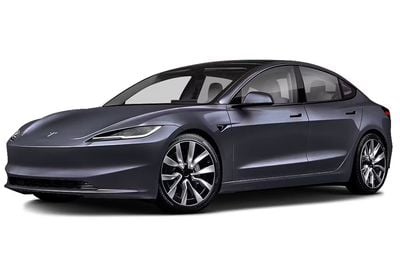 Tesla Model 3154,990
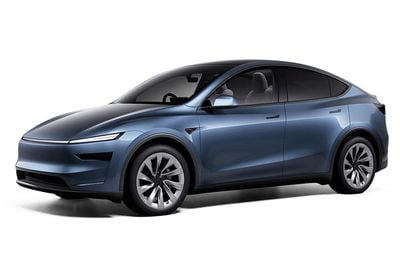 Tesla Model Y174,990
.jpg) Porsche Taycan416,500
Porsche Taycan416,500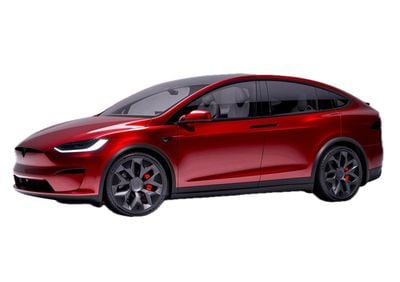 Tesla Model X409,990
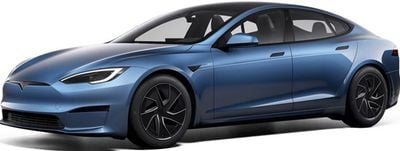 Tesla Model S389,990
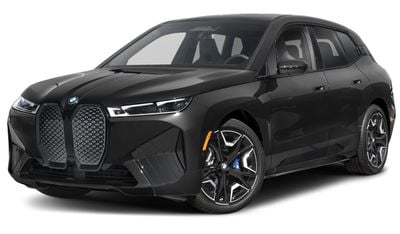 BMW iX430,000
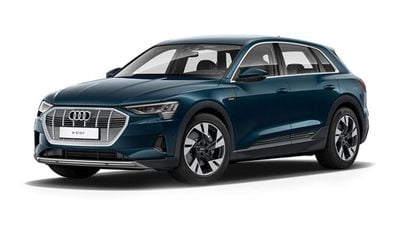 Audi e-tron489,900
.jpg)