Jetour T1 Review
The Jetour T1 is a five-seat SUV positioned below the larger Jetour T2. It combines a boxy design with a modern cabin, strong standard equipment and light off-road capability.
Buyers in the UAE can choose between conventional petrol models and the electrified T1 i-DM plug-in hybrid. Both share the same basic body and interior layout, but there are major differences in power, drivetrain, efficiency, equipment and off-road performance.
Design & Styling
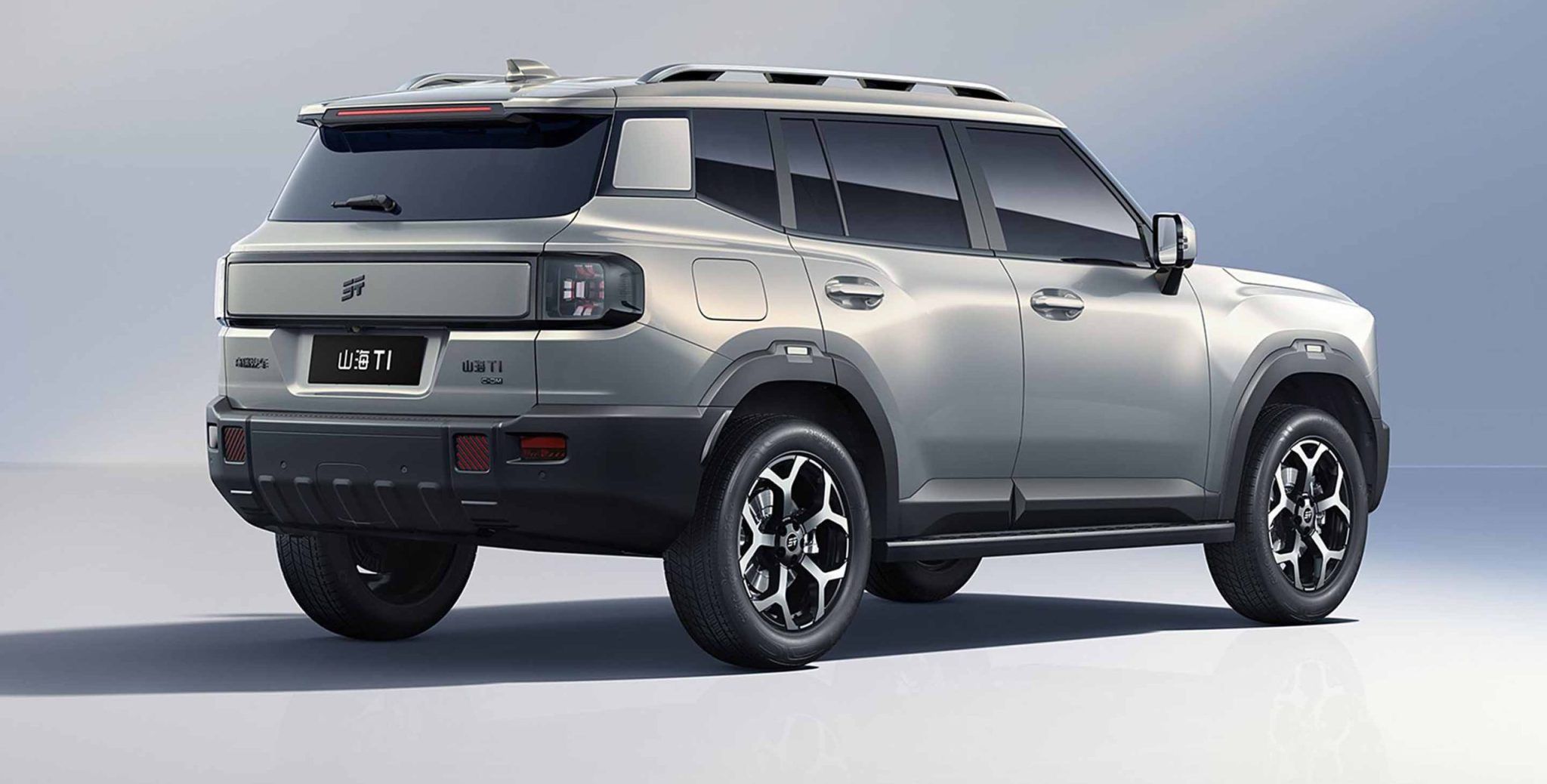
The Jetour T1 has a bold and upright appearance. Its flat bonnet, squared wheel arches, tall roofline and thick body cladding give it the character of a traditional off-road SUV. At the same time, its smoother body lines and compact proportions make it suitable for daily city driving.
Both petrol and i-DM versions measure 4,705mm long, 1,967mm wide and 1,843mm tall, with a 2,800mm wheelbase. The overall shape remains the same, but the i-DM receives several design updates. These include a redesigned illuminated front grille, a horizon-style light bar, revised LED headlight graphics and a different alloy-wheel design. It also gains a charging port on the rear quarter, i-DM badging and additional exterior colour options such as green and sand gold.
The petrol model uses a more conventional grille with prominent Jetour lettering. It also offers black and green as an interior colour combination, while the i-DM is mainly available with black-and-orange or black-and-grey cabin themes.
Engine & Performance
The petrol Jetour T1 uses a 2.0-litre turbocharged four-cylinder engine producing 254hp and 390Nm. It is paired with an eight-speed automatic transmission.
Two drivetrain options are available. The Comfort model uses front-wheel drive, while the Luxury version receives a BorgWarner four-wheel-drive system. The petrol T1 can accelerate from 0–100km/h in approximately 8.6 seconds in 2WD form and 8.8 seconds with 4WD.
The T1 i-DM uses a smaller 1.5-litre turbocharged engine supported by a permanent-magnet electric motor. Together, the system produces 335hp and 530Nm, giving the PHEV a clear advantage in power and torque.
It uses a dedicated single-speed hybrid transmission rather than the petrol model’s eight-speed automatic. Electric assistance also provides the i-DM with smoother, quicker responses during city driving.
However, the UAE-spec T1 i-DM is front-wheel-drive. Despite being more powerful, it does not offer the traction or terrain ability of the petrol 4WD model.
Fuel Efficiency
The petrol model is the simpler option for drivers who frequently travel long distances and do not have regular access to a charging point. Its 70-litre fuel tank also supports longer journeys between refuelling stops.
Efficiency is the i-DM's main advantage. It uses a 26.7kWh lithium iron phosphate battery, offering up to 117km of electric range under WLTC testing. Jetour also claims a total petrol-electric driving range of up to 1,000km.
The battery supports CCS2 charging. A 30 to 80 per cent fast charge takes around 30 minutes, while slower charging from 30 to 100 per cent takes less than four hours.
The i-DM can complete many daily UAE commutes using electric power, provided it is charged regularly. Without frequent charging, the additional weight of the battery and hybrid hardware may reduce its efficiency advantage.
It also supports a 2.2kW external power supply, allowing owners to operate small appliances and camping equipment.
Interior & Features
The T1’s cabin combines rugged styling with modern technology. Its high centre console, squared air vents and large grab handles support the SUV theme, while the large screens and electronic controls give it a more upmarket feel.
Equipment varies between the petrol trims. Depending on the version, the petrol model is offered with either a 12.8-inch or 15.6-inch touchscreen. Higher trims also receive a broader range of comfort and driver-assistance features.
The i-DM comes with a 15.6-inch central touchscreen, a 10.25-inch digital instrument display and a Snapdragon 8155 processor. Apple CarPlay, Android Auto, voice control and wireless phone charging are also available.
Higher i-DM versions add a crystal-style gear selector, 64-colour ambient lighting, a nine-speaker audio system, ventilated front seats and driver-seat memory. They also offer a powered passenger seat with a leg rest, a panoramic sunroof, a power tailgate and a heating and cooling centre armrest box.
Dual-zone climate control, nap mode and parking air conditioning further improve comfort. The i-DM also uses additional acoustic insulation and laminated glass to create a quieter cabin.
Space & Practicality
Both versions seat five passengers and use the same 2,800mm wheelbase. The boxy roofline provides generous headroom, while the wide body gives front and rear occupants good shoulder space.
The rear seats can be folded to create a flatter loading area. There are also several storage compartments, luggage hooks and mounting points for accessories.
One important difference is the spare wheel. The petrol T1 includes a temporary spare tyre. The i-DM does not have space for one because of its battery layout and instead comes with a tyre-repair kit.
The i-DM is also heavier, with a kerb weight of around 2,000kg. The petrol versions are lighter, which may benefit handling, braking and off-road performance.
Off-Road Capability
The petrol T1 Luxury is the more capable version for off-pavement use. Its BorgWarner four-wheel-drive system can distribute power between the front and rear axles depending on available grip.
It also comes with a rear electronic limited-slip differential, Snow, Mud, Sand and Rock driving modes, X Smart mode, hill-descent control and metal protection beneath the front section of the vehicle. The petrol version also has a claimed wading depth of 600mm.
The T1 i-DM retains hill-descent control, battery protection, and a claimed wading depth of 600mm. Its approach and departure angles are both rated at 28 degrees. However, it uses a front-wheel-drive layout and carries more weight because of the battery and hybrid system.
Ground clearance for the i-DM is listed at 190mm, while another specification figure states 160mm when fully loaded. This makes it suitable for gravel tracks, campsites and light trails, but less appropriate for demanding desert driving. Buyers who plan to drive regularly on sand or rough terrain will be better served by the petrol 4WD model.
Safety & Driver Assistance
The Jetour T1 offers a strong mix of active and passive safety systems. Standard equipment includes stability control, traction control, hill-start assistance, hill-descent control, tyre-pressure monitoring and ISOFIX child-seat mounting points.
Higher petrol trims and the i-DM receive a more complete driver-assistance package. This includes adaptive cruise control, lane-departure warning, lane-keeping assistance, forward-collision warning, autonomous emergency braking, blind-spot monitoring, rear cross-traffic alert and door-opening warning. Adaptive high beams, front and rear parking sensors and a 540-degree camera system are also available.
The i-DM adds further protection for its electrified components, including battery side guards and underbody shielding for the high-voltage battery system.
Verdict
The Jetour T1 delivers strong road presence, a spacious cabin and a generous equipment list in a manageable five-seat package. The introduction of the i-DM gives buyers a more powerful and efficient alternative to the standard petrol SUV.
The petrol 2WD is the simpler and more accessible option for everyday driving. The petrol 4WD is the best choice for buyers who regularly visit the desert or need better traction on loose surfaces.
The T1 i-DM is better suited to city driving and daily commuting. It offers more power, quieter performance, a useful electric range and additional cabin technology. Its main limitations are its front-wheel-drive layout, extra weight, lower clearance and lack of a spare tyre.
Overall, the T1 i-DM is the stronger daily-use model, while the petrol 4WD remains the most versatile choice for UAE buyers seeking genuine all-terrain ability.
Read more 





 Engine
 Horsepower
 Transmission
 Fuel Type
 Mileage
 Seating capacity



 Jetour Cars In The UAE: Everything You Need To Know — Models, Price, Features & More
 Jetour T1 — Top Things To Know About The New Compact SUV
 Jetour T2 vs Jetour T1: Which SUV is the Better Choice?