FAST Launches F61H Hydrogen V12 Supercar in the UAE
 December 13, 2025
, 6 Min Read
December 13, 2025
, 6 Min Read
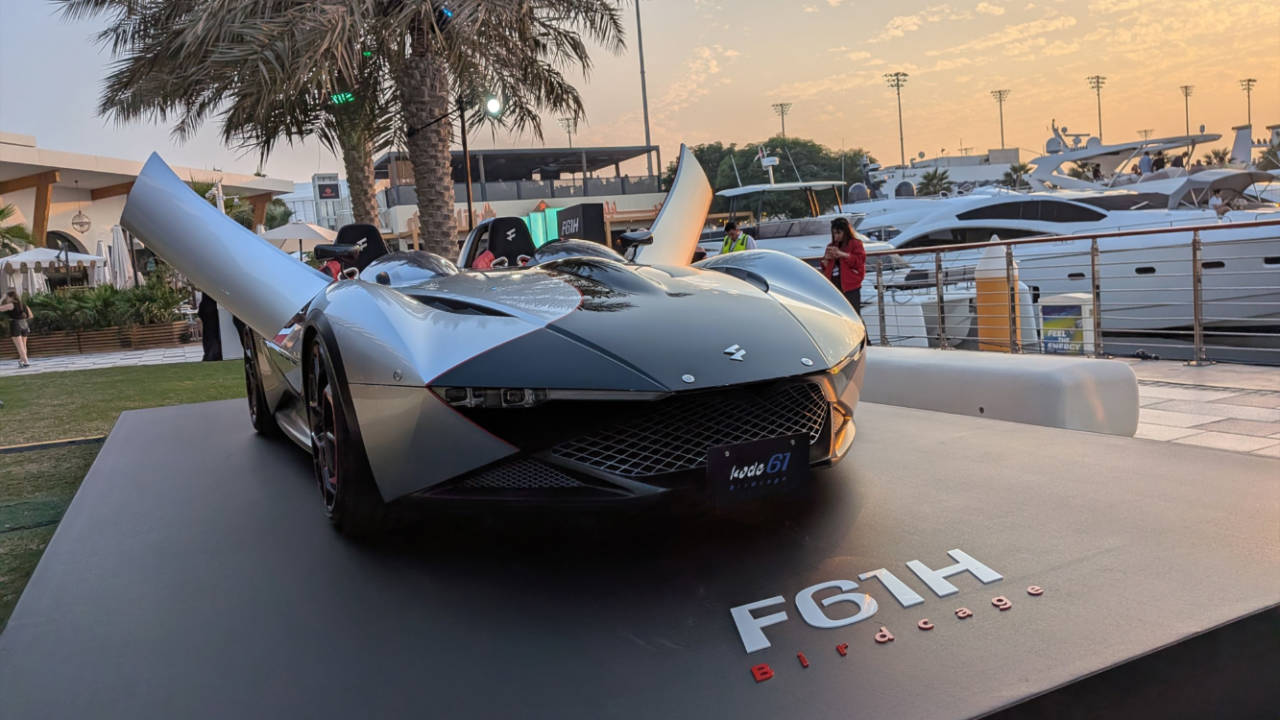
Future Automotive Solutions and Technologies (FAST) has officially launched the F61H, a hydrogen-powered V12 supercar, at a world premiere held on 10 December 2025 at The Ritz-Carlton Hotel in Abu Dhabi. The event marks the global debut of what FAST positions as the world’s first street-legal hydrogen internal combustion engine supercar.
 AI Quick Summary
Future Automotive Solutions and Technologies (FAST) has globally launched the F61H, a hydrogen-powered V12 supercar, in Abu Dhabi, positioning it as the world's first street-legal hydrogen internal combustion engine (ICE) supercar. This innovative vehicle offers a zero-emission alternative to battery-electric performance, using a 5.5-liter hydrogen V12 engine and a six-speed manual transmission to preserve the emotional driving experience of traditional high-performance cars.
This summary was generated by AI using this article’s content.Read Next



The launch places FAST at the centre of next-generation hydrogen mobility, with the UAE selected as the debut market due to its early hydrogen infrastructure and clean-energy ambitions.
UAE Chosen for Global World Premiere
FAST chose Abu Dhabi for the world premiere to align with the region’s investment in hydrogen technology and sustainable transport. Following the official unveiling, the F61H was also previewed at the Yas Marina Circuit harbour, coinciding with the Abu Dhabi Formula 1 Grand Prix weekend and attracting attention from international motorsport audiences.
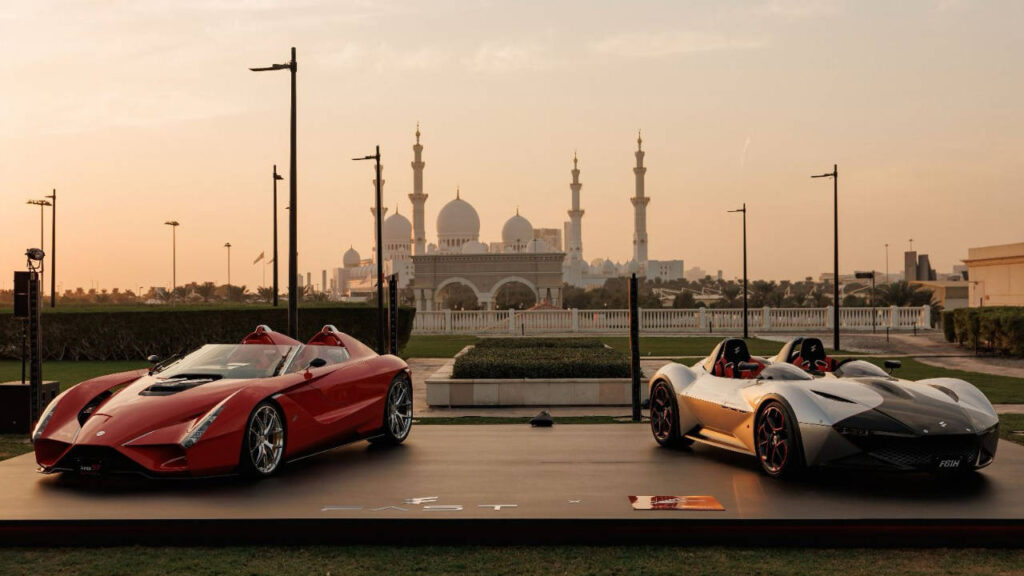
The company stated that the UAE provides the ideal environment for introducing hydrogen-powered performance vehicles to the global market.
A Hydrogen Alternative to Battery-Electric Performance
The F61H reflects FAST’s alternative approach to zero-emission performance. Rather than batteries or fuel cells, the car uses a hydrogen-powered internal combustion engine running on compressed hydrogen.
This system produces zero carbon dioxide emissions during operation, releasing only water vapour. FAST believes hydrogen combustion offers a more sustainable long-term solution for high-performance vehicles, particularly when concerns exist around battery lifespan, recycling, and future collectability.
Design Rooted in Motorsport Heritage
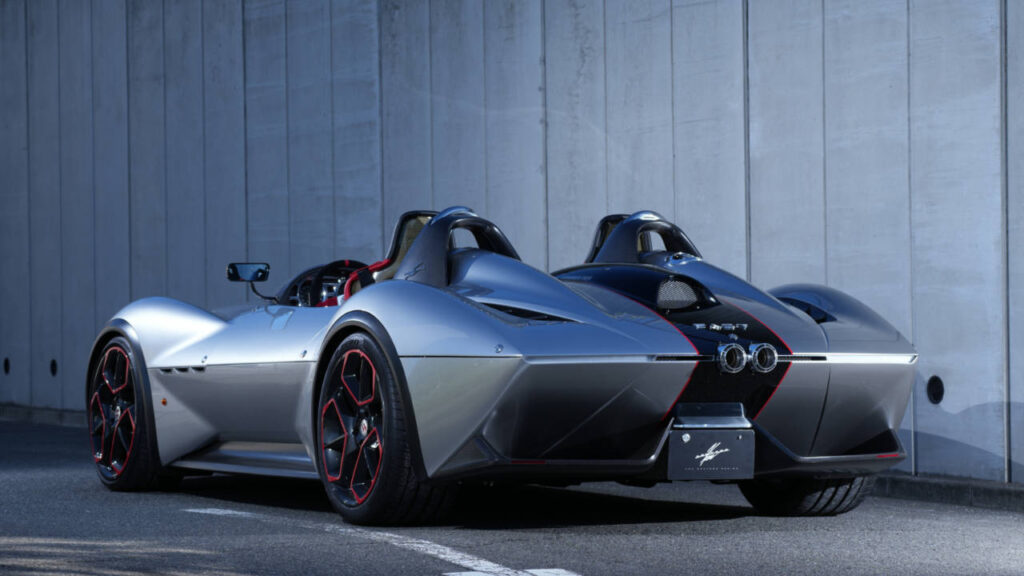
The F61H Birdcage is based on the Kode61 Birdcage, Ken Okuyama Cars’ latest one-off petrol model. The Kode61 is a two-seat barchetta with a front-mounted V12 engine and has been nominated for the Concorso d’Eleganza Villa d’Este and the Pebble Beach Concours d’Elegance. Customer deliveries of the Kode61 are already underway.
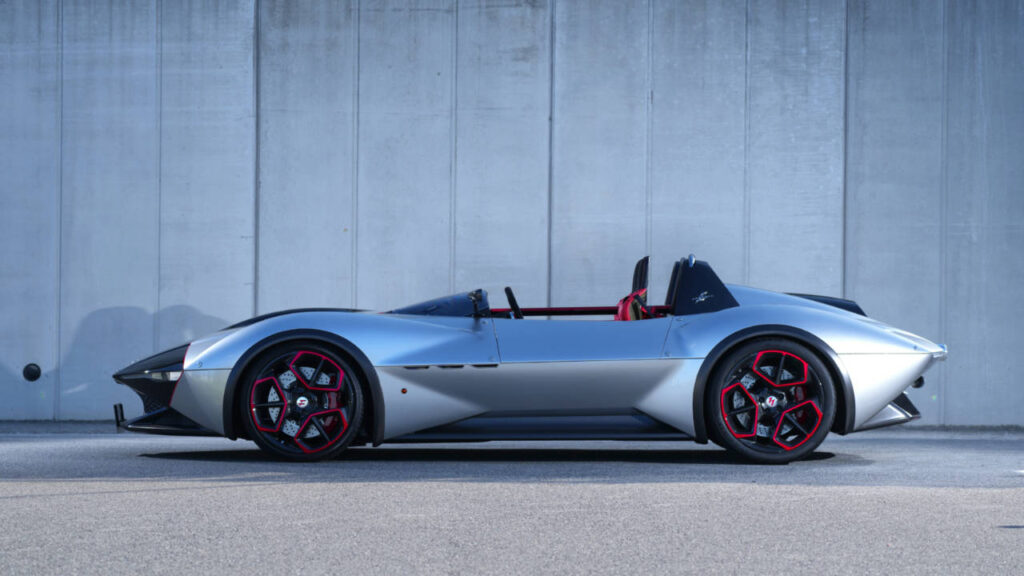
Design direction for the F61H was led by Ken Okuyama, the designer of the Ferrari Enzo and Maserati MC12. The car pays homage to the legendary Maserati Tipo 61 “Birdcage”, with an open-top barchetta body, long nose, compact tail, and three signature portholes behind the front wheels.
Lightweight carbon fibre bodywork is used throughout, with aerodynamic shaping focused on cooling and airflow rather than visual excess.
Hydrogen V12 Powertrain and Drivetrain Layout
At the core of the F61H is a hydrogen-fuelled V12 internal combustion engine, developed from an Italian-made petrol V12 and converted for hydrogen use in collaboration with FLAT FIELD Co., Ltd., an engineering company specialising in hydrogen engine research.
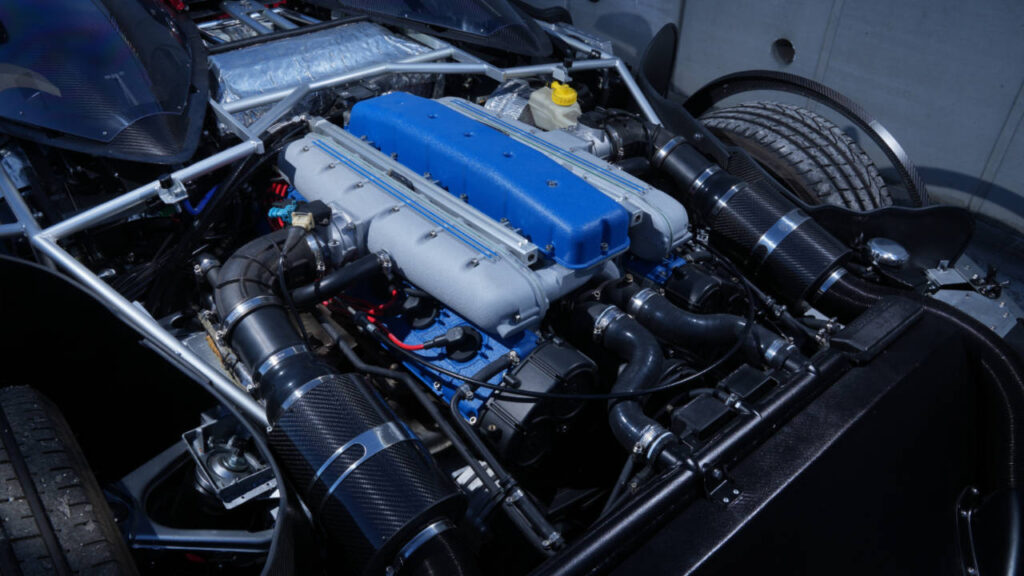
Key technical highlights include:
- Hydrogen-powered 5.5-litre V12
- Up to 500hp output
- Approx. 300hp at 7,000 rpm
- 307Nm of torque
- 12-cylinder independent electronic hydrogen fuel injection
- BorgWarner injectors
- Motec engine management system
- Six-speed manual transmission
- Rear-mounted transaxle layout
The hydrogen fuel tank is mounted at the rear for balanced weight distribution. The car can be refuelled at existing standard hydrogen filling stations, allowing fast refuelling compared with battery-electric alternatives.
Ken Okuyama Cars also states that the hydrogen V12 delivers a sensual and emotional exhaust sound, maintaining the character expected of a traditional high-performance engine.
Dimensions and Vehicle Architecture
The F61H features a low, wide stance designed for agility and stability:
- Length: 4,657mm
- Width: 1,985mm
- Height: 1,140mm
- Wheelbase: 2,500mm
The proportions support a lightweight structure and balanced handling, consistent with its barchetta layout.
Interior: Mechanical Simplicity and Driver Focus
The interior reflects Ken Okuyama’s minimalist philosophy, prioritising driver engagement over digital complexity.
The F61H uses a separated cockpit design, with independent seating areas for driver and passenger. A central structural spine runs between the seats, increasing chassis rigidity while visually dividing the cabin.
Each occupant has retractable window shields, allowing individual airflow control in the open-top cockpit.

Instrumentation is deliberately simple. The driver faces two large analogue gauges positioned directly ahead. There is no digital instrument cluster or infotainment system. A small passenger display provides only essential information.
Controls remain mechanical and tactile. A gated six-speed manual shifter with semi-exposed linkage sits at the centre of the cabin. Switchgear is minimal and focused solely on core driving functions.
Carbon fibre surfaces extend into the interior, with exposed mechanical elements reinforcing the car’s functional, motorsport-inspired character.
Environmental and Practical Advantages
Ken Okuyama Cars highlights several benefits of hydrogen internal combustion technology:
- Zero CO₂ emissions during operation
- Lower production cost than fuel-cell systems
- Faster refuelling compared with battery-electric vehicles
- Reduced mechanical complexity
- Retention of traditional engine sound and driver involvement
The company positions hydrogen combustion as a viable long-term solution for performance vehicles that preserves the emotional appeal of internal combustion engines.
FAST’s Long-Term Hydrogen Strategy
FAST confirmed that the F61H is part of a wider global hydrogenation programme led from Dubai. The company plans to continue developing hydrogen-powered vehicles in collaboration with FLAT FIELD, expanding both performance capability and real-world usability.
A Landmark Launch for FAST and Hydrogen Performance
The debut of the FAST F61H marks a defining moment in zero-emission performance engineering. It demonstrates that hydrogen internal combustion engines can deliver high performance, emotional driving experiences, and environmental responsibility in a single package.
By launching the F61H in the UAE, FAST has positioned itself at the forefront of hydrogen-powered automotive innovation.
Find the best cars for sale in the UAE.
Stay tuned to UAE’s most popular auto blog for more information about the latest happenings in all of the Emirates.
FAQs
What is the FAST F61H?
The FAST F61H is a hydrogen-powered supercar using a V12 internal combustion engine. It produces zero CO₂ emissions and is designed as a street-legal, high-performance vehicle.
How is the F61H different from hydrogen fuel-cell cars?
The F61H uses hydrogen in a traditional combustion engine, not a fuel cell. This allows faster refuelling, lower complexity, and a more engaging driving experience.
Where was the FAST F61H launched?
The F61H was launched in Abu Dhabi, UAE, with its world premiere held at The Ritz-Carlton Hotel and a public preview at Yas Marina Circuit.
What engine does the FAST F61H use?
It uses a hydrogen-fuelled 5.5-litre V12 engine producing up to 500 hp, paired with a six-speed manual transmission and rear-wheel drive.
Can the FAST F61H be refuelled easily?
Yes. The F61H can be refuelled at existing standard hydrogen filling stations, offering refuelling times similar to petrol vehicles.
Follow us on

Recent Stories
BYD Ti 7 Launched In The UAE: PHEV SUV With 870km Range Starting At AED 156,900
Al-Futtaim BYD has launched the all-new BYD Ti 7 in the UAE. The new plug-in hybrid SUV enters the market...
2026 Lexus IS350 Launched In The UAE: Price, Specs, Features & What’s New
The 2026 Lexus IS350 is now on sale in the UAE with prices starting from AED 199,000. That places it...
2026 Toyota RAV4 Launched In The UAE At AED 105,900
The all-new 2026 Toyota RAV4 has officially arrived in the UAE, with Al-Futtaim Toyota launching the sixth-generation model as a...
Toyota GR Yaris and GR Corolla Launched in the UAE At AED 167,900
Al-Futtaim Toyota has expanded its Gazoo Racing portfolio in the UAE with the official launch of the Toyota GR Yaris...
All-New Smart #5 Launched In The UAE From AED 159,900: 15-Min Charging, Brabus Power & A UAE-Exclusive Variant
Smart and AW Rostamani Group have officially launched the all-new Smart #5 in the UAE at an exclusive event held...
RELY R8 From Chery Commercial Vehicles Launched In UAE At AED 59,900
RELY, under Chery Commercial Vehicle and distributed locally by Al Ghurair Mobility, has officially launched the new R8 pickup in...