
Nissan Patrol Fuel Economy Compared: I6, V6, V8 & Twin-Turbo V6 Engines
 November 5, 2026
, 8 Min Read
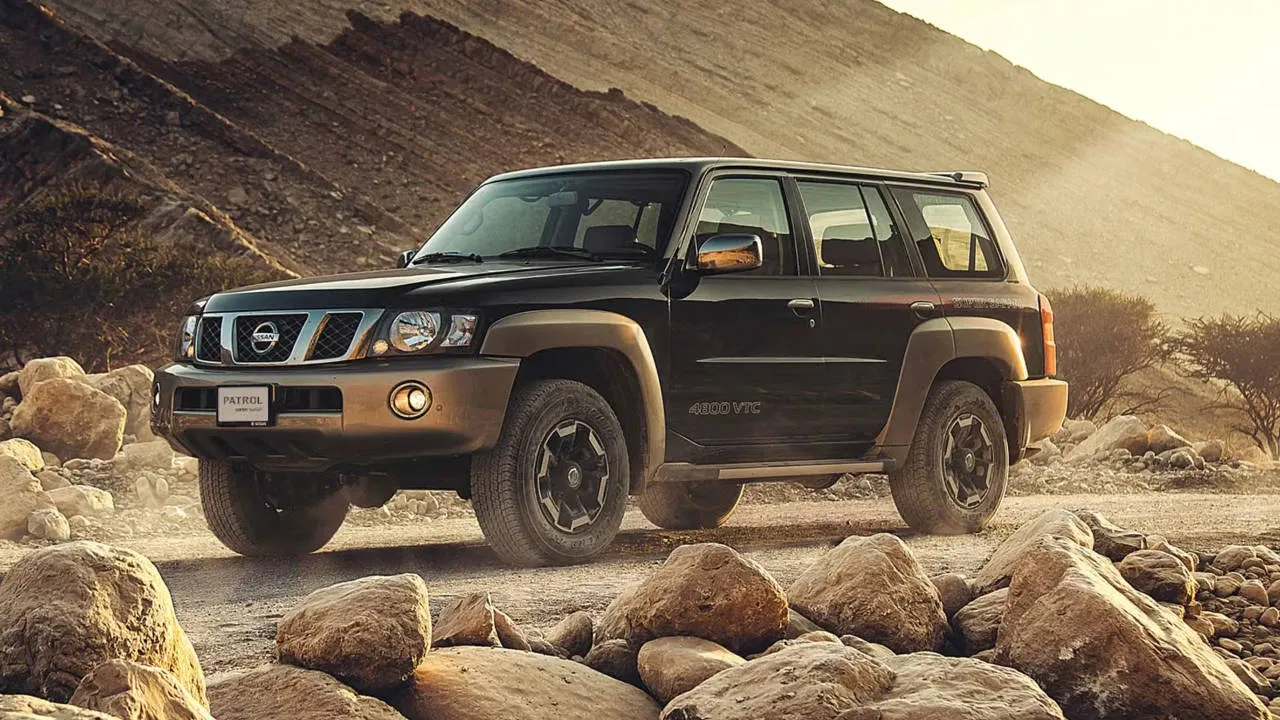
The Nissan Patrol is a legend in the UAE. From conquering massive dunes in Liwa to cruising along Sheikh Zayed Road, this SUV has earned a reputation for power, comfort and off-road capability. However, there is one thing Patrol owners have always had to live with: frequent visits to the petrol station.
Over the years, the Patrol has been powered by everything from old-school inline-six engines to powerful V8s and modern twin-turbo V6 units. Each brings a different combination of performance, character and fuel consumption.
 AI Quick Summary
This article compares the fuel economy of various Nissan Patrol engines in the UAE, revealing a significant improvement in efficiency across generations despite increased power output. Specifically, the latest 3.5L twin-turbo V6 engine is identified as the most fuel-efficient option, delivering more power than its predecessors while consuming less fuel.
This summary was generated by AI using this article’s content.Read Next


But which Nissan Patrol engine is the most fuel-efficient? How much petrol does each consume? And is the latest twin-turbo V6 really better than the beloved V8? Here’s how they compare.
Nissan Patrol Engine Options & Fuel Economy Compared
The Nissan Patrol has undergone several major engine changes across its generations. Here’s a comparison of five popular petrol engines found in the UAE.
| Engine | Generation | Fuel Economy | Fuel Consumption |
| 4.8L I6 | Y61 | 5.8–6.0 km/l | 16.7–17.2 L/100km |
| 4.0L V6 | Y62 | 8.5 km/l | 11.8 L/100km |
| 5.6L V8 | Y62 | 6.9 km/l | 14.5 L/100km |
| 3.8L V6 | Y63 | 9.7 km/l | 10.3 L/100km |
| 3.5L Twin-Turbo V6 | Y63 | 10.1 km/l | 9.9 L/100km |
These are published UAE-market fuel economy figures, not guaranteed real-world results. Figures vary by model, transmission and driving conditions. Older and newer vehicles may also have been tested using different procedures.
The figures highlight how far the Patrol has progressed. For more background, explore the complete history of the Nissan Patrol and its generations.
Nissan Patrol 4.8L Inline-Six: The Old-School Favourite
The 4.8-litre inline-six-cylinder engine, popularly known as the TB48DE, is closely associated with the Nissan Patrol Y61 Safari and Super Safari. It remains a favourite among UAE off-road enthusiasts thanks to its rugged construction and strong performance.
Later UAE-spec versions produce around 280hp and 451Nm, paired with a five-speed manual or automatic gearbox.
However, fuel economy is not its strongest quality. The 4.8-litre engine returns approximately 5.8–6.0 km/l, making it the thirstiest engine in this comparison.
The older engine design, large displacement and relatively basic transmissions all contribute to its fuel consumption. Heavy off-road modifications, larger tyres and aggressive desert driving can make matters worse.
Still, nobody buys a Nissan Patrol Super Safari expecting hybrid-like efficiency. Its appeal lies in its mechanical simplicity, distinctive engine character and modification potential.
Nissan Patrol 4.0L V6: The Sensible Y62
The sixth-generation Patrol Y62 introduced a more modern approach to comfort and performance. Alongside the powerful V8, buyers could choose a naturally aspirated 4.0-litre V6.
Producing 275hp and 394Nm, this engine uses a seven-speed automatic gearbox and delivers a published fuel economy of approximately 8.5 km/l.
That makes it noticeably more economical than the Y61’s 4.8-litre inline-six and the Y62’s larger V8.
For everyday driving, the 4.0-litre V6 offers enough performance for school runs, motorway journeys and family outings. However, with a fully loaded cabin or during demanding off-road driving, the engine needs to work harder.
Its lower purchase price and fuel consumption make it an interesting option in the used market.
Explore the Nissan Patrol Y62 trims and variants to understand the available configurations.
Nissan Patrol 5.6L V8: Power Comes At A Price
Few engines are as closely associated with the modern Patrol as the 5.6-litre naturally aspirated V8.
Found in the Y62’s higher variants, this engine produces 400hp and 560Nm. Its effortless acceleration, strong pulling power and unmistakable V8 soundtrack helped make it extremely popular in the UAE.
Fuel economy, however, stands at approximately 6.9 km/l, equivalent to 14.5 litres per 100km.
Interestingly, the V8 is more economical on paper than the older 4.8-litre inline-six, despite producing substantially more power.
Its modern engine technology and seven-speed automatic transmission help explain the difference.
However, frequent acceleration, heavy traffic and desert driving can push consumption considerably higher.
For buyers weighing performance against fuel costs, our Nissan Patrol Y62 vs Y63 comparison explores whether the V8 is still worth buying.
Nissan Patrol 3.8L V6: The Modern Naturally Aspirated Option
The seventh-generation Patrol Y63 replaced the older 4.0-litre V6 with a newer 3.8-litre naturally aspirated unit.
Despite its smaller displacement, it produces 316hp and 386Nm, offering considerably more horsepower than its predecessor.
A nine-speed automatic transmission also improves efficiency by allowing the engine to run at lower speeds during steady motorway driving.
The result is a published fuel economy of approximately 9.7 km/l.
This makes the 3.8-litre V6 one of the most economical Patrol engines available in the UAE.
It is particularly attractive to buyers who want the latest Patrol technology, comfort, and safety equipment without the extra performance of the twin-turbo engine.
For a detailed breakdown, read our 2026 Nissan Patrol trims and variants guide.
Nissan Patrol 3.5L Twin-Turbo V6: More Power, Less Fuel
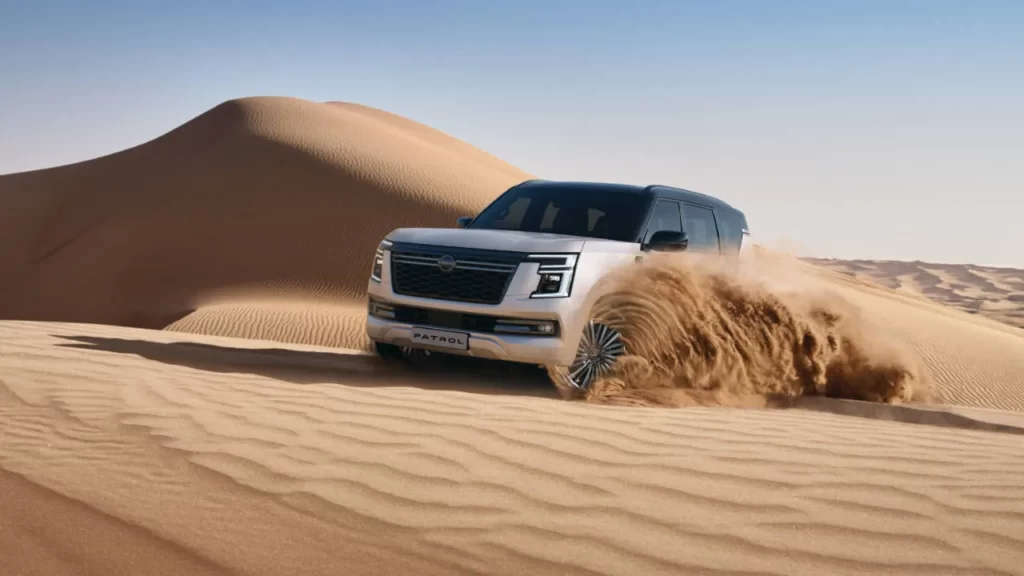
The biggest surprise comes from the latest Patrol’s 3.5-litre twin-turbocharged V6.
Replacing the 5.6-litre V8, this engine produces an impressive 425hp and 700Nm, making it considerably more powerful than the outgoing unit.
Despite the performance increase, the twin-turbo V6 delivers approximately 10.1 km/l.
This makes it the most fuel-efficient engine in our comparison.
Its twin turbochargers, modern fuel injection system and nine-speed automatic transmission help deliver strong performance without requiring a larger engine.
However, the advantage depends heavily on driving style. Frequent hard acceleration brings the turbochargers into action and increases fuel consumption.
This also explains why smaller engines do not always consume less fuel.
How Much Fuel Does Each Nissan Patrol Consume Annually?
Fuel economy figures become more meaningful when translated into annual fuel consumption.
Assuming an owner drives 20,000km annually, here is approximately how much petrol each engine would consume based on the published figures.
| Patrol Engine | Estimated Petrol Used Per Year |
| 4.8L I6 | 3,333–3,448 litres |
| 4.0L V6 | 2,353 litres |
| 5.6L V8 | 2,899 litres |
| 3.8L V6 | 2,062 litres |
| 3.5L Twin-Turbo V6 | 1,980 litres |
The difference is substantial. Compared with the Y62 V8, the latest twin-turbo V6 could save approximately 920 litres of petrol over 20,000km, based on these figures.
Actual savings will depend on your driving conditions and fuel prices.
For a broader picture of expenses, check our Nissan Patrol ownership cost guide.
Does Better Fuel Economy Mean More Driving Range?
Not necessarily. Fuel tank capacity plays an equally important role.
The Y62 Patrol has a large 140-litre fuel tank, while the latest Y63 comes with a smaller 97-litre tank.
This means an older Patrol can sometimes cover more distance between refuelling stops despite consuming more petrol per kilometre.
On paper, the Y62 V8 and Y63 twin-turbo V6 offer roughly similar theoretical driving ranges.
However, these calculations assume ideal conditions and the use of the entire fuel tank. Actual driving range will generally be lower.
What Affects Nissan Patrol Fuel Economy In The UAE?
Regardless of engine choice, several factors can significantly change fuel consumption.
- City traffic: Frequent stops and acceleration increase petrol consumption.
- Air conditioning: Constant cooling during UAE summers adds engine load.
- Desert driving: Soft sand, low tyre pressures and demanding terrain require more power.
- Vehicle modifications: Larger tyres, roof racks and added weight can reduce efficiency.
- Driving habits: Smooth acceleration and steady motorway speeds generally improve mileage.
- Maintenance: Proper tyre pressure, clean filters and timely servicing help maintain efficiency.
When shopping for an older model, follow our used Nissan Patrol buying guide to identify potential mechanical problems and signs of heavy off-road use.
Which Nissan Patrol Engine Should You Choose?
The ideal Patrol engine depends on how you plan to use the SUV.
The 4.8-litre inline-six remains a favourite for enthusiasts who value old-school off-road capability. The Y62’s 4.0-litre V6 is a more economical alternative for everyday driving, while the 5.6-litre V8 delivers the performance and character that made the Patrol famous.
The new 3.8-litre V6 offers a strong balance of modern technology and lower fuel consumption.
However, the 3.5-litre twin-turbo V6 is the clear winner for published fuel efficiency, combining the highest standard engine output in this comparison with the lowest fuel consumption.
Ultimately, the Patrol has evolved from a rugged, fuel-hungry off-roader into a more refined and efficient SUV without losing its adventurous character.
Explore new Nissan Patrol SUVs for sale in the UAE and used Nissan Patrol listings on DubiCars to find the version that suits your driving needs and budget.
Whatever car you’re thinking of, find it on Dubi with over 25,000 listings.
Stay tuned to the UAE’s most popular auto blog for more automotive content.
FAQs
Which Nissan Patrol engine has the best fuel economy?
The 3.5-litre twin-turbo V6 is the most fuel-efficient Nissan Patrol engine, delivering approximately 10.1 km/l while producing 425hp and 700Nm.
What is the fuel consumption of the Nissan Patrol V8?
The Nissan Patrol Y62’s 5.6-litre V8 delivers about 6.9 km/l, or 14.5 litres per 100km, depending on driving conditions.
Is the Nissan Patrol V6 more fuel-efficient than the V8?
Yes. The Y62’s 4.0-litre V6 delivers approximately 8.5 km/l, compared to 6.9 km/l for the 5.6-litre V8.
What is the fuel economy of the Nissan Patrol Super Safari?
The Nissan Patrol Super Safari’s 4.8-litre inline-six engine delivers approximately 5.8–6.0 km/l, making it one of the least fuel-efficient Patrol engines.
Is the new Nissan Patrol twin-turbo V6 better than the V8?
The 3.5-litre twin-turbo V6 produces more power and torque than the older 5.6-litre V8 while offering significantly better fuel economy of approximately 10.1 km/l.
Follow us on

Recent Stories

Audi Ramadan Car Offers In The UAE: Ali & Sons Announces Audi Approved :plus Ramadan Deals
For luxury car buyers in the UAE, Ramadan 2026 presents a compelling opportunity to step into refined German engineering with...

Where Are Better Ramadan Car Deals? Dealer v/s Private Seller
Ramadan is one of the most active seasons for car buyers in the UAE. Dealerships, online marketplaces, and private sellers...

Volvo Ramadan Offers 2026: SUV Deals Across The UAE
Ramadan 2026 brings simple, flexible ownership choices from Volvo Cars, exclusively represented in the UAE by Al-Futtaim Group. Built around...

Deepal Ramadan Offers 2026: Hybrid Car Deals Across The UAE
Ramadan 2026 brings attractive electrified SUV offers from Deepal, exclusively represented in the UAE by Al Tayer Motors. With competitive...

Mini Ramadan Offers 2026: Luxury Hatchback Deals Across The UAE
Ramadan 2026 brings premium benefits for MINI buyers across the UAE. With exclusive offers from AGMC in Dubai and the...

Maxus Ramadan Offers 2026: Pick-up & MPV Deals Across The UAE
Ramadan 2026 brings strong value-focused offers from Maxus, represented in the UAE by Al Naboodah. With competitive starting prices, free...