
Autonomous Taxi In Dubai Launching In 2025 – RTA Partners With Uber & WeRide
 April 3, 2025
, 5 Min Read
April 3, 2025
, 5 Min Read
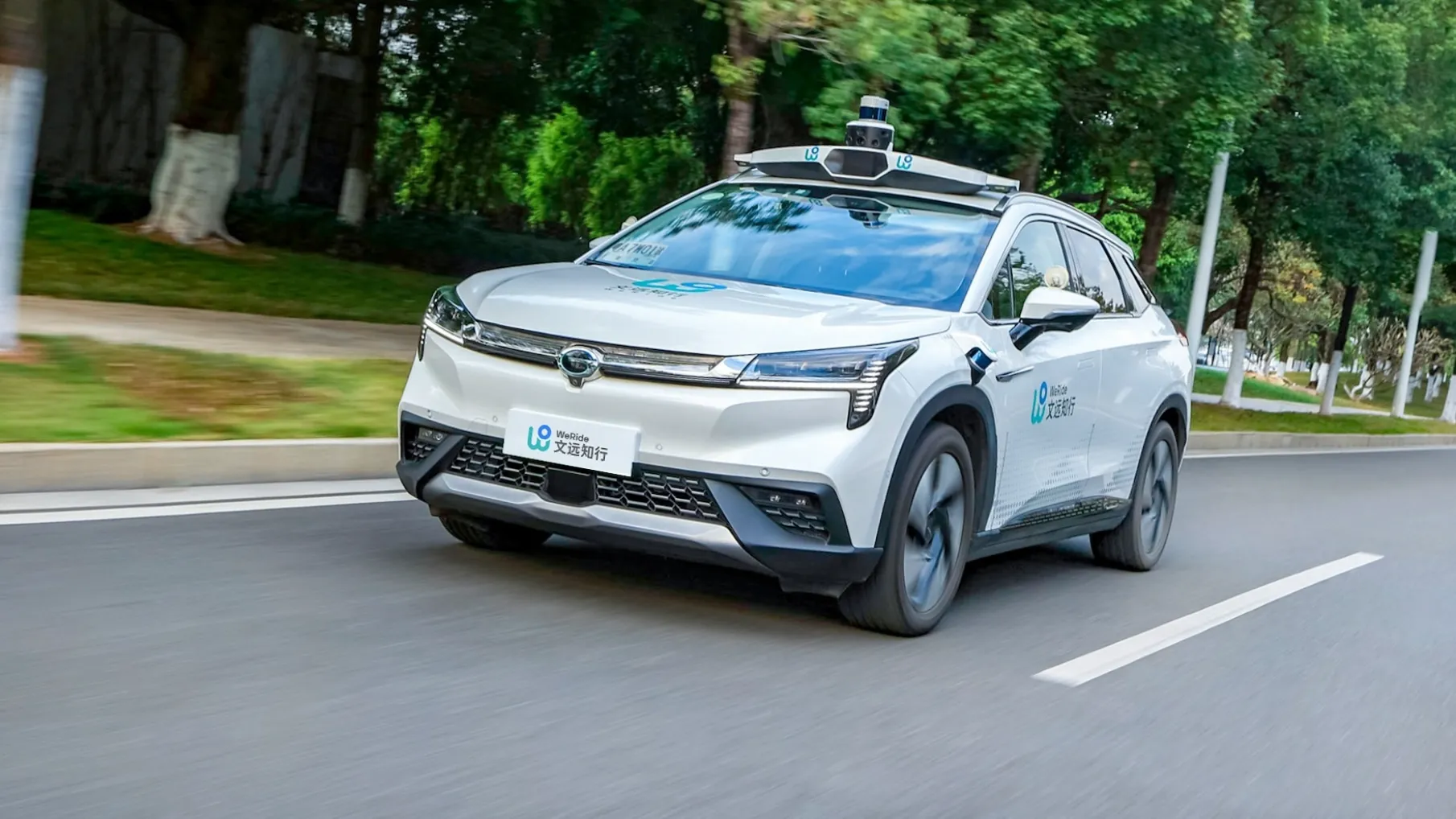
Dubai’s Roads and Transport Authority (RTA) has initiated groundbreaking partnerships in autonomous mobility. In collaboration with global leaders such as Uber Technologies, WeRide, and Baidu’s Apollo Go, Dubai is set to launch autonomous taxis. This initiative is a pivotal step toward realizing Dubai’s vision of becoming the smartest city in the world and transforming 25% of all journeys into autonomous trips by 2030.
Paving The Way for Autonomous Mobility
Mattar Al Tayer, Director General and Chairman of the Board of Executive Directors of RTA, emphasized that these partnerships are instrumental in advancing Dubai’s Self-Driving Transport Strategy. With Uber and WeRide at the forefront, along with Baidu’s Apollo Go, the initiative aims to enhance mobility, reduce congestion, and improve road safety by minimizing human errors that account for over 90% of traffic accidents.

The deployment of autonomous taxis will also bolster first and last-mile connectivity, seamlessly integrating with Dubai’s public transport network. As part of the strategic rollout, trials with safety drivers will commence this year, with full-fledged driverless commercial operations expected by 2026.
Strategic Collaborations With Industry Leaders
Uber & WeRide: Transforming Transportation
Uber’s global expertise in ride-hailing, combined with WeRide’s cutting-edge autonomous technology, marks a significant leap in Dubai’s transport evolution. Noah Zych, Uber’s Global Head of Autonomous Mobility, said, “We’re thrilled to be working with Dubai’s Road and Transport Authority to bring autonomous vehicles onto the Uber platform, starting with our technology partner WeRide.”

Shortly after WeRide launched its RoboTaxi, the brand became the first to receive an autonomous vehicle permit in the Chinese market back in 2020. WeRide then launched several other products like RoboBus, RoboVan, RoboSweeper & WePilot over the next few years.
The Guangzhou-based brand had first conducted Autonomous Taxi trials on Yas Island in Abu Dhabi back in 2021. After much testing and deliberation, Uber & WeRide launched autonomous taxi services on a few routes in Abu Dhabi last year. Now, this service is set to make it to Dubai later this year.

Jennifer Li, Chief Financial Officer and Head of International Business at WeRide, echoed similar sentiments: “Dubai marks a natural step forward in our commitment to advancing mobility in the Middle East as well as our continued global expansion. We believe our advanced autonomous driving technology and operational experience, combined with Uber’s powerful global mobility platform, will help us serve millions of consumers in cities around the world.”
Baidu’s Apollo Go: Expanding Global Reach
Baidu’s Apollo Go, one of the world’s leading autonomous mobility solutions, has already achieved over 150 million kilometers of safe autonomous driving in China. With the launch in Dubai, Apollo Go aims to bring its vast experience to the UAE, reinforcing the city’s ambition to be a global innovation hub. Dr. Wang Yunpeng, Baidu’s Corporate Vice President, emphasized that this expansion represents Apollo Go’s most significant international endeavor to date. Over 1,000 Apollo Go Robotaxis are expected to be deployed on UAE roads.
Enhancing Safety & Efficiency
Autonomous taxis promise a safer and more efficient transportation network by leveraging AI-driven precision. These vehicles are designed to minimize road accidents, optimize traffic flow, and provide reliable transport solutions for senior citizens and people of determination. Furthermore, Autonomous Vehicles align with Dubai’s sustainability goals by promoting electric and eco-friendly transportation options.
Future Roadmap & Implementation
RTA and its partners will collaborate on pilot programs, focusing on technological integration, safety protocols, and regulatory frameworks. The broader adoption of autonomous vehicles will reshape Dubai’s transport sector, offering residents and visitors a smarter, safer, and more efficient commuting experience.
Dubai’s commitment to innovation in mobility is unwavering, and this initiative is just the beginning. As the city gears up for a driverless future, it continues to set global benchmarks in autonomous transportation, reinforcing its position as a leader in next-generation urban mobility.
Find the best cars for sale in the UAE.
Stay tuned to UAE’s most popular auto blog for more automotive content.
Also Read:
- DubiCars Launches Car-Nival Campaign — Your Chance To Win Big
- Top 10 Best Chinese Car Brands In The UAE
- Variable Parking Charges Take Effect In Dubai From April 2025
FAQs
Is there a driverless taxi in Dubai?
Not yet, but Dubai’s Roads and Transport Authority (RTA) has partnered with Uber, WeRide, and Baidu’s Apollo Go to launch autonomous taxis. Trials with safety drivers will start in 2025, with fully driverless taxis expected to launch commercially by 2026.
Is there a Tesla taxi available in Dubai?
Yes, Dubai has Tesla taxis as part of the RTA’s fleet, operated by the Dubai Taxi Corporation. These electric taxis are available through ride-hailing apps and via the flag-down method as well. Here’s a complete guide to Taxis in Dubai.
Which country has driverless taxis?
Several countries have deployed driverless taxis, including China, the United States, and the United Arab Emirates. Companies like Baidu’s Apollo Go operate in China, while Waymo and Cruise have launched driverless taxis in the U.S. The UAE is now gearing up to introduce them in Dubai later this year.
How can I get a driverless Uber?
Once Uber’s autonomous taxis launch in Dubai, users will be able to book them through the Uber app. Initially, trials will include safety drivers, but fully driverless rides will be available once the service becomes commercially operational in 2026.
When will Dubai launch self-driving taxis?
Dubai plans to begin trials of self-driving taxis in 2025, with full commercial deployment expected by 2026 as part of its strategy to make 25% of all trips autonomous by 2030.
Follow us on

Recent Stories
New Lexus RZ 500e Launches In UAE: A Luxury Electric SUV With Serious Performance
Lexus has launched the new RZ 500e electric SUV in the UAE, bringing its first fully electric models to the...
Lexus ES500e Launched In The UAE: The Executive Sedan Finally Goes Fully Electric
Lexus has just taken a significant step in the UAE. Al-Futtaim and Lexus officially launched the all-new ES500e, the first...
DubiCars Announces New Premium Identity & Brand Uplift: An Elevated New Look & Feel
You might want to update your mental image of DubiCars. The familiar pink-red logo is retiring, the letters are now...

iCAUR Opens New Showroom At Marina Mall Abu Dhabi: V27 & 03T SUVs On Display
iCAUR has expanded its UAE presence by opening a new showroom at Marina Mall in Abu Dhabi. The premium new...
XPENG Showcases REEV Tech: GX Makes A Strong Case For Electrified Driving As UAE Fuel Prices Rise
Electric cars have many advantages: immediate response, zero tailpipe emissions, quiet luxury, and more. For some UAE buyers, however, one...
Dubai Opens Autonomous Vehicle Test Centre With 248 Testing Scenarios
Dubai has taken another major step towards large-scale autonomous mobility with the opening of Dubai Mobility Labs, a dedicated testing...