
What Is A New-Energy Vehicle (NEV)? The Future of Sustainable Mobility
 February 4, 2025
, 6 Min Read
February 4, 2025
, 6 Min Read
Introduction To NEV
The term New-Energy Vehicle (NEV) originated in China as part of the country’s efforts to promote clean energy transportation. The Chinese government introduced the NEV classification in the early 2000s, officially defining it in 2009 as part of a national strategy to reduce pollution and dependence on fossil fuels.
The term was formally recognized in China’s Automotive Industry Development Plan (2012-2020) and later expanded globally. Since then, NEV has been widely adopted in international markets, with countries and automakers using the term to describe electrified and alternative energy vehicles that align with sustainable transportation goals.
NEVs are designed to reduce dependency on fossil fuels and lower carbon emissions, addressing growing environmental concerns. Here are all the different types of NEVs, their benefits, and challenges.
Types Of New-Energy Vehicles (NEVs)
NEVs are classified into three main categories based on their energy source and technology:
1. Battery Electric Vehicles (BEVs)
BEVs run entirely on electric power and do not have an internal combustion engine. Instead, they rely on rechargeable lithium-ion batteries. Since they produce zero emissions, BEVs are considered the most environmentally friendly option.

Key Features:
- Fully electric propulsion with no tailpipe emissions.
- Charged via home chargers or public charging stations.
- Lower maintenance costs due to fewer moving parts.
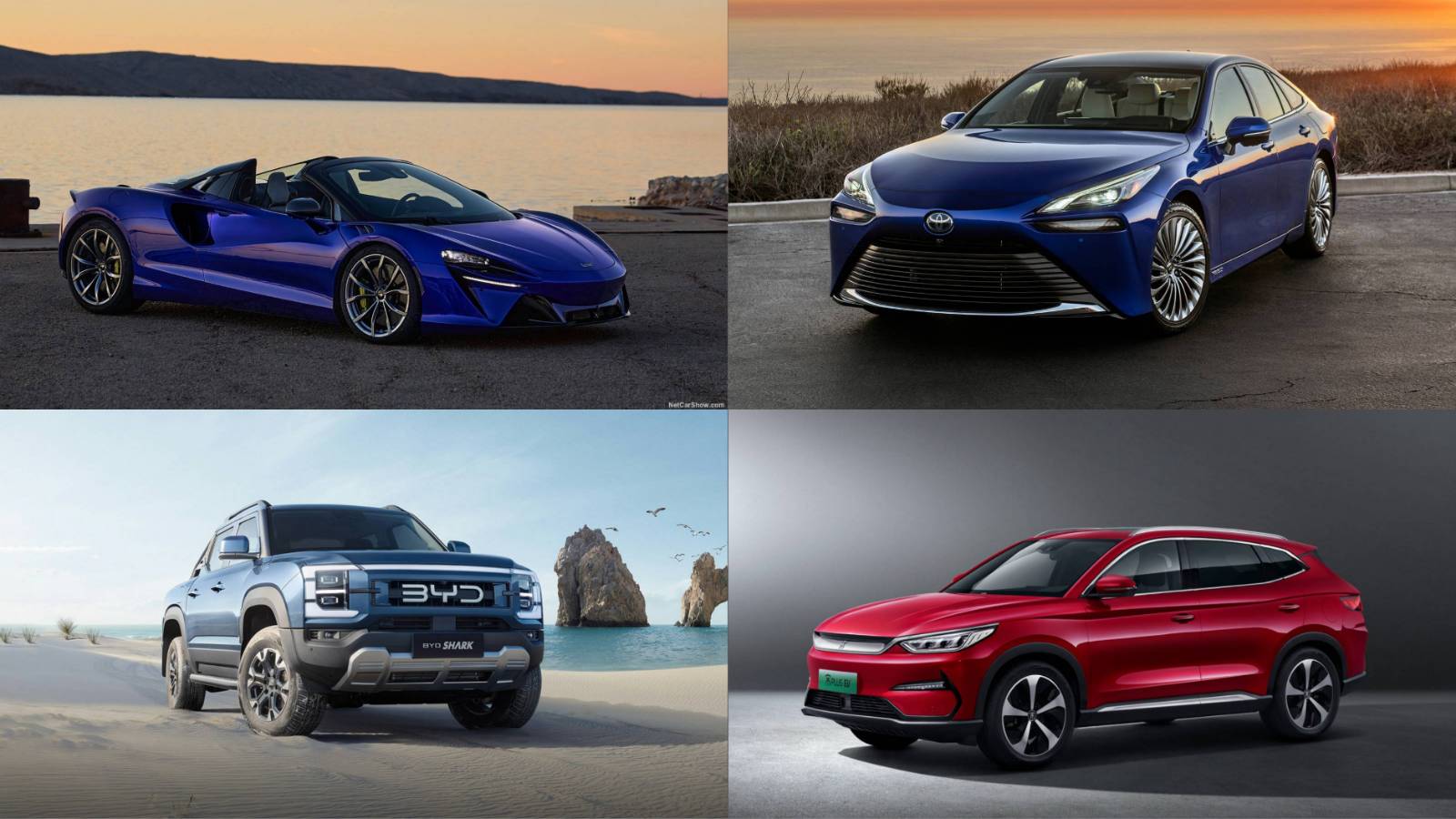
Popular Models: Tesla Model 3, BYD Seal, BMW iX, Lucid Air
Looking for an electric car in the UAE? Here are 10 best EVs under AED 100,000 for sale in the UAE.
2. Plug-in Hybrid Electric Vehicles (PHEVs)
PHEVs combine an internal combustion engine with an electric motor and a rechargeable battery. These vehicles can run on electricity for a limited range before switching to fuel, making them a practical choice for those concerned about battery range.

Key Features:
- Operates on both electricity and petrol/diesel.
- Can be charged externally or use regenerative braking to recharge the battery.
- Suitable for longer trips where charging stations are unavailable.
Popular Models: Toyota Prius, BYD Song Plus, McLaren Artura
Read this article to know the top 10 best hybrid SUVs for sale in the UAE.
3. Fuel Cell Electric Vehicles (FCEVs)
FCEVs use hydrogen fuel cells to generate electricity, emitting only water vapour. These vehicles have a faster refuelling time compared to BEVs but require dedicated hydrogen refuelling stations.

Key Features:
- Hydrogen fuel cell technology eliminates carbon emissions.
- Quick refuelling time similar to conventional petrol/diesel vehicles.
- Limited infrastructure availability in most regions.
Popular Models: Toyota Mirai, Hyundai Nexo, Honda CR-V e:FCEV
Advantages Of NEVs
NEVs provide multiple benefits, making them a compelling choice for consumers and governments alike:
- Lower Carbon Emissions – Reduces pollution and dependence on fossil fuels.
- Fuel Efficiency – BEVs and FCEVs eliminate fuel costs, while PHEVs consume less petrol.
- Lower Maintenance Costs – Fewer mechanical parts result in reduced servicing needs.
- Government Incentives – Tax benefits, reduced registration fees, and subsidies in many countries.
- Advanced Technology – Features like regenerative braking, AI-based energy management, and over-the-air software updates.
Challenges Facing NEVs
Despite their advantages, NEVs face several challenges that need to be addressed. The availability of charging stations is still limited in some regions, leading to concerns over charging infrastructure. Many potential buyers also experience battery range anxiety, fearing they may run out of charge before reaching a charging station.
Additionally, the initial cost of NEVs remains higher than traditional vehicles, though prices are gradually decreasing. Battery longevity is another challenge, as degradation over time affects long-term performance.
For Fuel Cell Electric Vehicles (FCEVs), hydrogen availability is a major issue since hydrogen refuelling stations are scarce. Addressing these obstacles will be key to the widespread adoption of NEVs.
NEVs In The UAE & Middle East
The UAE is rapidly adopting NEV technology, with government initiatives encouraging electric vehicle (EV) adoption. Key developments include:

- Infrastructure Growth: Dubai Electricity and Water Authority (DEWA) has expanded its ‘Green Charger’ network across the country.
- Government Incentives: Free charging at DEWA stations, reduced registration fees, and exemptions from tolls for EVs.
- Brand Expansion: Tesla, Lucid Motors, and Chinese brands like BYD are gaining market traction.
- Luxury EV Market: High-end brands like Porsche, Mercedes-Benz, and Audi are introducing premium EVs.
- Saudi Arabia’s Vision 2030: Aims to promote EV adoption and support sustainable mobility solutions.
Future Of NEVs
The future of NEVs looks promising with continuous advancements in technology:
- Improved Battery Technology – Increased range and faster charging solutions are under development.
- Bans on ICE Vehicles – Many countries plan to phase out petrol/diesel cars by 2035.
- Growth of Hydrogen Fuel Cells – More research is being done to expand FCEV infrastructure.
- Automaker Commitments – Leading brands are shifting towards fully electric line-ups.
New-Energy Vehicles are at the forefront of the automotive revolution, offering a cleaner and more sustainable alternative to traditional vehicles. While challenges remain, continuous innovation, supportive policies, and growing infrastructure are accelerating their adoption.
The UAE and Middle East are making significant progress in embracing NEVs, paving the way for a greener future. With more advancements on the horizon, NEVs are set to become the standard for transportation worldwide.
Find used electric cars for sale in the UAE and new electric cars for sale in the UAE.
Subscribe to DubiCars’ WhatsApp Channel for the latest automotive news, guides, polls, and informative infographics.
Stay tuned to UAE’s most popular auto blog for more information about the latest happenings in all of the Emirates.
FAQs
What is a NEV?
A New-Energy Vehicle (NEV) is an alternative energy vehicle that runs on electricity or hydrogen instead of petrol or diesel. It includes BEVs, PHEVs, and FCEVs, aiming to reduce emissions and promote sustainability.
What are the new energy passenger vehicles?
They are electric, plug-in hybrid, and hydrogen fuel cell cars designed for personal use. Examples include Tesla Model 3 (BEV), Toyota Prius PHEV, and Toyota Mirai (FCEV).
What is the meaning of a new energy car?
A new energy car uses electricity, hybrid systems, or hydrogen instead of traditional fuel, reducing emissions and promoting eco-friendly mobility.
What is a BEV?
A Battery Electric Vehicle (BEV) runs only on electricity, with no internal combustion engine. It needs charging and produces zero emissions. Examples: Tesla Model S, Nissan Leaf.
What is an FCEV?
A Fuel Cell Electric Vehicle (FCEV) uses hydrogen fuel cells to generate electricity, emitting only water vapour. It offers fast refuelling but needs hydrogen stations. Examples: Toyota Mirai, Hyundai Nexo.
Also Read:
- Top 10 Best Chinese EVs Launching In 2025
- Top 10 Best Supercars Launching In 2025
- Top 10 Most Reliable Hybrid Cars
Follow us on

Recent Stories
Used Nissan Patrol Buying Guide: What To Check Before Paying
Few used SUVs have as much appeal in the UAE as the Nissan Patrol. Whether it is an old-school Y60,...
UAE Petrol Prices October 2026: How Much Does A Full Tank Cost?
Petrol prices in the UAE have jumped sharply for October 2026, putting the cost of filling up firmly back in...
Petrol Prices Rise In The UAE: Why Costs Increased And How To Save On Fuel
Fuel prices in the UAE have seen a sharp rise in April 2026, placing added pressure on everyday drivers. With...
UAE Petrol Prices Increase: Should You Buy An EV Or Hybrid In 2026?
Fuel prices are climbing once again, and with every increase, the same pattern emerges. People don’t complain much about the...

Trade-In vs Private Sale In The UAE: Which Leaves You With More Money?
Selling your car before upgrading should put money towards your next purchase. Yet the highest offer doesn’t always mean the...
Car Accident History In The UAE: What Reports Can And Cannot Tell You
Checking a car’s accident history should be one of the first steps when buying a used car in the UAE....