
Porsche Sells Bugatti Rimac Stake: Abu Dhabi Investor Takes 30% Share
 September 15, 2026
, 10 Min Read
September 15, 2026
, 10 Min Read
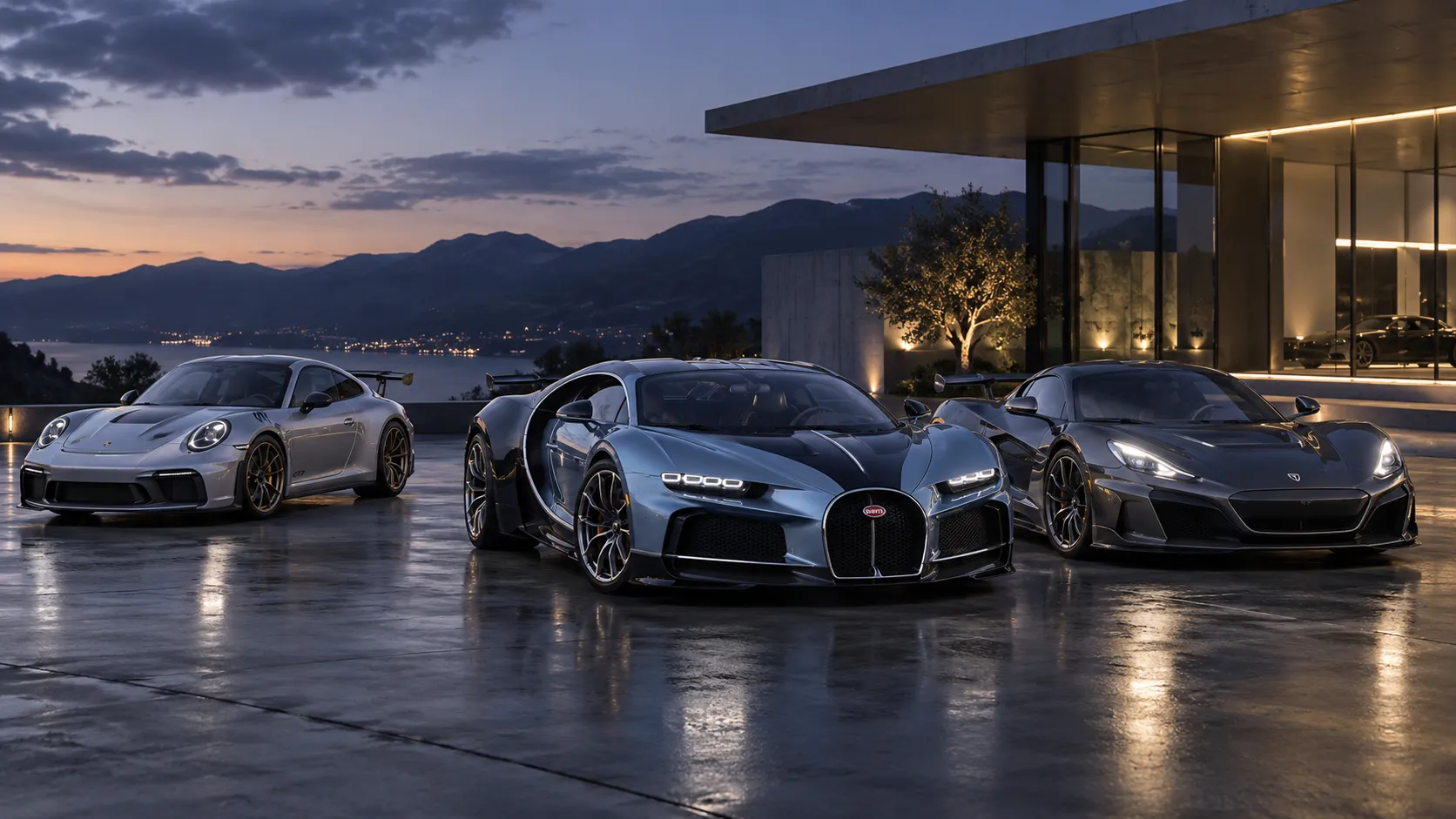
Porsche has completed the sale of its stakes in Bugatti Rimac and Rimac Group, bringing approximately €1 billion into Stuttgart while giving Abu Dhabi-based BlueFive Capital a major position in one of the world’s most exclusive hypercar manufacturers.
 AI Quick Summary
Porsche has divested its stakes in Bugatti Rimac and Rimac Group, earning approximately €1 billion from the transaction. Abu Dhabi-based BlueFive Capital acquired a 30% share in Bugatti Rimac directly, becoming the second-largest shareholder and securing a board seat. This move underscores the UAE's strategic shift towards direct ownership and influence within the global hypercar manufacturing industry.
This summary was generated by AI using this article’s content.Read Next

Porsche and Bugatti are two legendary brands in the auto industry. One perfected the everyday sports car over generations. The other spent decades treating the laws of physics as mildly inconvenient suggestions.
Now, nearly five years after Porsche and Rimac Group established Bugatti Rimac, Porsche has officially ended its direct ownership involvement with Bugatti.
Who Bought Porsche’s Bugatti Rimac Stake?
Porsche previously owned 45% of Bugatti Rimac, with Rimac Group holding the remaining 55%. Porsche also owned a separate 21% stake in Rimac Group.
A consortium led by HOF Capital has now acquired Porsche’s holdings in both companies. BlueFive Capital, the consortium’s largest investor, purchased 30% of Bugatti Rimac directly from Porsche.
This makes BlueFive the second-largest shareholder in Bugatti Rimac after Rimac Group. The Abu Dhabi-based investment manager will also receive one seat on the board and two observer seats, giving it influence beyond simply providing capital.
Who Is BlueFive Capital?
BlueFive Capital was launched in November 2024 and already manages more than $15 billion in assets. Its Bugatti Rimac investment forms part of a broader consumer strategy focused on businesses with powerful brands, defensible market positions and long-term growth potential.

Bugatti certainly fits the description. It possesses more than a century of heritage, produces exotic cars in tiny numbers and maintains enormous pricing power among the world’s wealthiest collectors.
There are very few manufacturers capable of charging several million dollars for a car, limiting production to a few hundred examples and still having customers discuss bespoke paint before asking for the final invoice. Bugatti is firmly in that club.
Why Is The UAE Connection So Important?
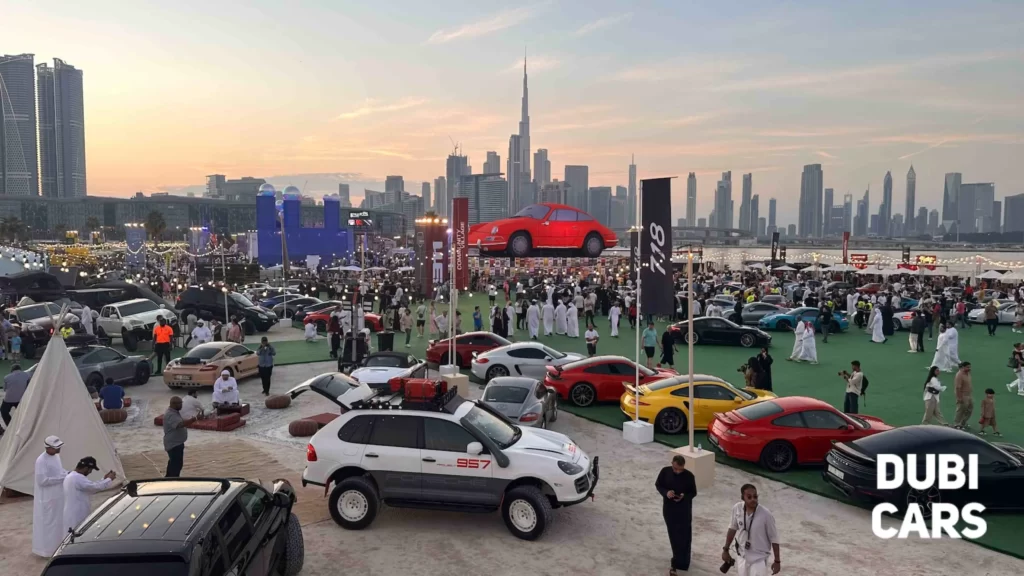
The UAE has long been one of the natural habitats of the hypercar. Bugatti Veyrons, Chirons, McLaren P1s and Porsche 918 Spyders are genuinely seen on public roads here.
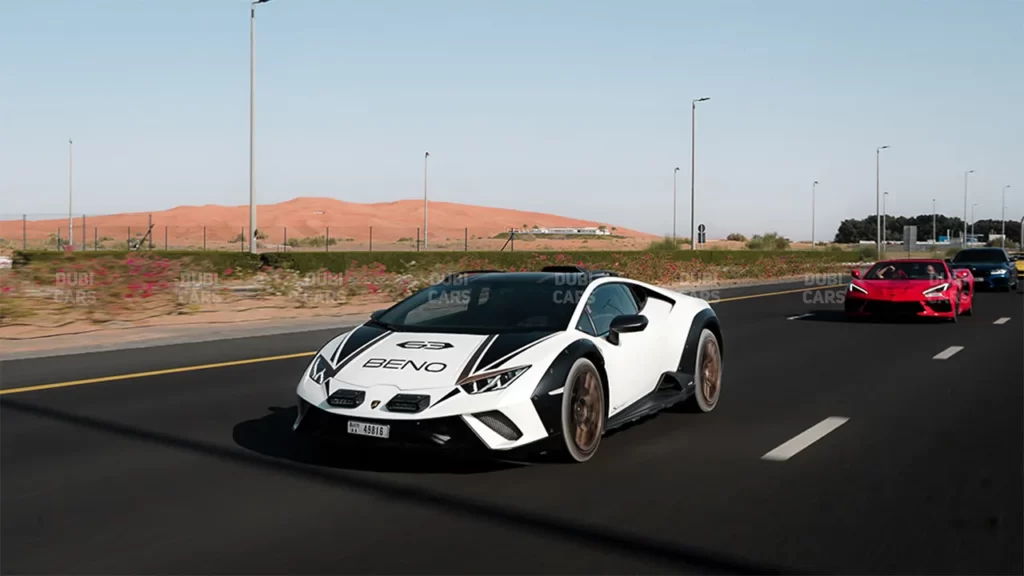
Local collectors have helped turn limited-production cars into cultural events, often commissioning specifications that become famous far beyond the Emirates. However, the relationship between the UAE and the global supercar industry is now evolving.
BlueFive Capital’s acquisition brings Abu Dhabi directly into the ownership structure of the company behind Bugatti, one of the most recognised and valuable names in automotive history.
From Supercar Showrooms To Boardrooms
For years, the UAE made automotive headlines through the cars parked outside its hotels, displayed in its showrooms and at its enthusiast events. Increasingly, those headlines concern capital, technology, manufacturing and corporate ownership.
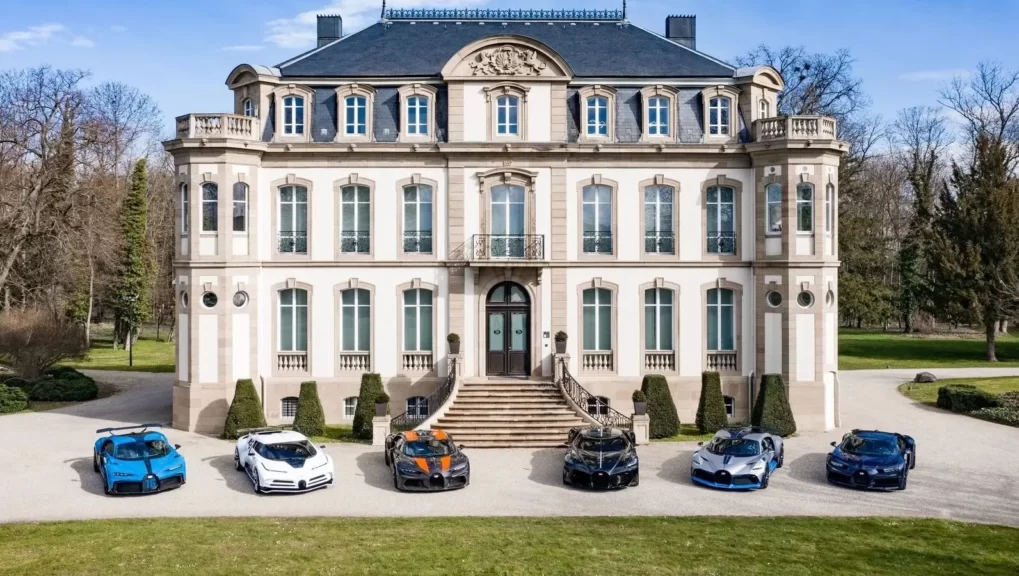
BlueFive’s 30% stake also comes with a board seat and two observer seats. That gives an Abu Dhabi-based company a meaningful voice as Bugatti Rimac enters the Tourbillon era and develops its long-term product strategy.
The hypercars are still here, thankfully. The big difference is that UAE companies are increasingly gaining influence over what hypercar gets built next.
Abu Dhabi’s Growing Automotive Portfolio
This is not Abu Dhabi’s first major move involving a globally recognised performance-car manufacturer.
CYVN Holdings completed its acquisition of McLaren Automotive in 2025, along with a non-controlling stake in McLaren Racing. The investment was intended to provide McLaren Automotive with greater financial stability and support its next stage of growth.
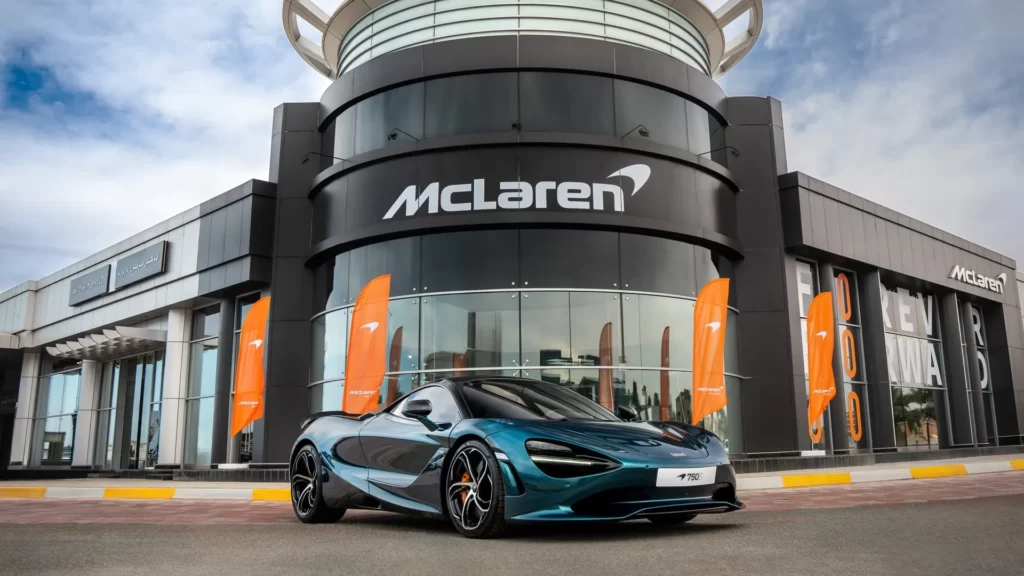
CYVN has also invested extensively in NIO and helped establish NIO MENA. Those plans included an Abu Dhabi research and development centre focused on artificial intelligence and autonomous-driving technology.
These investments suggest that the UAE wants a larger role across the automotive value chain. That includes vehicle sales and ownership, but also finance, research, advanced technology, manufacturing and corporate strategy. The UAE’s automotive influence is becoming considerably harder to describe using showroom sales alone.
Bugatti’s Journey Through The Decades
Ettore Bugatti founded the company in Molsheim in 1909, building elegant road cars and dominant racing machines such as the Type 35. Production faded after the Second World War, before Italian businessman Romano Artioli revived the marque with the EB110 in the 1990s.
Volkswagen acquired Bugatti in 1998 and funded its most ambitious era, producing the 987hp Veyron and 1,479hp Chiron. In 2021, Bugatti was taken over by the newly formed Bugatti Rimac joint venture, owned 55% by Rimac Group and 45% by Porsche.
Porsche has now sold its stake to the HOF-led consortium. Rimac Group retains control, while BlueFive Capital holds 30% and other consortium investors own the remaining 15%.
How Did Porsche Become Involved With Bugatti Rimac?
Porsche and Rimac Group established the Bugatti Rimac joint venture in 2021. Rimac Group took a 55% majority stake, while Porsche owned the remaining 45%.
The arrangement brought the historic French hypercar manufacturer together with Mate Rimac’s rapidly growing Croatian technology company. At the time, the pairing seemed almost improbable.
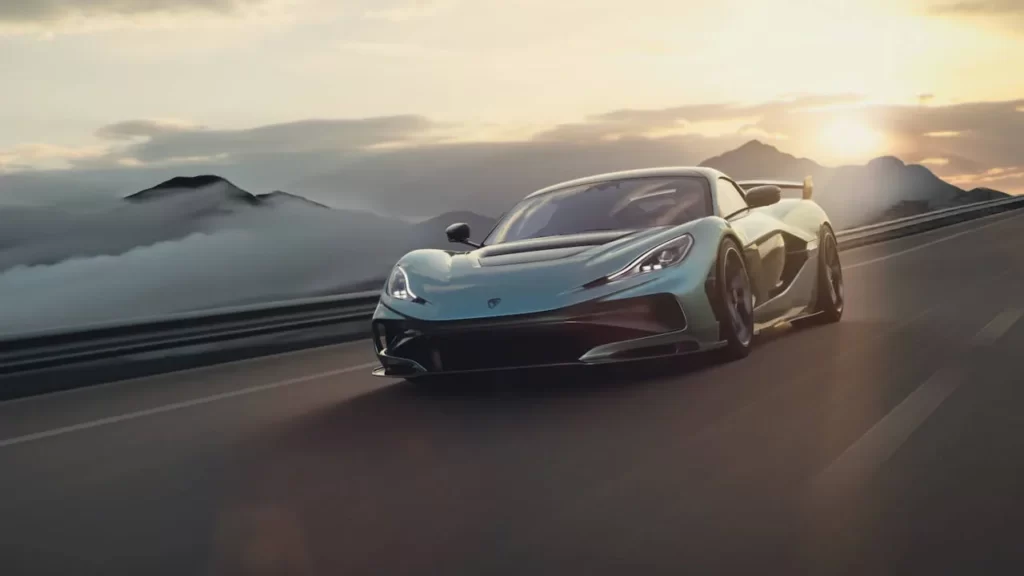
Bugatti had built its modern reputation around massive combustion engines, exquisite craftsmanship and top-speed records. Rimac had emerged from an electric BMW E30 project to develop some of the most advanced EV powertrains in the industry.
What Did Rimac Bring To Bugatti?
Rimac brought expertise in batteries, electric motors, software and high-performance electric powertrains. More importantly, it had already demonstrated that electric cars could deliver performance dramatic enough to interest even stubborn petrolheads.
The Rimac Nevera broke 23 performance records in a single day, including a 0-400-0km/h time of 29.94 seconds. It produced 1,914hp and 2,360Nm from four electric motors.
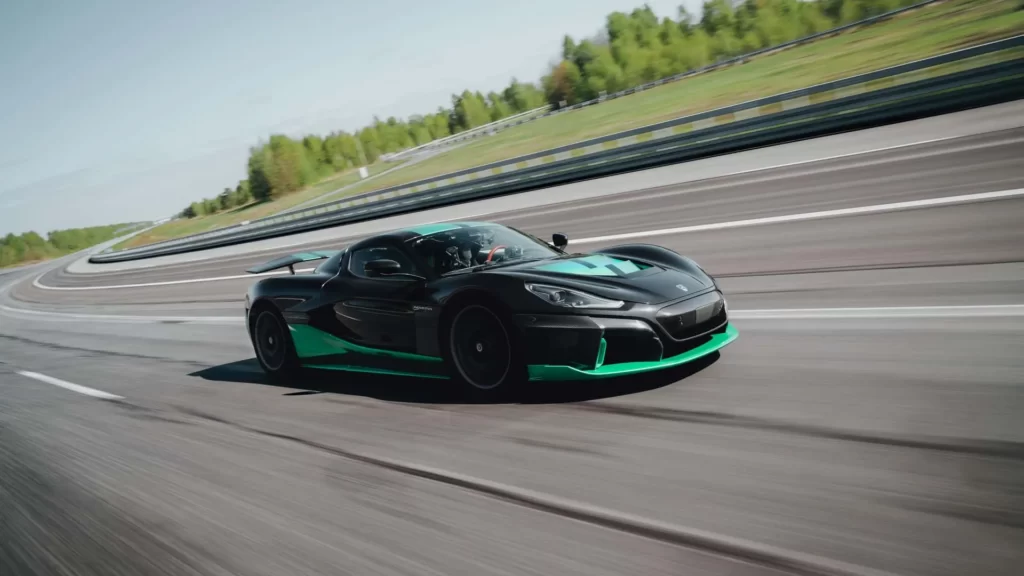
Under the joint venture, Bugatti retained its identity, headquarters and production base in Molsheim. Rimac supplied the electrification knowledge required to carry that identity into a new generation.
Why Did Porsche Sell Its Stake?
Porsche describes the transaction as another step towards focusing on its core business. Selling the two stakes will generate proceeds of approximately €1 billion.
Of that amount, €250 million will be used to further fund Porsche’s pension obligations. The transaction is also expected to lift its projected 2026 Automotive Net Cash Flow Margin from 3-5% to 5.5-7.5%.
Selling a non-core investment gives Porsche additional financial flexibility while it continues spending heavily on new vehicles, combustion engines, hybrids, electric models, software and battery development.
What Changes For Mate Rimac & Bugatti Leadership?
The completed transaction strengthens Mate Rimac’s strategic and operational control over Bugatti Rimac and Bugatti Automobiles.
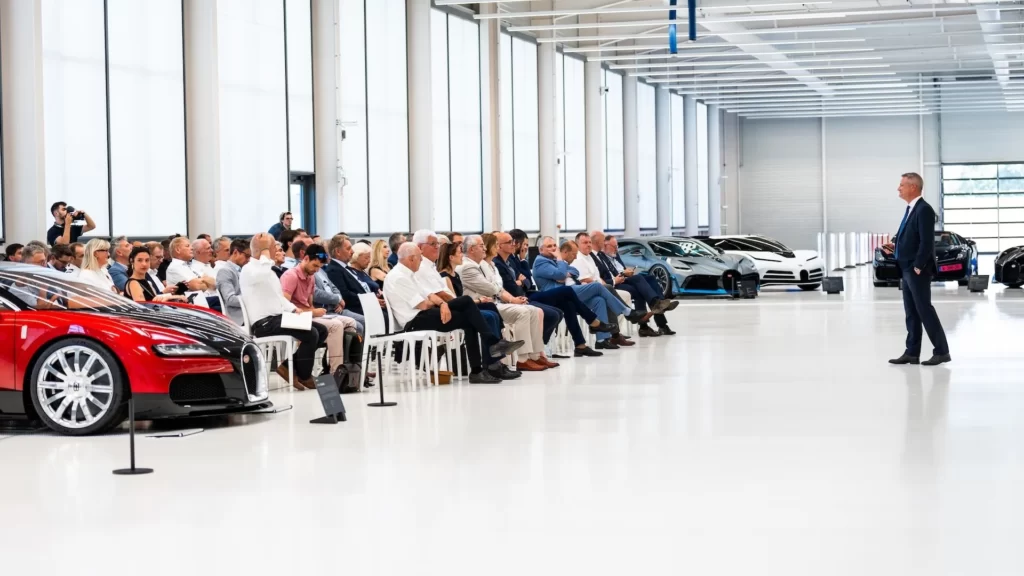
Mate Rimac remains CEO of Bugatti Rimac and will additionally become President of Bugatti Automobiles. Christophe Piochon will step down as Bugatti President and Chief Operating Officer of Bugatti Rimac.
The new structure places Mate Rimac more directly in charge of Bugatti during one of the company’s most important transitions. Marko Brkljačić, formerly Chief Operating Officer at Rimac Technology, will join the Bugatti Rimac leadership team as COO. Current Bugatti Automobiles Managing Director Hendrik Malinowski is expected to become the brand’s Chief Commercial Officer. Further leadership changes are also planned.
Mate Rimac must now protect the theatre, craftsmanship and mechanical drama expected from Bugatti while integrating the technology that made Rimac globally relevant. Bugatti customers tend to welcome innovation, provided it arrives wrapped in carbon fibre and accompanied by an engine capable of propelling it into the stratosphere.
What Does The Sale Mean For Rimac Group?
Porsche’s departure simplifies a complicated ownership relationship involving Porsche, Rimac Group and Bugatti Rimac.
Rimac Group remains the majority shareholder in Bugatti Rimac, while the new investment consortium introduces fresh capital and institutional backing. BlueFive becomes the second-largest shareholder with its 30% position.
For Rimac Group, the transaction strengthens Mate Rimac’s long-term vision while providing new financial partners for the costly task of developing hypercars, batteries, electric powertrains and advanced vehicle technology.
Does Porsche Need The Money?
Porsche is not in immediate financial distress. It ended the first half of 2026 with €7.3 billion in automotive net liquidity and generated more than €1 billion in automotive net cash flow.
However, the company is working through an expensive strategic realignment. Global deliveries fell from 146,391 cars in the first half of 2025 to 122,306 during the same period in 2026. Revenue declined by 5.1% to €17.23 billion.
Operating profit improved to €1.35 billion, helped by tighter cost control and Porsche’s value-over-volume strategy. Even so, turning minority investments into approximately €1 billion gives Stuttgart additional room to manage its own transformation.
The Volkswagen-Bugatti Story
Any conversation about modern Bugatti ownership must return to Volkswagen. The Volkswagen Group acquired the Bugatti name in 1998 under Ferdinand Piëch.
The ambition was magnificently excessive: build a road car with 1,000hp, four turbochargers, 16 cylinders, all-wheel drive, and a top speed beyond 400km/h. It became one of the most technically ambitious projects ever undertaken. The result was the Bugatti Veyron.
The Bugatti Veyron Changed The Hypercar
The original Veyron’s 8.0-litre quad-turbocharged W16 produced 987hp and 1,250Nm. It could accelerate from 0-100km/h in approximately 2.5 seconds and reach 407km/h.
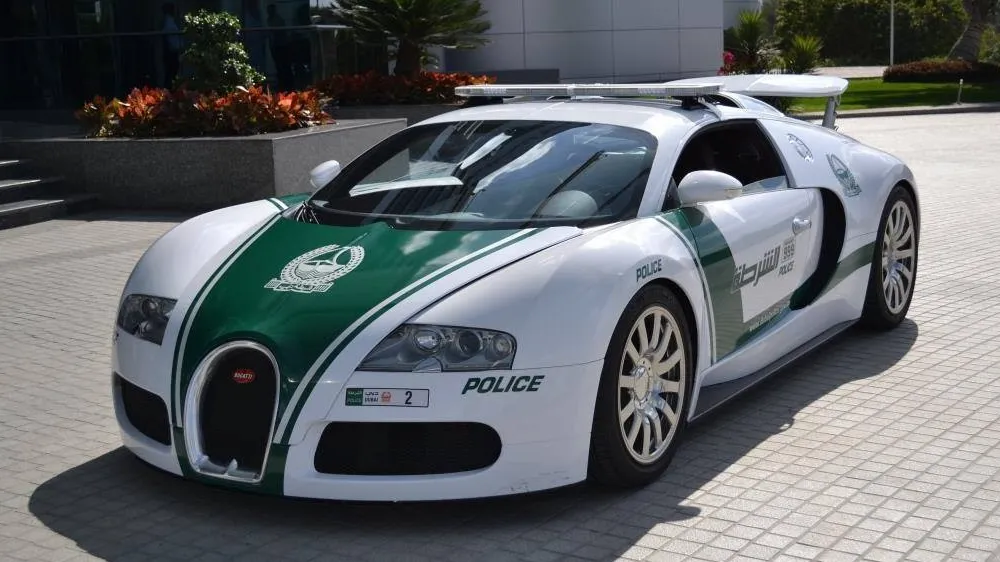
The later Veyron Super Sport increased output to 1,183hp and recorded a top speed of 431.072km/h in 2010. It pushed production-car performance into territory previously reserved for racing machinery and highly optimistic conversations between engineers.
The Veyron was enormously complicated and expensive to develop. Yet that was partly its appeal. Volkswagen had demonstrated what its engineering empire could achieve when commercial restraint was given the afternoon off.
The Chiron Took The W16 Further
The Chiron arrived in 2016 with 1,479hp and 1,600Nm. It retained the 8.0-litre quad-turbo W16 while making the entire package faster, stronger and more refined.
The Chiron Super Sport 300+ later became the first production-based car to exceed 300mph, reaching 490.484km/h during Bugatti’s record attempt.
Production eventually concluded with the 500th car, the Bugatti Chiron Super Sport L’Ultime. Its completion closed the extraordinary W16 chapter that Volkswagen had begun with the Veyron.
What Comes Next For Bugatti?
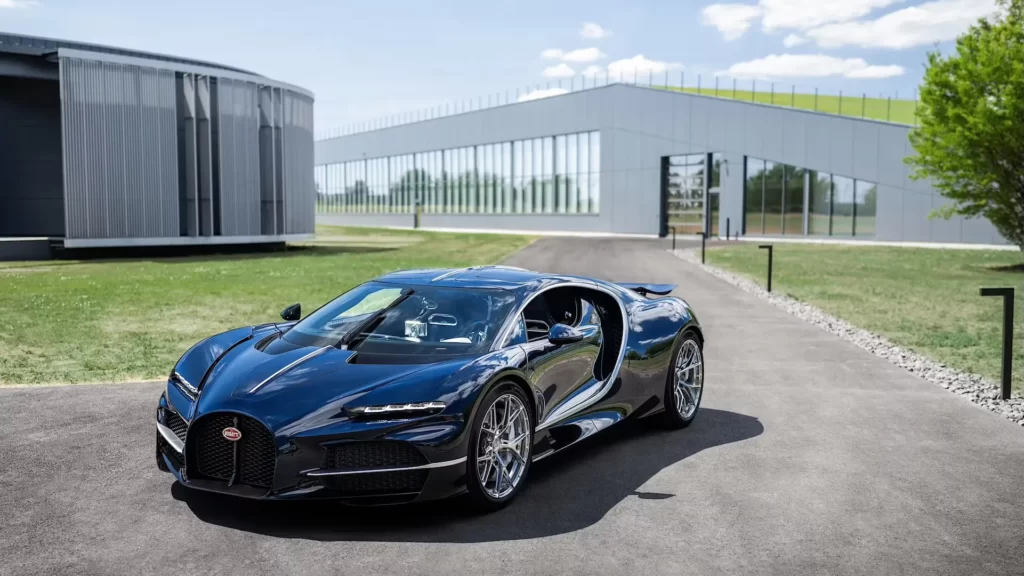
Bugatti opened its new La Manufacture production facility in Molsheim in July 2026. The Tourbillon has also entered the final stages of its testing programme. Together, the new facility and new hypercar form the foundation of the ten-year Bugatti vision established under Mate Rimac’s leadership in 2021.
The timing makes BlueFive’s arrival especially significant. It is investing as Bugatti prepares to move beyond the W16 era and begin production of its first electrified series-production hypercar.
The Bugatti Tourbillon Begins A New Era
The Bugatti Tourbillon replaces the quad-turbocharged W16 with an 8.3-litre naturally aspirated V16 developed with Cosworth.
The combustion engine produces 1,000hp, while three electric motors add another 800hp. Combined output stands at 1,800hp, making electrification an accomplice to the drama rather than its replacement.
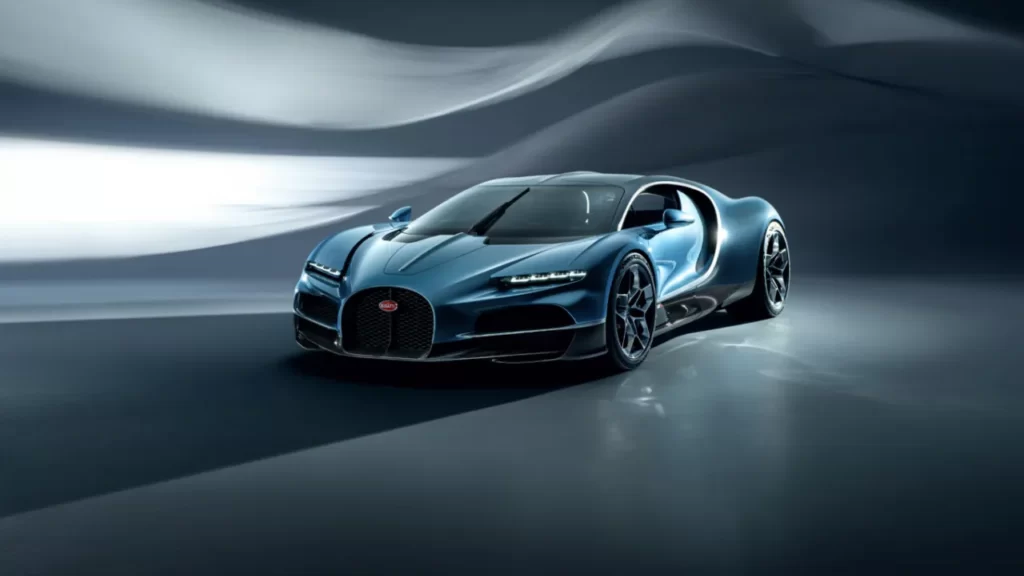
A 24.8kWh battery provides approximately 60km of electric range. When the V16 and electric motors work together, Bugatti claims 0–100km/h in around two seconds, 0–300km/h in under ten seconds and a potential top speed of 445km/h with the Speed Key.
How Exclusive Is The Tourbillon?
Only 250 examples of the Tourbillon will be produced. Prices start at €3.8 million before taxes and personalisation, equivalent to approximately AED 16.5 million. In the UAE, where restrained hypercar specifications are rarely standard, the final configurator total could become considerably more entertaining.
The Tourbillon represents what Bugatti Rimac was created to deliver: old-world craftsmanship and mechanical theatre supported by new-world electrical performance. A naturally aspirated V16 is already wonderfully unreasonable. Connecting it to three electric motors makes it precisely the sort of engineering madness Bugatti’s history demands.
Editor’s Take
Porsche’s exit is significant because these were never passive shares in anonymous companies. Porsche, Bugatti and Rimac represent three different interpretations of performance: repeatable sports-car precision, extravagant mechanical speed and disruptive electric technology. Turning those holdings into approximately €1 billion gives Porsche useful capital as it concentrates on its own costly transformation.
For the UAE, BlueFive Capital’s 30% stake is the larger story. Abu Dhabi-backed investors now hold meaningful interests connected to McLaren, NIO and Bugatti Rimac. The country’s automotive identity is growing from a celebrated market for extraordinary cars into a source of capital and strategic influence behind the brands themselves.
Follow us on

Recent Stories

2027 GAC GS7 PHEV Launched In The UAE At AED 159,900
GAC has officially launched the all-new 2027 GS7 PHEV in the UAE, expanding its electrified SUV line-up with a five-seat...

Zeekr Opens Redesigned Dubai Showroom & Previews 1,380hp 9X SUV
Zeekr UAE and AWR Automotive have unveiled the brand’s redesigned flagship showroom on Sheikh Zayed Road, Dubai. However, the showroom...

Chinese Car Brand Li Auto Launched In The UAE: New Li L9 Livis Introduced
Chinese new-energy vehicle manufacturer Li Auto has officially entered the UAE market with the launch of its flagship Li L9...

Jetour G700 TopFire Launched In The UAE: Prices Start At AED 229,000
The Jetour G700 TopFire has officially been launched in the UAE, bringing a more extreme, off-road-focused version of the G700...
New BMW 7 Series Arrives In The UAE With Neue Klasse Technology & More
BMW has launched the new 7 Series in the Middle East, with the flagship luxury sedan making its regional debut...
Toyota & Lexus Takata Airbag Recall In The UAE: Affected Models & Free Repair
Al-Futtaim Toyota and Lexus have launched a renewed safety campaign in the UAE urging owners of vehicles affected by the...

