
Driving During A Hot Summer: Precautions To Take With Your Car
 September 23, 2026
, 7 Min Read
September 23, 2026
, 7 Min Read
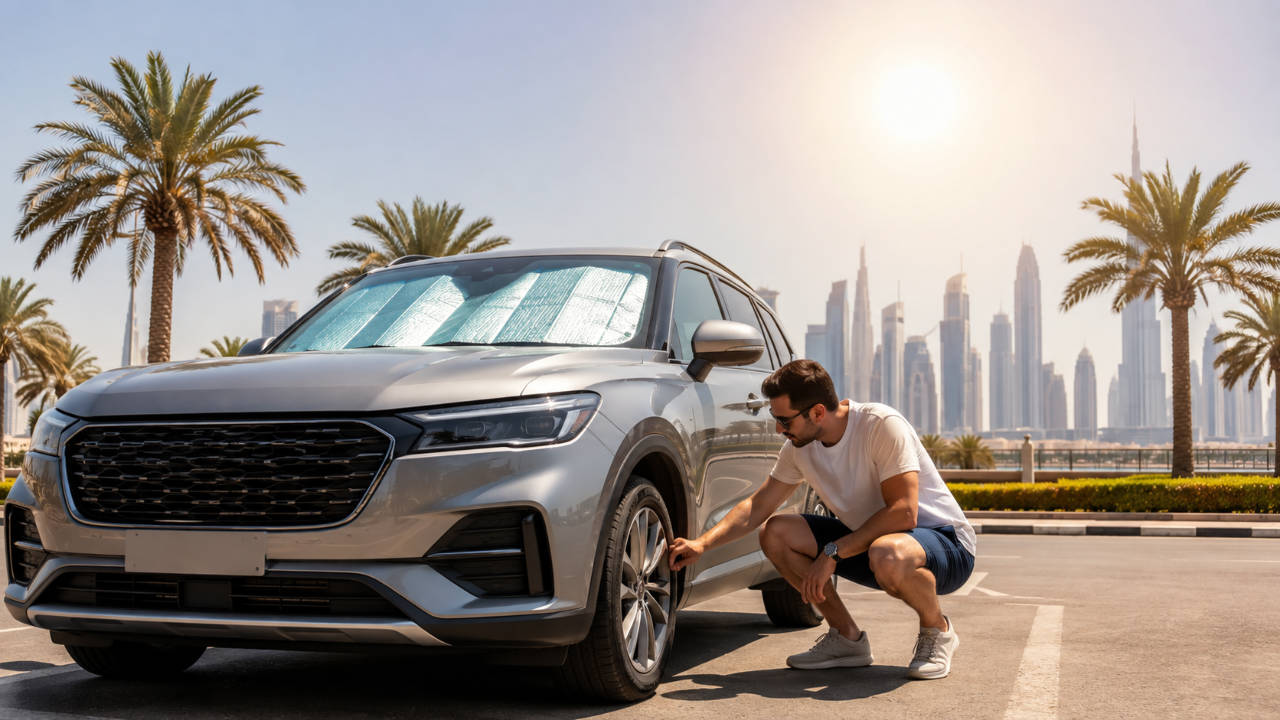
Summer driving in the UAE puts extra strain on almost every part of a car. Extreme heat, scorching road surfaces, long periods of air-conditioning use and hours parked in direct sunlight can affect tyres, batteries, cooling systems, electronics and cabin materials.
The effects are easy to spot during peak summer, from cars stopped on the roadside with their bonnets raised to pieces of failed tyres on highways. Summer safety is therefore about more than preventing a breakdown. Drivers also need to keep the cabin cooler, protect passengers from heat-related injuries and know what to do during an emergency.
Why Does Your Car Need Extra Attention In Summer?
Heat accelerates wear on batteries, tyres, hoses, seals and cooling systems. A battery can appear healthy one day and fail with little warning because high temperatures speed up its internal ageing.
Tyres face an especially difficult combination of extreme heat, hot tarmac, motorway speeds, incorrect pressure, overloading and ageing rubber. UAE Ministry of Interior data recorded 65 accidents caused by tyre blowouts between 2023 and 2025.
These conditions help explain why tyres fail more often during UAE summers.
Extreme heat can affect EVs and hybrids too. Thermal-management systems protect their batteries, but high temperatures can increase cooling demand, temporarily reduce range and affect rapid-charging performance. Read more about how UAE summer heat affects EV and hybrid batteries.
For a wider look at heat-related vehicle damage, see how extreme GCC heat affects cars.
How Should You Prepare Your Car For Summer?
Start with the tyres. Check pressure when they are cold and use the figure shown on the vehicle’s door pillar or in the owner’s manual. Inspect for cracks, cuts, bulges, uneven wear and exposed cords.
Tyre age matters too. A tyre can still have usable tread while its rubber has deteriorated through age and heat exposure. Our guide explains when to change your car tyres in the UAE.
Next, test the battery, particularly if the engine cranks slowly or you notice electrical problems.
The cooling system also deserves attention. Check coolant only when the engine is completely cold; look for leaks and make sure the radiator fan works correctly. Never open a radiator or pressurised coolant cap while the engine is hot.
Also check:
- Engine oil
- Brake fluid
- Windscreen-washer fluid
- Belts and hoses
- Cabin filter
- Air-conditioning performance
Weak or inconsistent AC should be properly diagnosed rather than repeatedly topping up refrigerant without checking for a leak. For a complete checklist, see how to prepare your car for summer in the UAE.
How Can You Keep Your Car Cooler?
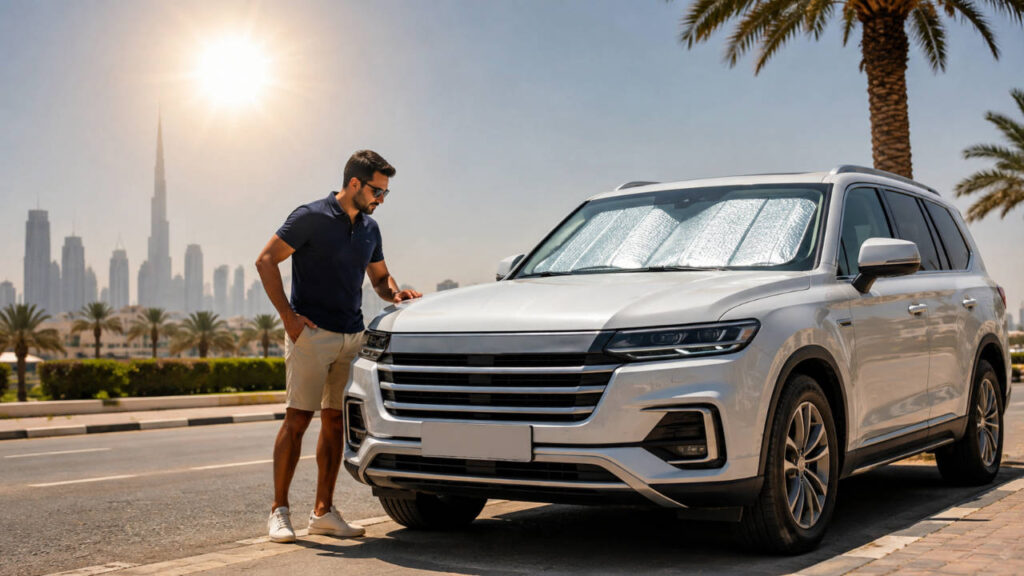
Park under cover whenever possible. If shade is unavailable, use a properly fitted reflective windscreen sunshade.
High-quality window tint can also reduce heat entering the cabin, but darkness alone does not determine heat rejection. Look for a strong Total Solar Energy Rejection, or TSER, rating.
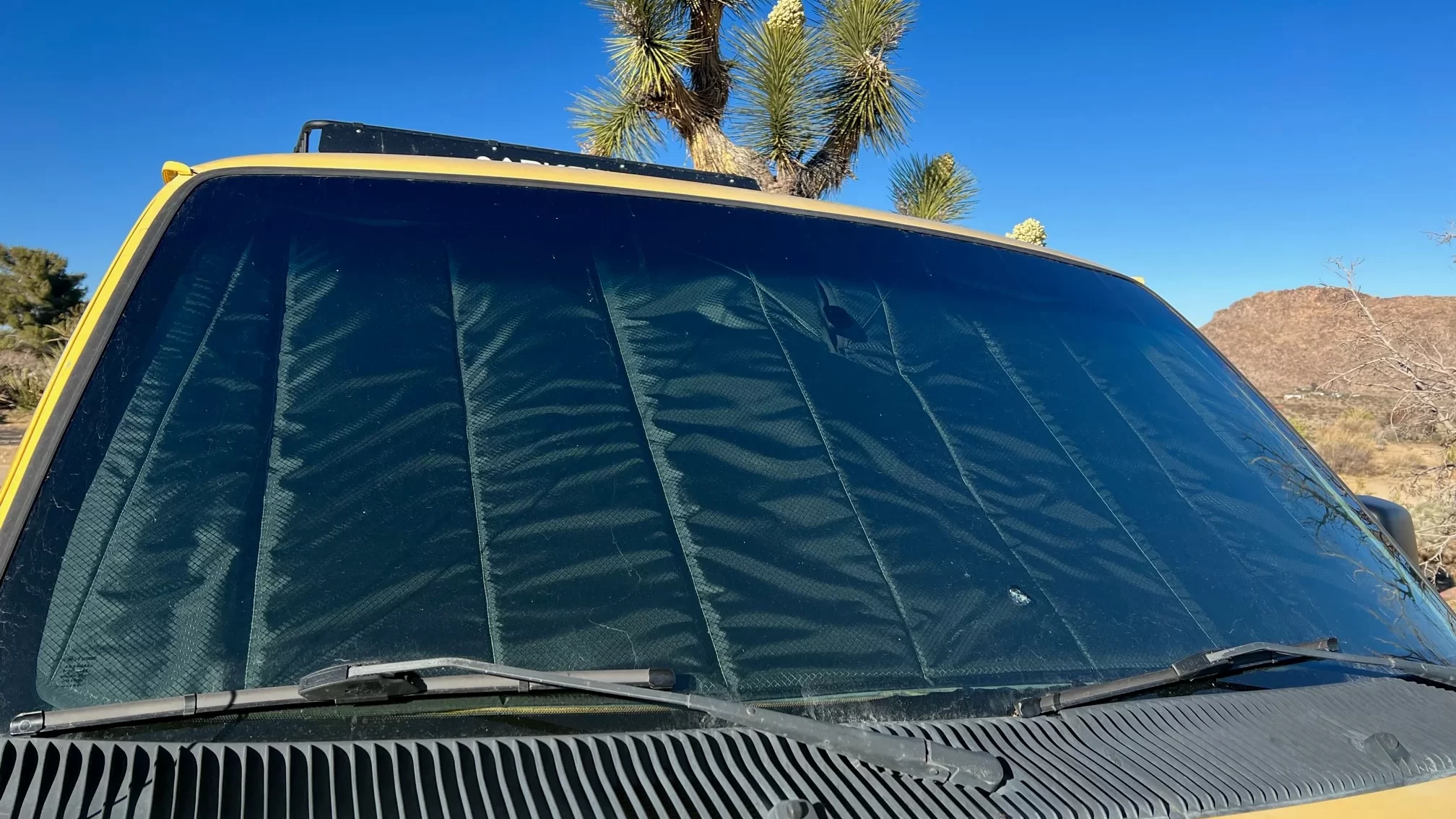
A good ceramic tint can reduce cabin temperature by around 2°C to 5°C, while quality reflective sunshades can make dashboard surfaces up to 15°C cooler under certain test conditions.
Read our guide to UAE car-window tint rules and heat-protection benefits, along with more ways to keep your car cool during the UAE summer.
Before driving, open the doors or windows briefly to release trapped hot air. Start the AC in fresh-air mode, then switch to recirculation once the hottest air has escaped.
How Can You Avoid Injuries From A Hot Parked Car?
A parked car can become dangerously hot. Dubai Police has previously warned that temperatures inside a locked vehicle exposed to the sun can reach approximately 70°C.
Steering wheels, seat-belt buckles, gear selectors, metal trim and child-seat fittings can become hot enough to burn skin. A published medical case even documented an 11-month-old infant suffering a patterned burn after bare skin touched a sun-heated plastic section of a child seat.
Always cool the cabin and check child-seat surfaces and buckles before placing a child inside.
Most importantly, never leave a child or pet unattended inside a parked vehicle, even for a few minutes. Leaving the windows slightly open does not make the vehicle safe.
During the first eight months of 2022, Dubai Police rescued 36 children from locked vehicles. In May 2024, a seven-year-old boy died in Sharjah after being left inside a locked vehicle for several hours.
Drivers should make one habit automatic: check the rear seats every time before locking the car.
What Should You Never Leave Inside A Hot Car?
Heat can also turn everyday objects into hazards. Aerosol cans and other pressurised containers have exploded inside hot vehicles in documented incidents, damaging dashboards, windscreens and sunroofs.
Remove items such as:
- Aerosol cans
- Lighters
- Perfume bottles
- Flammable liquids
- Gas cylinders
- Power banks
- Loose lithium batteries
Power banks and jump packs may be useful during a journey, but they should not live permanently inside a hot cabin.
What Daily Precautions Should You Take?
- Drivers who regularly park outside should make summer care part of their routine.
- Before driving, look for visibly low tyres or fluid leaks, ventilate the cabin and make sure the AC is working properly.
- While driving, monitor the temperature gauge and warning lights. Keep enough fuel or EV charge to handle congestion, diversions or unexpected delays.
- When parking, use a sunshade, remove heat-sensitive objects and check the rear seats.
- For more everyday advice, read our essential summer driving tips.
- If the car will remain parked for several weeks, take additional precautions with the battery, tyres and fluids. Read our guide to car storage and maintenance while travelling.
What Should You Do During A Tyre Blowout?
- If a tyre blows out, hold the steering wheel firmly and keep the vehicle as straight as possible.
- Do not stamp on the brake. Ease off the accelerator gradually, allow the car to slow naturally, activate the hazard lights and move to a safe stopping area.
- Once stopped, do not stand in live traffic or between the car and passing vehicles. Only change the tyre yourself if the location is genuinely safe.
What If The Car Overheats Or Breaks Down?
- If the temperature warning appears, switch off the AC and pull over safely. Stop the engine and never open a hot coolant cap.
- Continuing to drive an overheating engine can warp the cylinder head, damage the head gasket or potentially ruin the engine. If you are unsure what an alert means, see our guide to car dashboard warning lights.
- If the vehicle breaks down, move away from live traffic where possible, activate the hazard lights and call roadside assistance. If smoke or flames appear, get everyone out, move well away and contact emergency services.
- Before a longer journey, check tyres, coolant, oil, battery, AC, fuel or EV charge, drinking water and phone charge. Our guide to the best UAE drives this summer includes more road-trip preparation advice.
What Is The Main Summer Safety Rule?
Summer safety comes down to four things: prepare the car, keep the cabin cooler, protect everyone inside and know how to react when something goes wrong.
A few simple checks and daily habits can prevent expensive damage, roadside emergencies and, more importantly, dangerous situations during the UAE summer.
Find the best used cars for sale in the UAE.
Stay tuned to UAE’s most popular auto blog for more information about the latest happenings in all of the Emirates.
FAQs
How should I prepare my car for summer in the UAE?
Check the tyres, battery, coolant, engine oil, AC, brakes and fluids. Also inspect belts, hoses and tyre condition before peak summer temperatures arrive.
How often should I check tyre pressure during summer?
Check tyre pressure at least weekly and before long journeys. Always measure pressure when the tyres are cold and follow the manufacturer’s recommended figures.
Can hot weather cause a tyre blowout?
Yes. Extreme heat increases tyre stress, especially when tyres are old, damaged, incorrectly inflated, overloaded or driven at sustained high speeds.
How can I keep my car cooler when parked in the sun?
Park in shade, use a reflective windscreen sunshade and legal heat-rejecting window tint. Ventilate the cabin briefly before switching the AC to recirculation.
What should I do if my car overheats in summer?
Pull over safely, switch off the AC and engine, and allow the car to cool. Never open a hot radiator or pressurised coolant cap.
Follow us on

Recent Stories

The Dubai Luxury Car Rental Guide For Tourists Who Actually Want to Drive Something Interesting
Most guides to luxury car rental Dubai tell you the same things. Smooth roads. Great value compared to Europe. Book...
Used Car Inspection In The UAE: Warning Signs Before You Buy
Buying a used car in the UAE can save you a considerable amount of money, especially when compared to purchasing...
New Chinese SUV Or Used Japanese SUV For The Same Money
Imagine having AED 100,000 to spend on an SUV in the UAE. You could drive home in a brand-new Chinese...

Who Is Dubi? The DubiCars Way Forward
A first car. A family upgrade. A weekend toy that requires a slightly creative explanation at home. Every car search...
Should You Buy A Chinese Car In The UAE? Pros, Cons & What To Know
Chinese cars have quickly moved from being budget alternatives to serious competitors in the UAE. Brands such as BYD, Geely,...

Used Nissan Patrol Buying Guide: What To Check Before Paying
Few used SUVs have as much appeal in the UAE as the Nissan Patrol. Whether it is an old-school Y60,...