
Why Are Modern Cars Getting So Heavy? Reasons Behind Increasing Car Weights
 November 24, 2026
, 6 Min Read
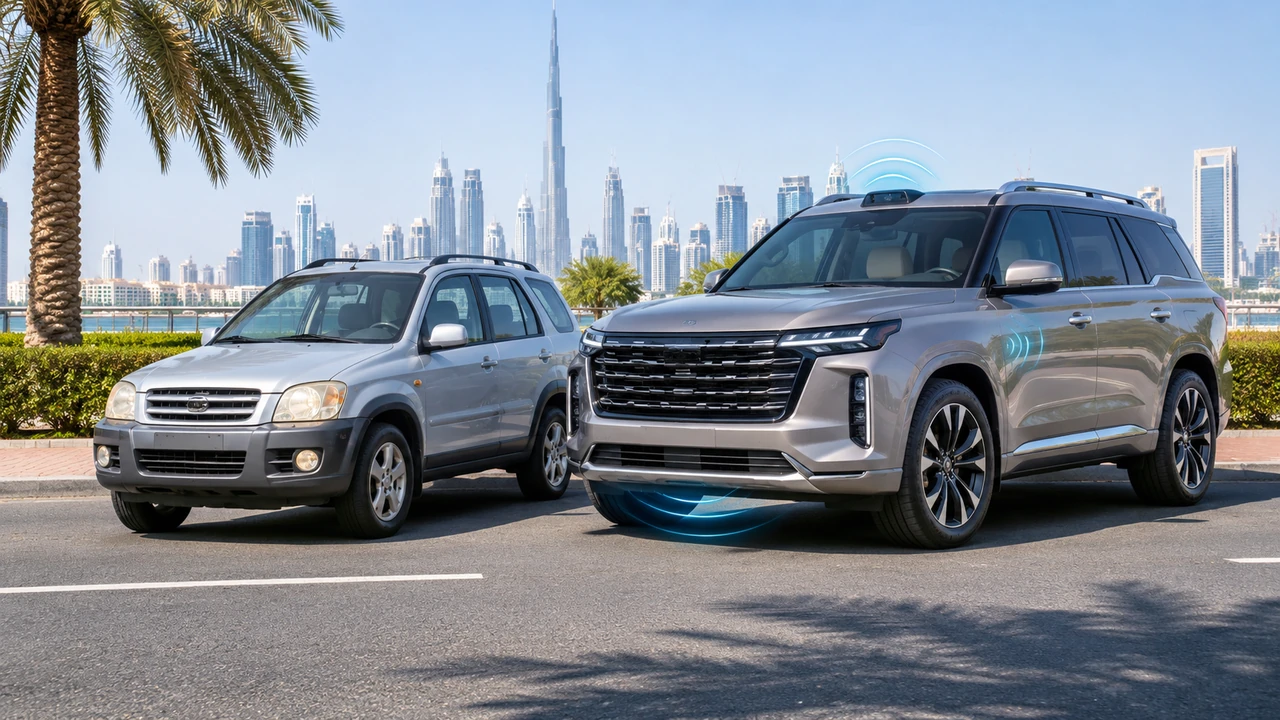
Cars are getting bigger, faster, safer and more comfortable. However, one thing keeps increasing with every new generation: weight.
A modern family SUV can easily weigh over two tonnes. Some luxury SUVs and electric vehicles (EVs) exceed three tonnes. Even sports cars, once famous for being lightweight, are gaining weight.
Take the latest BMW M5, for example. Its plug-in hybrid powertrain has helped push its weight to around 2.4 tonnes, significantly more than the previous generation.
 AI Quick Summary
Modern cars are consistently increasing in weight due to factors like larger dimensions, enhanced safety features, luxury amenities, and the heavy battery packs of electric and hybrid vehicles. This growing mass negatively impacts fuel efficiency, braking, and overall handling performance.
This summary was generated by AI using this article’s content.Read Next



So, why are modern cars getting heavier? Is the extra weight necessary, and how does it affect performance, safety and driving in the UAE?
Are Modern Cars Really Getting Heavier?
Yes, and the numbers are quite surprising. In the Netherlands, the average unladen weight of cars manufactured in 2016 was 1,224kg. For cars manufactured in 2024, that figure increased to 1,554kg, a jump of nearly 27%.
This reflects changing buying habits, including growing demand for SUVs, electric vehicles and plug-in hybrids. But batteries aren’t the only reason cars are getting heavier.
Modern Cars Are Getting Bigger
Compare a modern car with its equivalent from 20 years ago. Chances are, the new model is longer, wider and packed with more equipment. Manufacturers are increasing vehicle dimensions to offer better passenger comfort, larger boots and more interior space.
However, bigger bodies require additional materials, stronger chassis components and larger suspension systems. Even compact SUVs have grown considerably. This trend is especially noticeable in the UAE, where spacious family vehicles remain popular.
However, larger doesn’t always mean more practical. Our SUV vs MPV vs Wagon comparison explains the differences.
Modern Safety Features Add Weight
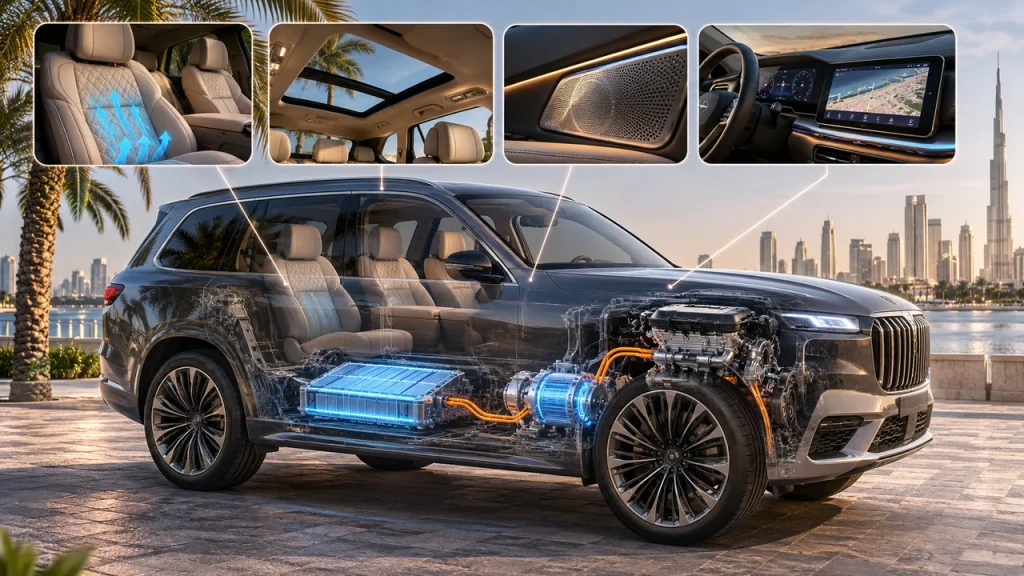
Older cars had relatively basic safety equipment. Modern vehicles feature reinforced passenger compartments, crumple zones, multiple airbags and stronger body structures. These improvements help protect occupants during accidents but can increase weight.
Today’s cars also feature advanced driver assistance systems (ADAS), including cameras, radar sensors and automatic emergency braking. The electronics themselves are relatively light, but the complete safety package contributes to the vehicle’s complexity.
Interestingly, a heavier car isn’t automatically safer. Good engineering and crash protection matter more than simply adding weight. Check out our guide to the safest cars available in the UAE.
Electric Vehicle Batteries Are Heavy
One of the biggest reasons car weights are increasing is electrification. Unlike conventional cars, EVs carry large battery packs that can weigh several hundred kilograms.
Larger batteries generally offer longer driving ranges but also add considerable weight. For example, the recently launched Polestar 5 features a 112kWh battery and weighs approximately 2,500kg.
EVs also require battery protection structures, cooling systems and electrical components. However, electric motors are generally lighter and more compact than conventional engine-and-transmission combinations.
Despite their extra weight, EVs are usually much more energy-efficient than petrol vehicles. Our UAE electric car buying guide explores their advantages and ownership considerations.
Hybrid Cars Carry Two Power Systems
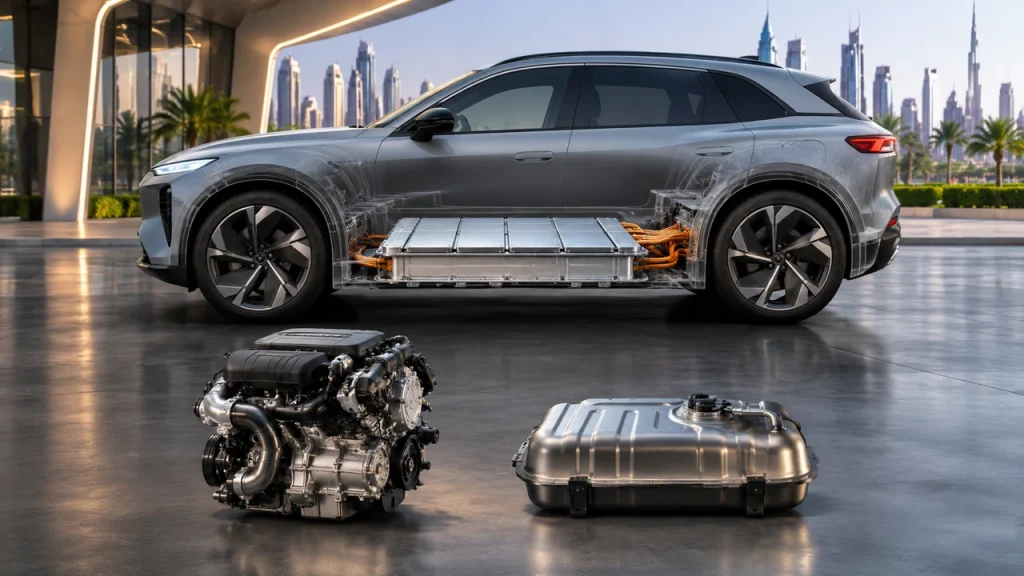
Hybrid vehicles combine petrol engines with electric technology. Plug-in hybrids are particularly heavy because they need an engine, electric motor, sizeable battery, fuel tank and supporting systems.
The 2025 BMW M5 demonstrates this perfectly. Its plug-in hybrid system added more than 500kg to its weight compared with the previous generation.
However, conventional hybrids typically use smaller batteries and carry less additional weight. Read our Hybrid vs EV vs Petrol comparison to understand the differences.
Luxury Features Are Adding Extra Kilos
Modern interiors are packed with technology and comfort features. Power-adjustable seats, panoramic sunroofs, massage functions, premium sound systems, and extensive sound insulation all add weight. Luxury SUVs take things further with powered doors, reclining rear seats and entertainment systems.
In the UAE, features such as ventilated seats and powerful climate control are particularly desirable. Individually, these features might not add much weight. Together, they can make a noticeable difference.
More Performance Requires Stronger Components
Today’s cars produce significantly more power than their predecessors. However, controlling that power requires stronger transmissions, larger brakes, wider tyres and reinforced suspension components.
Performance SUVs and sports cars also frequently feature all-wheel-drive systems, which add mechanical components. Modern off-road vehicles can be even heavier because of their transfer cases, locking differentials, and underbody protection.
Our AWD vs 4WD guide explains how these systems differ.
Buyers Want Cars That Do Everything
Modern vehicles are expected to be comfortable, powerful, safe, efficient and practical. A single SUV might need to handle school runs, highway journeys, towing and weekend desert adventures.
Meeting all these requirements often means additional equipment and stronger components. This is particularly relevant for UAE buyers who enjoy desert driving and off-road adventures.
How Does Extra Weight Affect Driving?
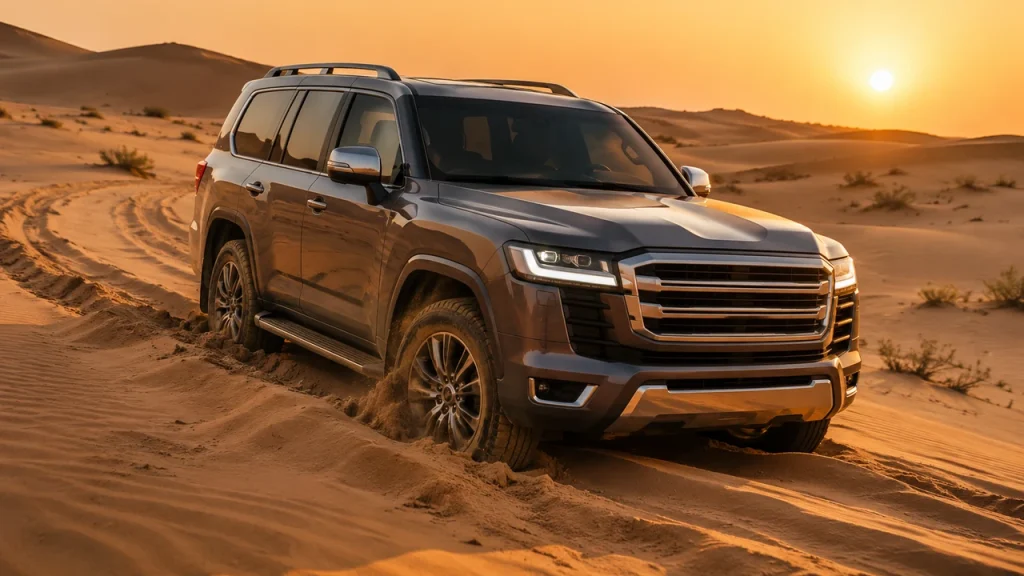
Weight influences almost every aspect of a car’s driving experience.
| Factor | Impact of extra weight |
| Fuel efficiency | Generally increases energy consumption |
| Braking | More energy must be managed when stopping |
| Handling | Can reduce agility |
| Tyres | Greater loads can increase wear |
| Acceleration | Requires more power |
| Off-roading | Can make soft-sand driving harder |
For UAE drivers, tyre wear deserves particular attention. Heavy vehicles combined with hot roads and incorrect tyre pressures can increase stress on tyres. Read our guide on why tyres fail more often during UAE summers.
Will Cars Become Lighter In The Future?
Manufacturers are exploring aluminium, high-strength steel, carbon fibre and lighter battery technology to reduce weight. Improved manufacturing techniques and more efficient vehicle designs can also help.
However, larger dimensions and growing equipment lists may offset these improvements. Explore the latest EV technology trends to see where the industry is heading.
Should UAE Buyers Worry About Car Weight?
Weight shouldn’t be the only consideration when choosing a vehicle. A lighter car may offer better efficiency and lower running costs, while a heavier SUV might provide more space, equipment and towing capability.
Compare fuel consumption, tyre specifications, driving requirements and overall expenses before buying. Our five-year UAE car ownership cost guide can help you understand the bigger picture.
Whatever car you’re thinking of, find it on Dubi with over 25,000 listings.
Stay tuned to the UAE’s most popular auto blog for more automotive content.
FAQs
Why are modern cars heavier than older cars?
Modern cars are larger and feature more safety equipment, technology, comfort features and electrified powertrains.
Are electric cars heavier than petrol cars?
Generally, yes. Large battery packs make many EVs heavier than comparable petrol cars, although weight varies between models.
Does a heavier car consume more fuel?
Usually, yes. Heavier vehicles need more energy to accelerate, although aerodynamics, engine efficiency and driving conditions also affect consumption.
Are heavier cars safer in accidents?
Not always. Greater weight can help in some collisions, but modern safety engineering and crash protection are more important than weight alone.
Is a lightweight car better for UAE driving conditions?
Lightweight cars can offer better efficiency and agility. However, comfort, cooling, safety and intended use are equally important considerations.
Follow us on

Recent Stories
Dubai To Fujairah: Bus, Etihad Rail & Driving Compared
Planning a trip from Dubai to Fujairah? Whether you’re heading to the beach, exploring the Hajar Mountains or enjoying a...
How To Check Used EV Battery Health, Warranty & Charging
Buying a used electric car in the UAE can save you thousands of dirhams compared to buying a new one....
Which Car Repairs Are Worth Doing Before Selling In The UAE?
Selling your car in the UAE? Before putting it up for sale, you might wonder whether spending money on repairs...
Explained: UAE’s New Five-Car Ownership & 9-Hour Driving Rules
Major changes are coming to UAE traffic regulations in 2027. These include a nine-hour driving limit, revised vehicle registration provisions,...

Upcoming Car Events In Dubai And The UAE For 2026-27: Dates, Venues & Tickets
Here are the upcoming car events in Dubai and across the UAE for the 2026-27 season. For now, November is...

Used Toyota Land Cruiser Buying Guide: Inspection Points And Service History To Check
The Toyota Land Cruiser is one of the most trusted SUVs in the UAE. From daily school runs to desert...