
BYD Produces 16 Million NEVs: New Milestone Achieved
 May 6, 2026
, 7 Min Read
May 6, 2026
, 7 Min Read
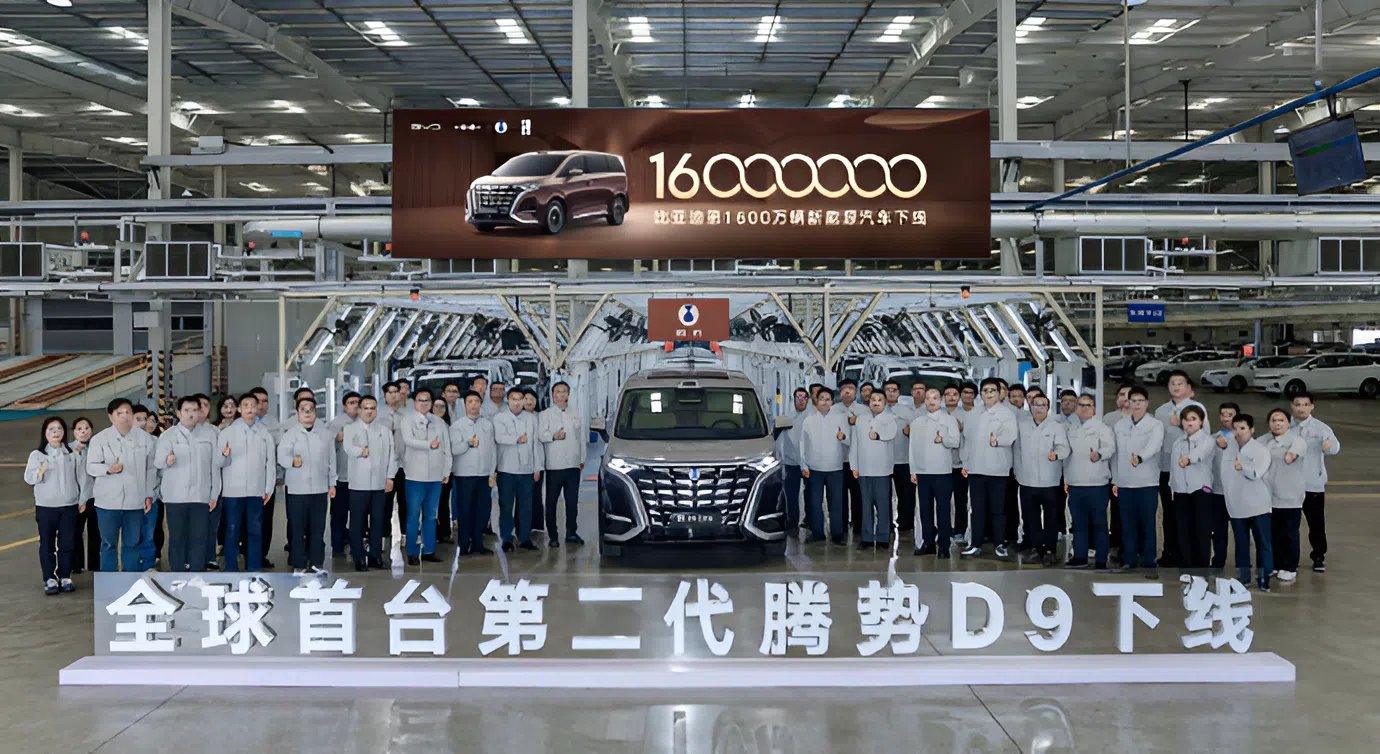
BYD has reached a major global milestone by producing its 16 millionth new energy vehicle (NEV). This achievement underlines how quickly the company has scaled in the electrified mobility space and how strongly global demand has shifted towards electric and hybrid vehicles.
 AI Quick Summary
BYD achieved a major global milestone by producing its 16 millionth new energy vehicle (NEV), showcasing its rapid scaling and the accelerating shift towards electric and hybrid vehicles worldwide. This landmark vehicle was the second-generation Denza N9, a premium SUV, highlighting BYD's diversified strategy to target both volume and the luxury EV segment. The achievement underscores the mainstream adoption of electric mobility and BYD's growing global presence with its vertically integrated production.
This summary was generated by AI using this article’s content.Read Next

The milestone is not just about production numbers. It reflects a broader industry transition where electrified vehicles are becoming mainstream. Consumers across key markets are now actively moving towards EVs and plug-in hybrids due to rising fuel costs, improved technology, and better long-term value.
How fast has BYD grown to this scale?
BYD’s journey to 16 million NEVs reflects one of the fastest expansions in automotive history. The company took several years to reach its first million vehicles, but growth has accelerated sharply in recent years as global EV adoption has increased.
A key factor behind this growth is BYD’s diversified approach. Unlike some competitors such as Tesla, BYD offers both fully electric vehicles and plug-in hybrids. This flexibility allows it to cater to markets with different levels of charging infrastructure, helping it scale faster across regions.
Which model marked the 16 millionth vehicle?
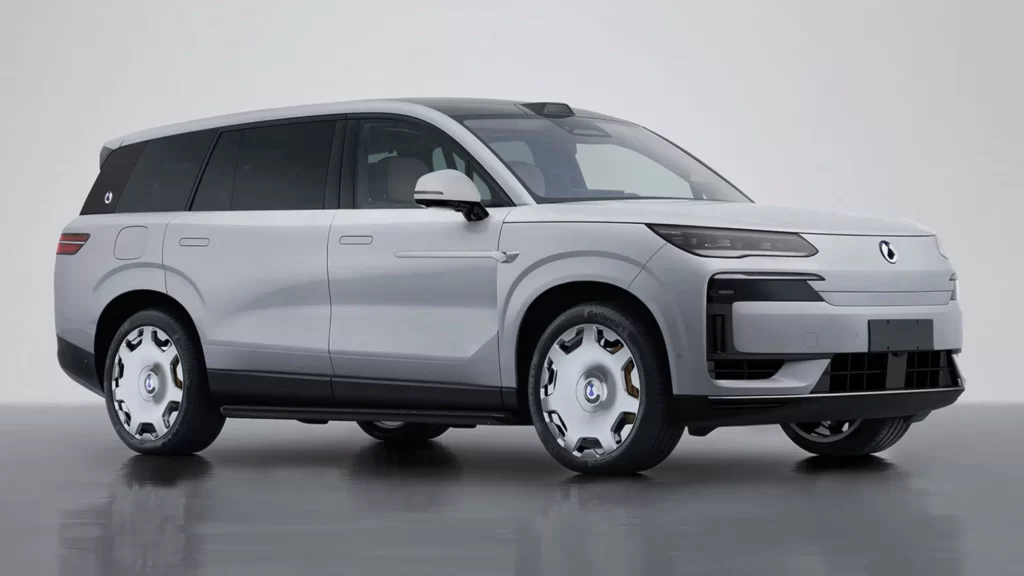
The milestone vehicle is the second-generation Denza N9, a premium SUV from BYD’s luxury sub-brand Denza. The Denza N9 is positioned to compete with established premium SUVs globally, signalling that BYD is now targeting both volume and brand prestige. Here are the current-gen specs and details of the Denza N9.
What are the key technical differences between the two Denza N9 versions?
The second-gen Denza N9 has undergone a major technical evolution with its newer Flash Charge iteration, focusing heavily on range, charging speed, and efficiency improvements while retaining its high-performance setup.
Key technical differences:
- Battery pack: First version uses a 46.9 kWh Blade Battery, while the newer version gets a 75.264 kWh second-generation Blade Battery, a capacity increase of around 40%.
- Pure electric range (CLTC): Earlier version delivers about 202–230 km, whereas the newer version reaches up to 420 km, nearly doubling the EV-only range.
- Combined range: First version offers around 1,302–1,330 km (battery + fuel). The newer version is expected to match or exceed this, although final certified figures are still limited.
- Charging performance: Earlier version supports 30–80% DC fast charging in about 19 minutes (~100 kW). New version introduces Flash Charge technology, enabling 10–70% in around 5 minutes and 10–97% in about 9 minutes, even in extreme cold conditions.
- Powertrain and performance: Both versions retain the same setup: a 2.0L turbo petrol engine with a three-motor system producing about 680 kW (≈925 hp) and 1,035 Nm, achieving 0–100 km/h in 3.9 seconds.
- Efficiency and fuel consumption: Earlier version records around 16.6 kWh/100 km EV consumption and about 6.3 L/100 km (NEDC). New version improves WLTC fuel consumption from about 7.29 L/100 km to 6.81 L/100 km.
- ADAS and driver assistance: Earlier version features God’s Eye B (DiPilot 300) with LiDAR, cameras, radar, and Nvidia Orin-X computing. New version upgrades to God’s Eye 5.0, enhancing highway and city navigation assist capabilities.
- Cockpit and software: First version includes a multi-screen luxury cabin setup. New version introduces a next-generation AI intelligent cockpit with improved natural language interaction and deeper system integration.
- Dimensions and weight: Size remains nearly identical at around 5,255 mm length and 3,125 mm wheelbase.
Weight increases slightly to about 3,280 kg due to the larger battery. - Design changes: Exterior design remains largely unchanged, with subtle updates such as new 22-inch wheels, reflecting a focus on internal upgrades rather than styling.
Although these changes are not officially confirmed by BYD, we expect these changes to be present on the second-gen Denza N9, based on the recent patent filings.
Why is this milestone important for the global market?
The 16 million NEV milestone is a strong indicator that the automotive industry is entering a new phase. Electric mobility is no longer limited to early adopters or premium buyers. It is now becoming the default choice for a growing number of consumers.
What makes this milestone even more important is the shift it represents. The Denza N9 shows that electrification is now moving deeper into the luxury segment. Buyers expect not only efficiency but also performance, technology, and comfort in electrified vehicles.
What does this mean for markets like the UAE?
The UAE market is seeing a noticeable change in buyer behaviour. With fuel prices rising and awareness of sustainability increasing, more consumers are considering EVs and plug-in hybrids.
BYD’s expansion into the region fits well with this shift. The brand offers a mix of affordability and advanced technology, making it accessible to a wider audience. At the same time, premium models like the Denza N9 indicate that the luxury EV segment could see faster growth in the UAE, where high-end vehicles have always been in demand.
How is BYD strengthening its global presence?
BYD continues to expand aggressively across international markets, including the Middle East, Europe, and Asia. Its strategy focuses on offering a wide range of models while building strong local distribution and service networks.
One of BYD’s biggest advantages is its vertically integrated structure. By producing its own batteries and key components, the company can control costs and ensure consistent supply. This gives it a strong edge in scaling production and maintaining competitive pricing.
What lies ahead for BYD?
Looking ahead, BYD is expected to continue growing its global footprint while expanding both its mass-market and premium offerings. The Denza brand will likely play a central role in strengthening its position in the luxury segment.
At the same time, advancements in battery technology, charging infrastructure, and vehicle intelligence will remain key focus areas. As demand for electrified vehicles continues to rise, BYD is well positioned to remain one of the most influential players in the industry.
BYD’s Achievment
BYD’s 16 million NEV milestone, marked by the Denza N9, represents a major moment in the evolution of the automotive industry. It highlights how quickly electric mobility is scaling and how brands are adapting to meet changing consumer expectations.
From improved range and charging speeds to the expansion into premium segments, the shift towards electrification is becoming more comprehensive. For markets like the UAE, this means greater choice, better technology, and a faster transition towards a more sustainable future.
Add a BYD car to your garage. Select from the best BYD cars for sale in the UAE. Also, we have a good collection of Denza N9 listed for sale.
Stay tuned to UAE’s most popular auto blog for more information about the latest happenings in all of the Emirates.
FAQs
What is BYD’s 16 million NEV milestone?
BYD reached 16 million NEV production, marking one of the fastest growth rates in the EV industry and highlighting strong global demand for electric and hybrid vehicles.
Which car marked BYD’s 16 millionth vehicle?
The milestone vehicle is the Denza N9, a premium SUV showcasing BYD’s latest hybrid technology and its expansion into the luxury segment.
What is a NEV and why is it important?
A New Energy Vehicle (NEV) includes electric and plug-in hybrid cars. They reduce fuel use and emissions, making them key to global sustainability and lower running costs.
How fast has BYD grown in the EV market?
BYD has scaled rapidly, producing millions of NEVs in a short time. Its mix of EVs and hybrids helps it grow faster than many competitors globally.
Is BYD bigger than Tesla in EV sales?
BYD often leads global NEV sales, while Tesla focuses only on fully electric cars. BYD’s broader range gives it a volume advantage.
Follow us on

Recent Stories
Toyota’s First Electric Car In The UAE: Toyota bZ4X Touring Launched At AED 184,900
For the first time in a partnership that stretches back to 1955, Al-Futtaim Motors and Toyota UAE have launched a...
Porsche Mission S Revealed: New Mid-Engine Supercar To Sit Above The 911
Porsche has revealed the all-new Mission S, a stunning supercar concept that offers a glimpse into the brand’s future. Unveiled...
Flying Tesla Roadster Unveiled: 0 to 100 km/h in Under a Second
Tesla has finally unveiled its long-awaited second-generation Roadster, and this electric sports car has quite a few tricks up its...

DubiCars Launches ‘Find It On DubiCars’
Whatever car you’re thinking of, Find It On DubiCars. A sensible Toyota for the daily commute. A seven-seat SUV for...
All-New Toyota Hilux 2027 Launched In The UAE At AED 107,900
The wait is finally over! The all-new Toyota Hilux 2027 has arrived in the UAE, bringing a fresh design, a...

New 2026 Jeep Wrangler Moab 392 Launched In UAE: The HEMI V8 Is Back!
The V8-powered Jeep Wrangler is back, and it still means business! The 2026 Jeep Wrangler Moab 392 has officially launched...