
Trump’s Auto Industry Tariffs & Its Global Outcome — Could The UAE Benefit?
 August 6, 2025
, 9 Min Read
August 6, 2025
, 9 Min Read
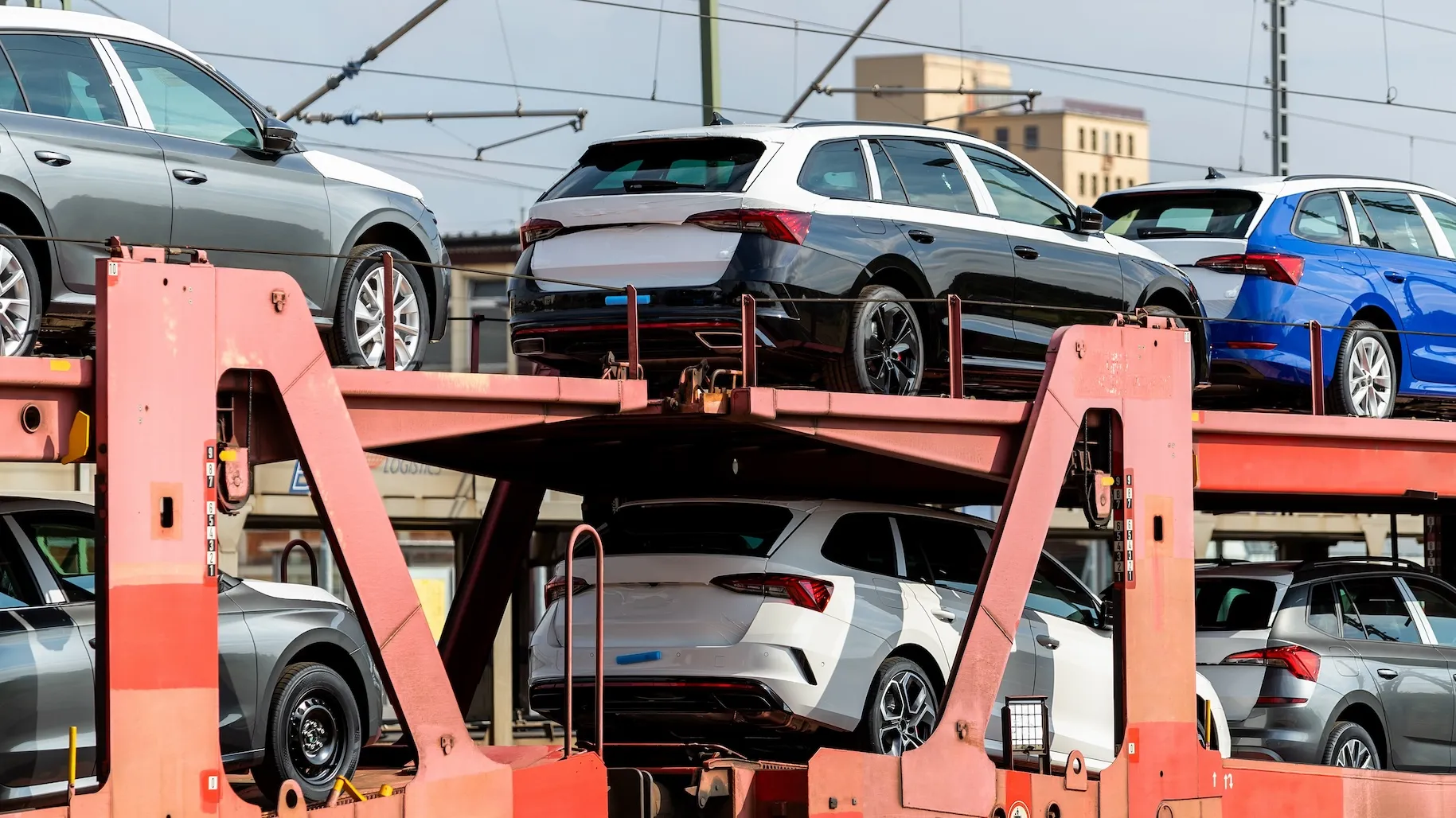
Earlier this year, the Trump administration launched sweeping new tariffs on the automotive sector as part of a broader trade overhaul. US President Donald Trump invoked “national security” under Section 232 to impose a 25% tariff on virtually all imported cars, light trucks, and key parts, effective April 3, 2025.

Automakers, dealers, and consumers immediately faced a sharp new cost shock: analysts warn the 25% levy could add thousands of dollars to car prices and even billions of dollars to car makers’ costs. In this article, we take a detailed look at how these tariffs work, their effects on the auto industry, and what it means for car buyers and car dealers in the UAE. As it turns out, the UAE might actually emerge as a relative winner from the tariff-induced chaos.
What Are Tariffs
A tariff is essentially a tax on imports, making foreign goods more expensive relative to domestic products. The stated purposes include generating revenue, protecting domestic industries, etc. Economically, tariffs raise the cost of foreign-made goods for domestic buyers who ultimately bear most of the burden. Moreover, tariffs can disrupt supply chains.
Will Trump Tariffs Affect The UAE Car Market?
According to industry experts and historical data, the UAE’s car market is largely insulated from the direct impact of these US tariffs. Here’s why:
1. Minimal Direct Exposure
The UAE’s car market is largely based on reselling, with little to no local manufacturing. As a result, the tariffs don’t directly apply to the UAE car market. Additionally, the country isn’t heavily dependent on just American cars. Japanese cars dominate the market, followed by German cars and then American cars. In recent times, Chinese manufacturers have begun dominating certain segments. Here’s a list of the Top 10 Chinese Cars In The UAE.
2. Opportunity For Volume Diversion
With manufacturers like Audi, VW, and JLR pressing the pause button on US shipments, excess production needs an outlet. The UAE, with its efficient re-export infrastructure and growing domestic appetite for new vehicles, stands as an attractive alternative.
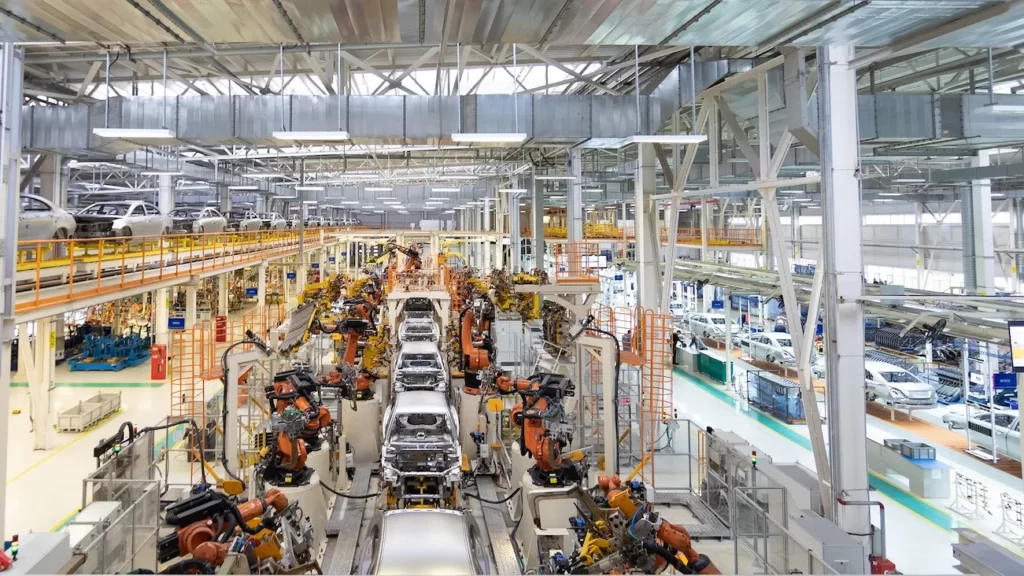
Craig Stevens, CEO of DubiCars, in the latest episode of the AutoTalk Podcast titled ’The Automotive Trade Wind’, said, “Jaguar Land Rover paused all their volume going to the US, VW and BMW have paused half the volume going in. But those manufacturing plants are still making cars. They can’t just stop and send the staff home. They’ve still got to produce those cars, and the volume’s got to go somewhere. So, I think the UAE will be one of the markets that will see maybe some competitive deals come in.”
3. An Incoming Price Drop?
The UAE market is intensely competitive, especially with the rise of Chinese car manufacturers. With US-bound cars being redirected, local dealers could access surplus stock at lower prices, translating to better deals for consumers.
Glenn Harwood, the Co-Founder of AlgoDriven, said in the AutoTalk episode, “I think we’re going to see, especially the European, the Korean, the Japanese manufacturers probably have more cars on the ground and better deals.” He went on to say, “For the broader market, if we see more deals on new cars, that pushes new car prices down, which just pushes the used car price down.”
4. Re-Export Market Poised for Growth
Beyond domestic sales, the UAE serves as a hub for car re-exports to Africa, the CIS, and other regions. With global car manufacturers searching for quick solutions to offload inventory, the UAE’s low tax regime, flexible logistics, and vibrant business environment make it an ideal launchpad.
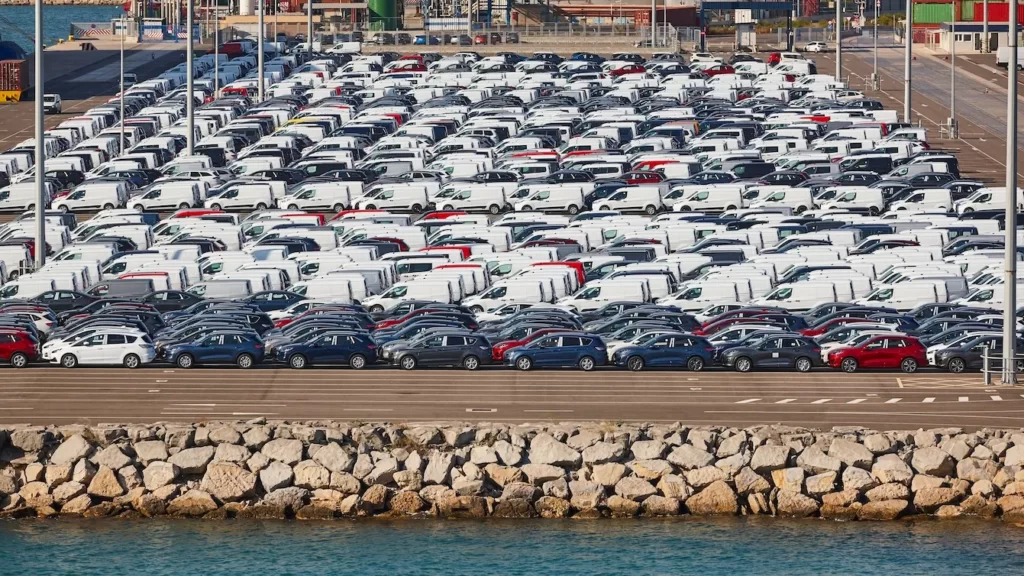
Craig went on to say, “If you’re in Africa and don’t want to buy 5,000 cars from China, but just five from a reliable place with low tariffs, the UAE is perfect.”
Watch the complete podcast here for an in-depth discussion on the Trump Tariffs and their effects on the UAE car market:
What Should UAE Car Dealers Do?
Industry advice for UAE-based car dealers boils down to three main pointers:
- Watch for Deals: Keep an eye out for excess stock and special pricing from manufacturers and dealers looking to push volume away from the US market.
- Hold On to Premium US Models: New or nearly new examples of cars like the Ford Mustang, Jeep Wrangler, Cadillac Escalade, and similar models could appreciate in value as new American imports become scarce.
- Clear Out Mainstream US Stock: Budget American models will struggle to compete with lower-priced, better-equipped Chinese and Japanese rivals. Move them quickly.
Trump’s Tariff Announcements — The Timeline
The Trump administration announced a series of tariff measures early in 2025. The key actions affecting the car industry were announced on these dates.
March 5–6, 2025: One-month delay on Canada/Mexico auto tariffs
After announcing 25% duties on Mexican/Canadian goods (including vehicles), Trump granted automakers a 30-day reprieve on those auto tariffs if firms comply with existing USMCA (NAFTA) content rules. This was aimed at giving industry time to adjust before duties hit at midnight on April 3.
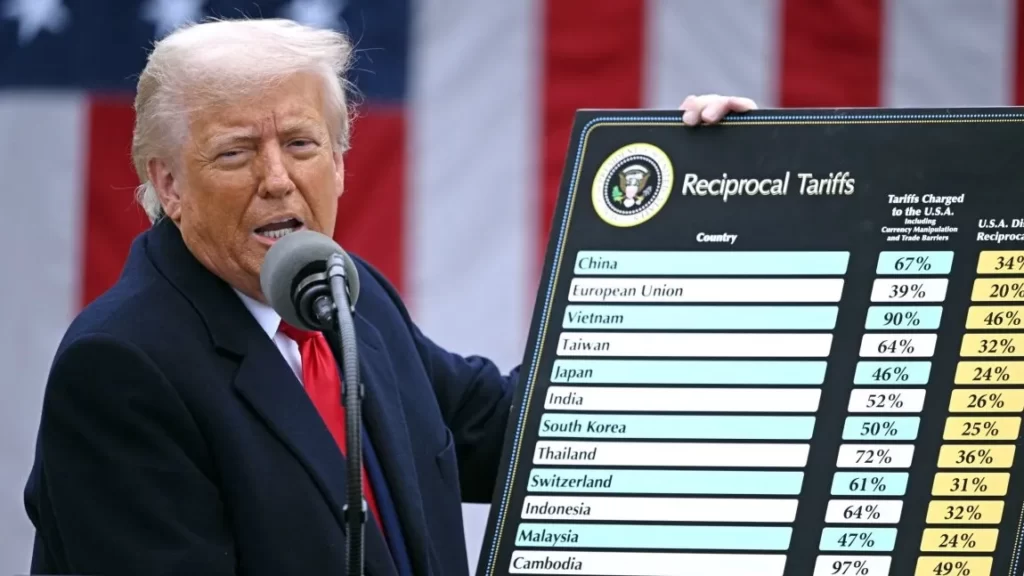
March 26, 2025: 25% tariff on imported cars and light trucks (effective 03 April )
In a presidential proclamation, Trump found that auto imports “threaten to impair national security” and imposed a flat 25% duty on most passenger vehicles and light trucks from all countries. The tariffs also cover certain “engines and engine parts, transmissions and powertrain parts, and electrical components” from April 3 (with other parts to follow). Virtually every major automaker’s imports, from Japan, Korea, Europe, Mexico, etc., are subject to the tax.
April 29, 2025 – Partial easing for US automakers
Trump issued executive actions providing relief to domestic carmakers. He decreed that vehicles (and parts) subject to the 25% auto tariff would not also face other 25% tariffs (on steel/aluminum or Canada/Mexico). He also offered a “domestic assembly credit”: US vehicles built between April 3, 2025, and April 30, 2026, earn a credit equal to 3.75% of their sticker price, which can be used to import parts duty-free (2.5% credit in year 2). In effect, each $50,000 car built in the US gains about $1,875 in duty-free parts (dropping to $1,250 in year two). These credits phase out by April 2027, incentivizing more domestic assembly. (Notably, all China-origin parts remain fully liable to tariffs.)
May 9, 2025 – US-UK Trade Deal – Special Auto Quota
In a limited pact with the UK, Washington agreed to a hard quota of 100,000 British-made cars per year at a 10% tariff (down from 27.5% previously). After that quota is filled, the normal 25% tariff applies. By contrast, Mexico, Canada, and others pay 25% on their exports.
The goal is to pressure automakers to relocate production to the United States, but the approach has triggered broad uncertainty in the auto industry supply chain.
US Auto Market Affected By The Tariffs
Data from several reports reveals that American car buyers paid 2.5% more for new vehicles in April 2025 compared to March — a sharp increase, more than double the typical seasonal jump. The last time the US market saw such a significant monthly spike was during the pandemic in 2020.
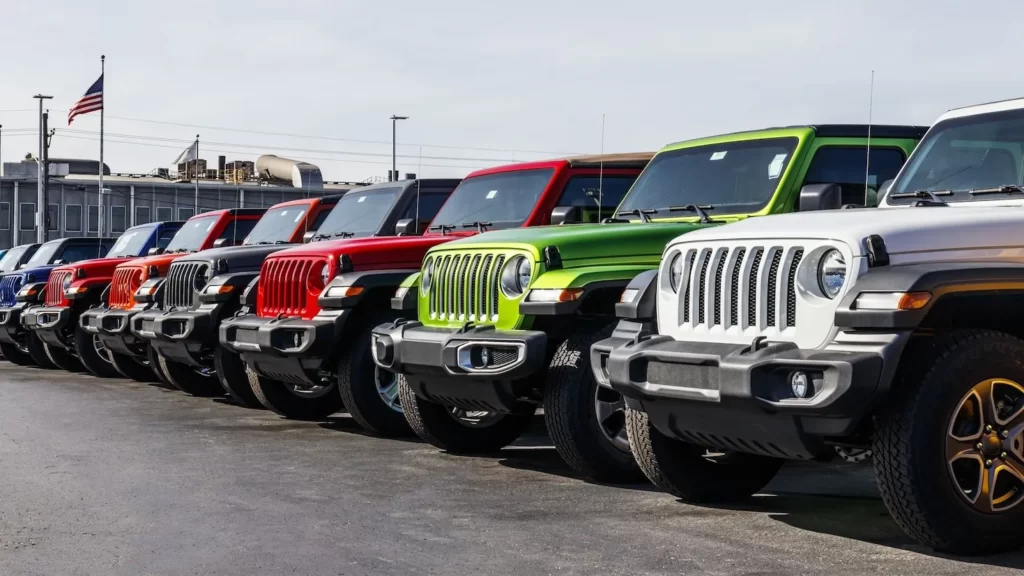
The price hike comes as automakers absorb the new tariffs, which were initially aimed at encouraging domestic manufacturing but are now straining global trade. Although manufacturers like Hyundai and Stellantis brands like Jeep, Dodge & Ram have offered discounts to offset the cost to consumers, prices for some models, such as the Ford Mustang Mach-E and Ford Bronco Sport, have already risen by up to $2,000.
Car Manufacturers’ Reactions To The Trump Tariffs
In response to the newly imposed tariffs, car manufacturers from across the world have announced major operational shifts:
- Jaguar, Land Rover, Audi, VW, and Mitsubishi have paused US shipments.
- Aston Martin has reduced US shipments.
- Ferrari increased prices by 10% on its top-tier models like the Purosangue, 12 Cilindri & F80.
- BMW will delay price increases but has confirmed a 4% hike on some made-in-Mexico models starting in May.
- Honda is relocating production of the Civic Hybrid from Japan to Indiana.
- Mercedes-Benz plans to start manufacturing a new ‘high-volume model’ in Alabama by 2027, but is yet to disclose what it would be.
- Toyota has has reportedly agreed to absorb tariff-related costs, but it remains to be seen if this continues for a long time. In fact, a few reports say Toyota is the worst-hit.
- Infiniti halted production of the QX50 and QX55 in Mexico and is likely to shift them to its Tennessee plant.
The disruption is global, and so are the consequences.
Looking Ahead: A Market in Transition
While the US car market braces for higher prices and supply headaches, the UAE could see a boost in inventory, more competitive pricing, and even stronger growth in re-exports. But experts caution that the next two to three years will likely bring a shift in the sales mix and consumer preferences. For now, it seems the UAE may turn America’s tariff turmoil into a strategic advantage.
Find the best cars for sale in the UAE.
Stay tuned to UAE’s most popular auto blog for more automotive content.
Also Read:
- Top 10 Chinese Car Brands In The UAE
- Ultimate Guide To Buying A Car In The UAE
- Top 10 Luxury SUVs In 2025
FAQs
What are America’s tariffs?
The US has imposed a 25% tariff on all imported vehicles and auto parts, aimed at protecting domestic manufacturing. Exemptions exist for vehicles meeting USMCA requirements, but the policy has already led to higher prices, disrupted supply chains, and major shifts in global vehicle distribution.
Will tariffs affect Tesla?
Tesla is largely insulated from the tariffs since most of its vehicles sold in the US are manufactured domestically. However, certain imported components could become more expensive, potentially impacting production costs or delivery timelines for select models.
What cars won’t be affected by tariffs?
Vehicles built entirely within the United States or those meeting the 85% USMCA content requirement are exempt from the 25% import tariff. This includes many American-built models and some Mexican or Canadian-assembled vehicles that qualify under the trade agreement.
How are car manufacturers responding to tariffs?
Manufacturers are pausing US imports, shifting production to North America, raising prices on affected models, or offering temporary price protection to dealers and buyers. Some are also likely to redirect inventory to untapped markets like the UAE, where demand remains strong.
Will the UAE car market be affected by America’s tariffs?
The UAE market is unlikely to be negatively impacted. In fact, it may benefit as global manufacturers look to divert excess inventory from the US market. Consumers could see better deals, especially on European, Japanese, and Korean vehicles, while re-export opportunities are likely to grow.
Follow us on

Recent Stories
New Lexus RZ 500e Launches In UAE: A Luxury Electric SUV With Serious Performance
Lexus has launched the new RZ 500e electric SUV in the UAE, bringing its first fully electric models to the...
Lexus ES500e Launched In The UAE: The Executive Sedan Finally Goes Fully Electric
Lexus has just taken a significant step in the UAE. Al-Futtaim and Lexus officially launched the all-new ES500e, the first...

DubiCars Announces New Premium Identity & Brand Uplift: An Elevated New Look & Feel
You might want to update your mental image of DubiCars. The familiar pink-red logo is retiring, the letters are now...

iCAUR Opens New Showroom At Marina Mall Abu Dhabi: V27 & 03T SUVs On Display
iCAUR has expanded its UAE presence by opening a new showroom at Marina Mall in Abu Dhabi. The premium new...
XPENG Showcases REEV Tech: GX Makes A Strong Case For Electrified Driving As UAE Fuel Prices Rise
Electric cars have many advantages: immediate response, zero tailpipe emissions, quiet luxury, and more. For some UAE buyers, however, one...
Dubai Opens Autonomous Vehicle Test Centre With 248 Testing Scenarios
Dubai has taken another major step towards large-scale autonomous mobility with the opening of Dubai Mobility Labs, a dedicated testing...